

Boxes, Bags and Containers for Veterinary Waste
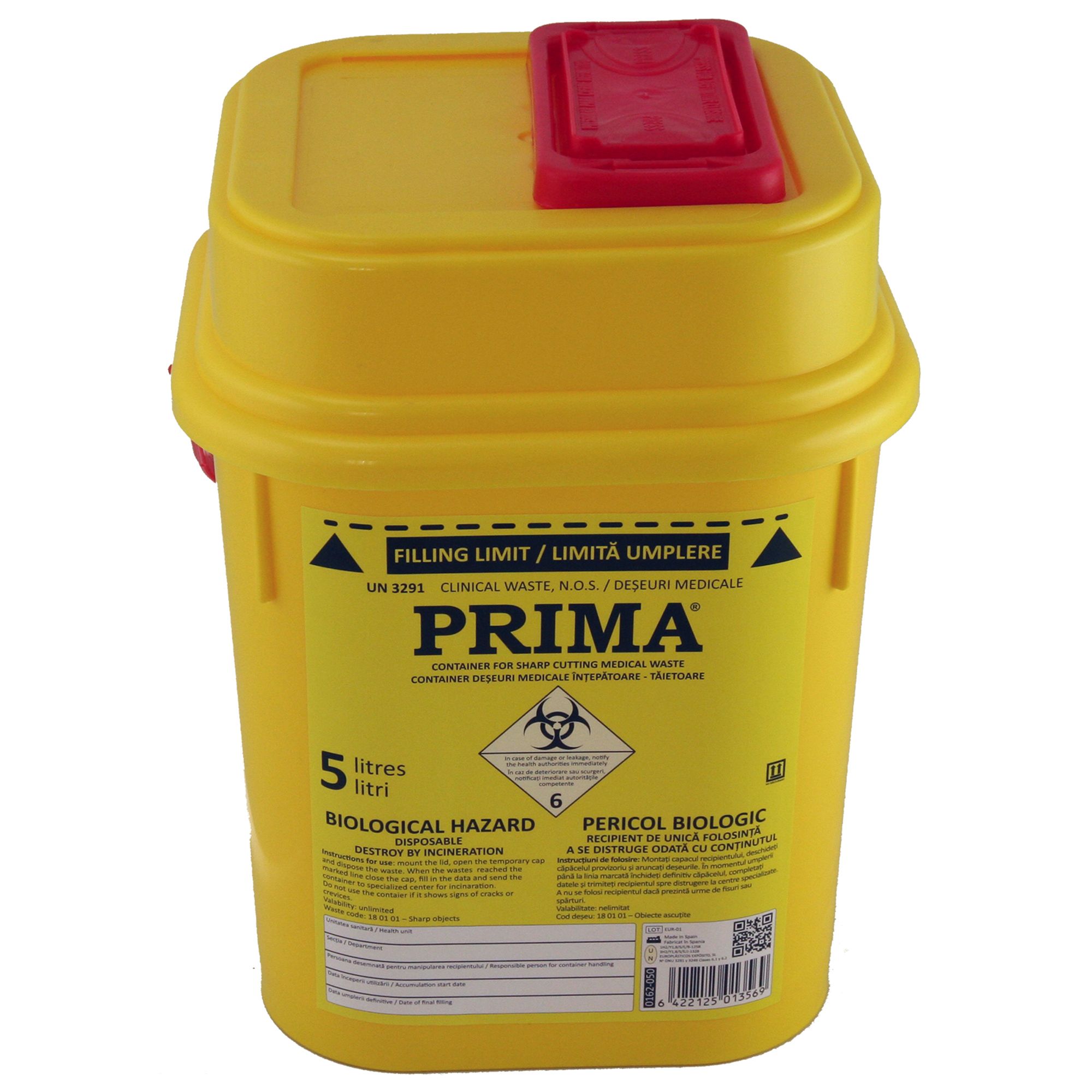
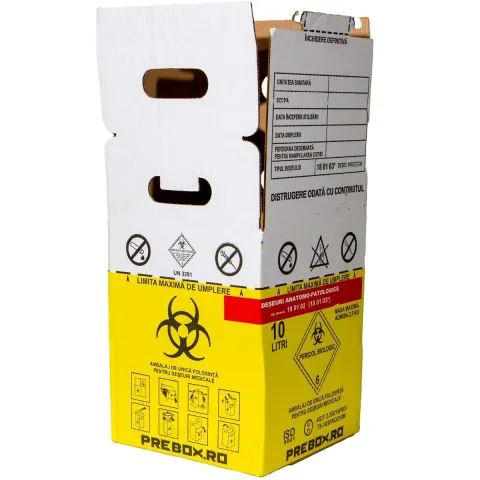
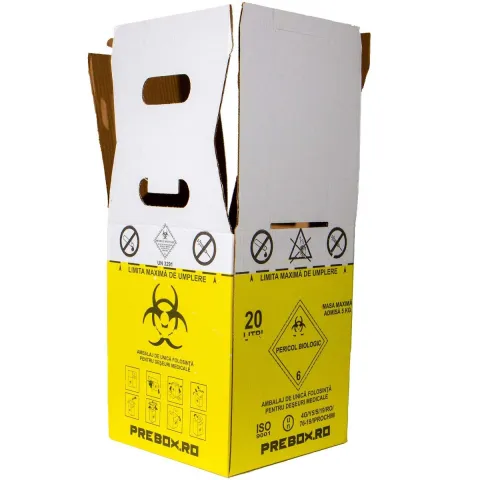
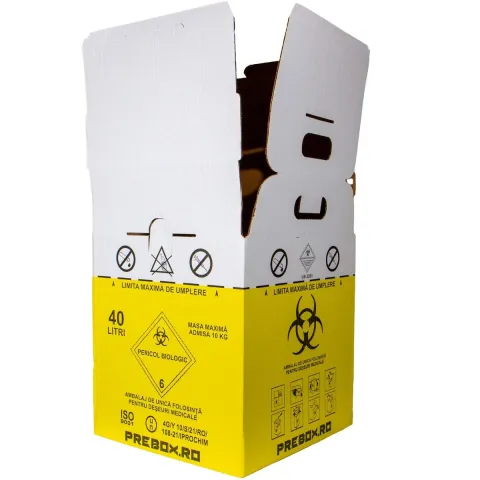
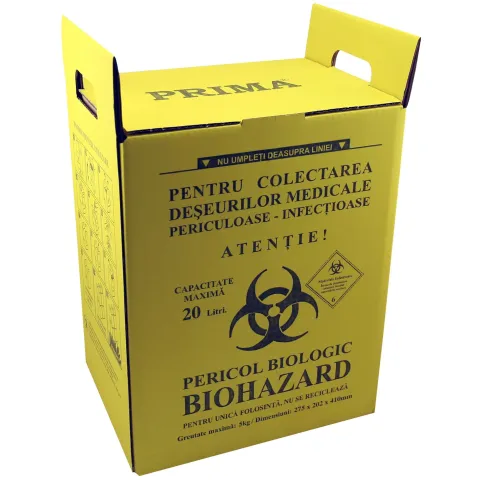
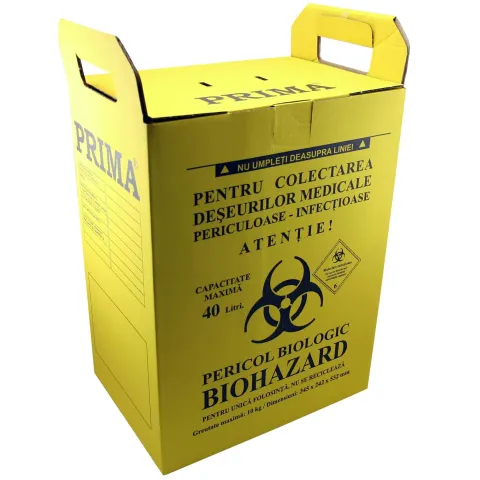
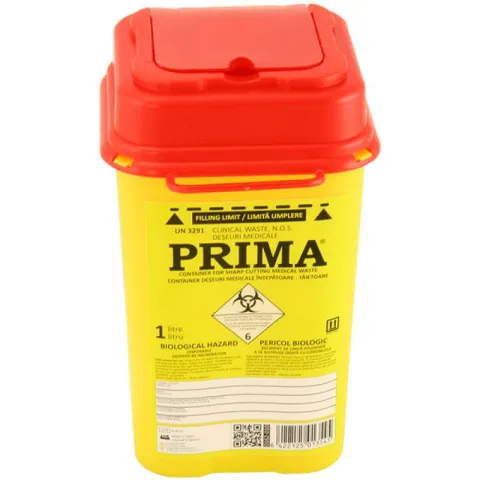
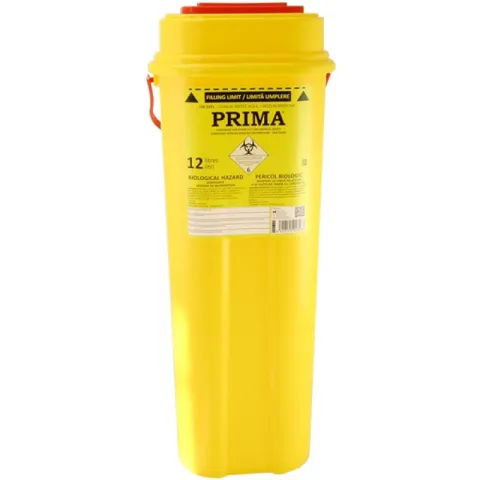
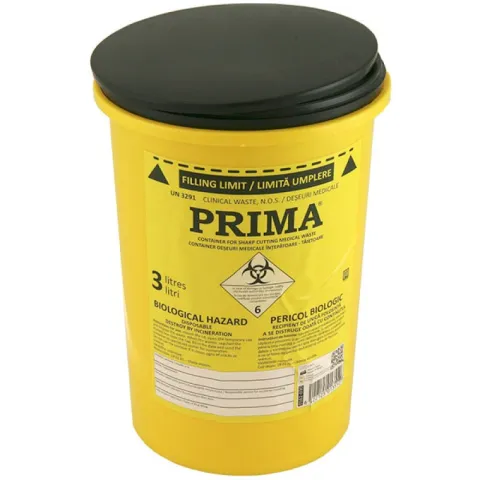
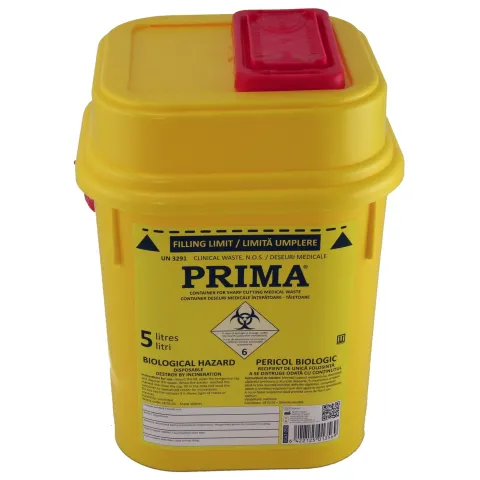
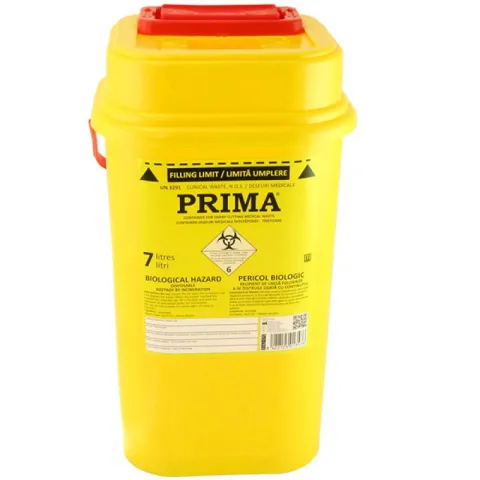
For hazardous waste in a veterinary practice or clinic, here you will find yellow rigid plastic containers for needles and blades in 1, 3, 5, 7 and 12 liters, cardboard boxes with a yellow Biohazard liner for incineration in 10, 20 and 40 liters, red-band boxes for anatomical waste and yellow 20–300 liter bags, 50 per pack. Prices start at 4.83 lei.

You can change this from “Sort”.
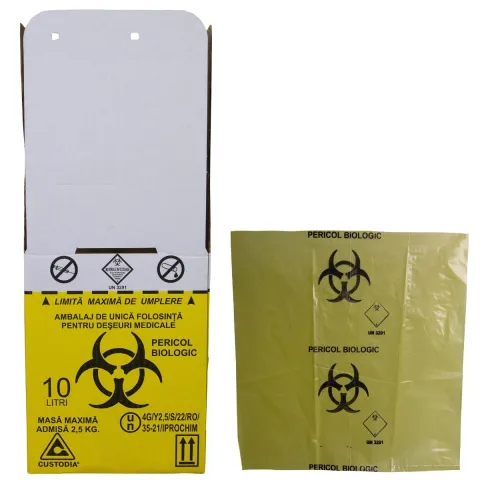
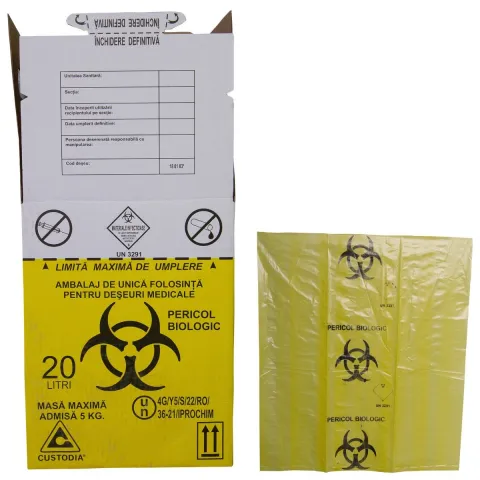
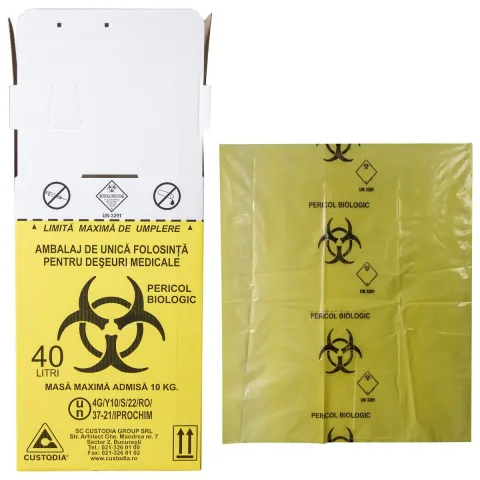
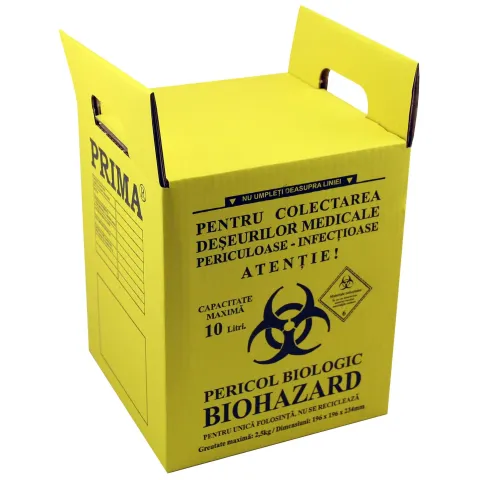
The right packaging for each kind of waste
- Needles, syringes with needles, scalpel blades: yellow rigid plastic single-use containers from 1 to 12 liters.
- Swabs, gloves, drapes and other contaminated materials: 3-layer corrugated cardboard boxes with a yellow Biohazard bag inside, in 10, 20 or 40 liters.
- Tissue from procedures: yellow red-band boxes, described by the manufacturer for anatomical waste that is not sharp; the liner is 50–70 µm thick.
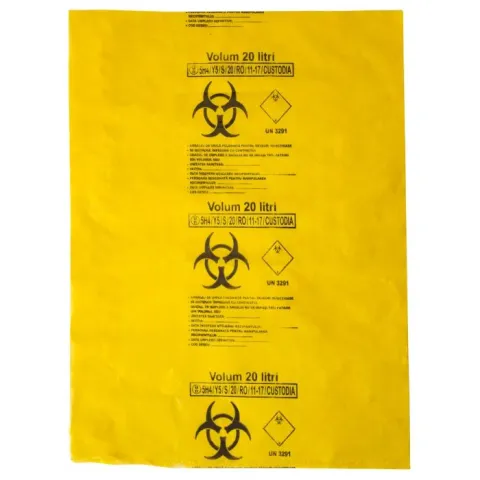
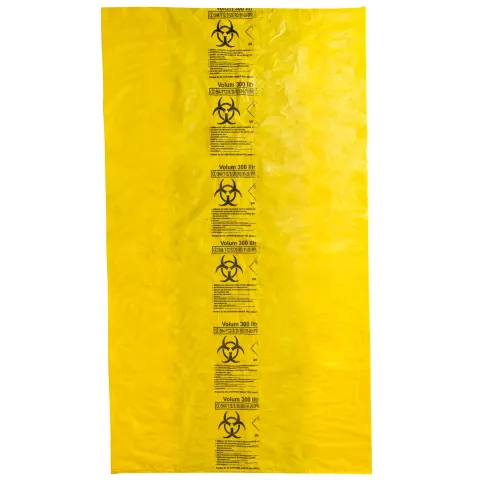
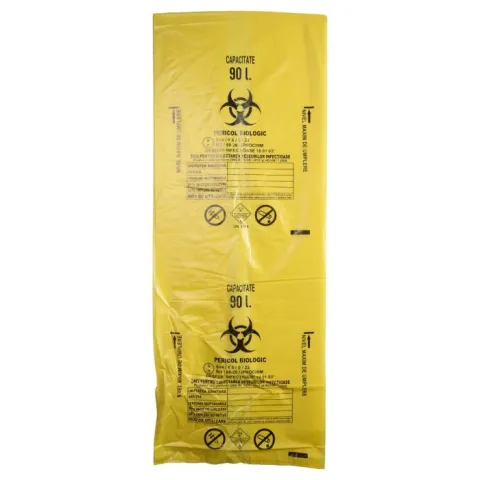
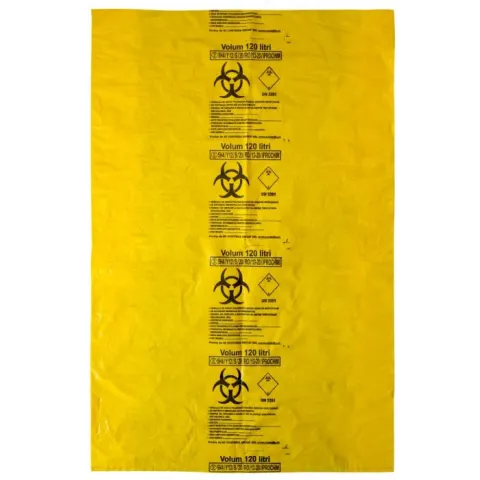
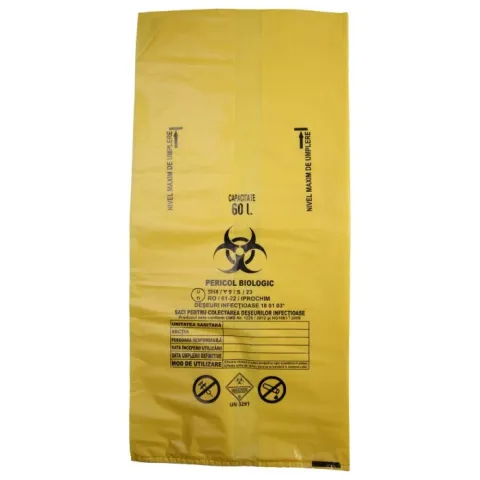
- Large quantities, in bins: yellow polyethylene bags with the Biohazard symbol in 20, 60, 90, 120 and 300 liters.
The box product sheets also give the dimensions: 21 × 21 × 25 cm for 10 liters, 28 × 21 × 36 cm for 20 liters and 34.5 × 24.5 × 52 cm for 40 liters, with a maximum allowed load of 2.5 kg. The products are split into boxes and bags and plastic containers. The full range, with Klintensiv containers and body bags, is under infectious waste in the medical section.
Frequently asked questions
What capacities do the sharps containers come in?
1, 3, 5, 7 and 12 liters. They are yellow, made of rigid plastic and single-use.
How do the red-band boxes differ from the other yellow boxes?
Red-band boxes are described for anatomical waste that is not sharp, while the others are for collecting and incinerating infectious waste. Both types have a yellow Biohazard bag inside.
How many yellow bags are in a pack?
50, in every capacity: 20, 60, 90, 120 and 300 liters.