A visitor gown, a sterile operating room gown and a coverall against infective agents seem to do the same job: they cover your clothes. The difference lies in the material, in sterility and in the tests listed on the label. This guide shows what the gowns, caps and shoe covers in the catalog are made of, what EN 13795 and EN 14126 mean on the package and what to choose for visitors, the laboratory, the practice, the salon or the food industry.
2performance levelsstandard and high, for surgical gowns assessed under EN 13795-1.
≥ 100cm of water columnthe resistance to liquid penetration required in the critical area of a high-performance gown.
-Bon the labelshows that the protective clothing is also certified against infective agents, under EN 14126.
The materials in brief
| Material | What the catalog sheets say | Where you find it |
|---|
| PPSB, polypropylene non-woven | Lightweight; described as breathable for the caps. The sheets of the PPSB gowns do not describe it as impermeable | Visitor and lab gowns, coverall, caps, surgical hoods, shoe covers |
| SMS, SMMS, SMMMS | Multi-layer polypropylene non-woven; the SMMS gown is described as impermeable to liquids and permeable to air, and the sterile SMS gown as impermeable | The lab gown with zipper, the 40 g/m² and 35 g/m² sterile gowns |
| Polyethylene: LDPE, HDPE, CPE | Impermeable film; the LDPE apron is described as resistant to water, oils and grease | Aprons, sleeve covers, shoe covers, boot covers, hooded gown |
| Cotton | 150 g/m² gown, autoclavable, reusable | The re-sterilizable surgical gown |
Gowns: which one for what
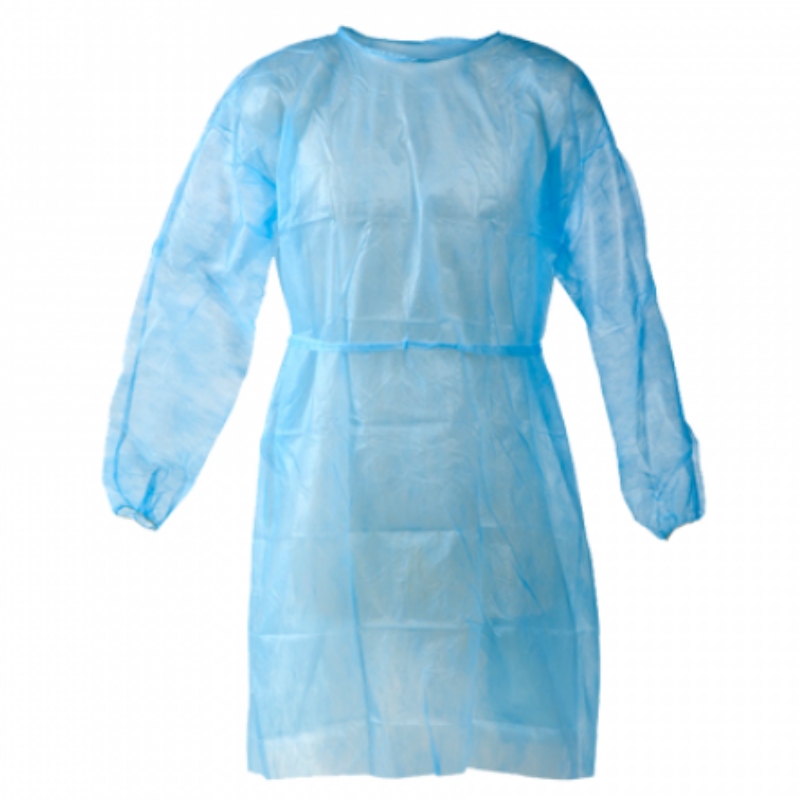
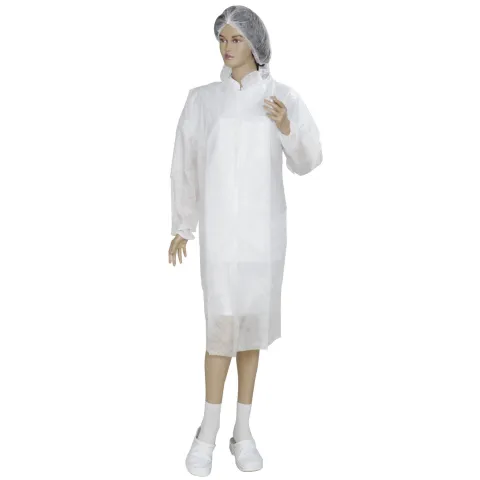
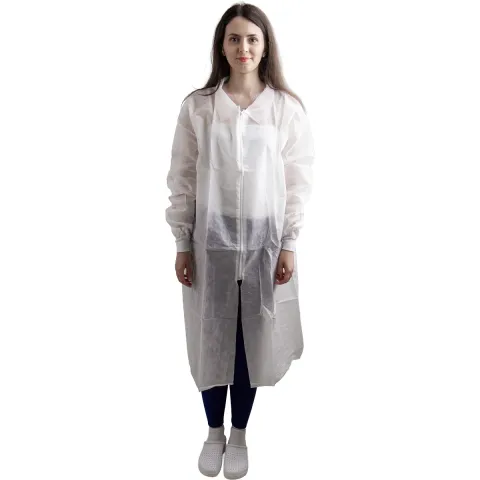
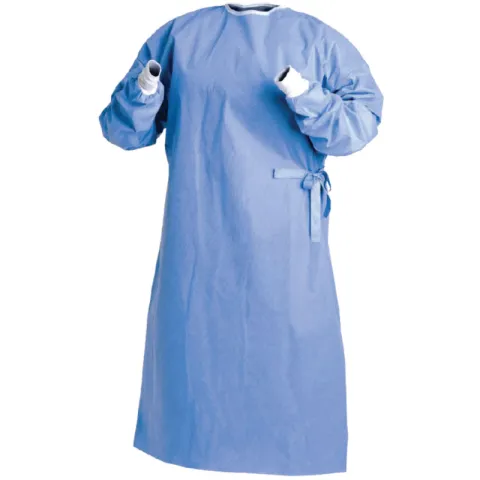
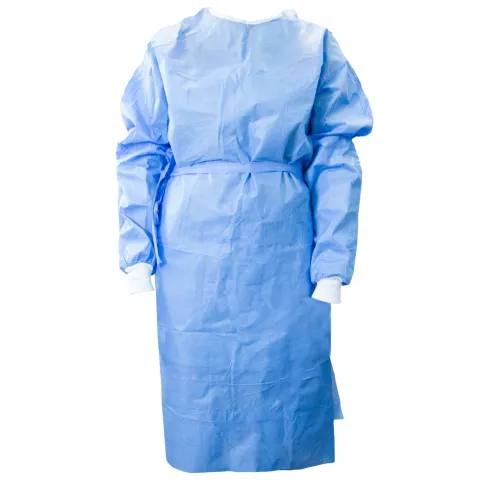
Visitor or lab non-sterilePPSB non-woven, white or blue, size XXL; the lab gown measures 75 × 120 cm. They keep clothes clean during visits, in the laboratory or in the food industry.
Impermeable contact with liquidsThe SMMS gown with zipper, a polyethylene-laminated lining on the front and cotton cuffs; the Abena Excellent gown, with a liquid-resistant front and breathable back; the polyethylene aprons and gown.
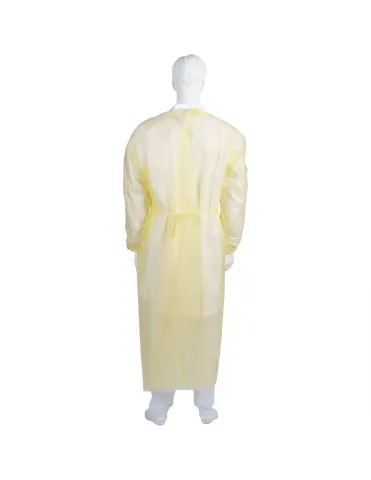
Sterile operating roomIndividually packed, for the operating room, minor surgery and dental or veterinary practices, as the sheets state: SMS at 40 g/m², SMMMS at 35 g/m² or reinforced PPSB.
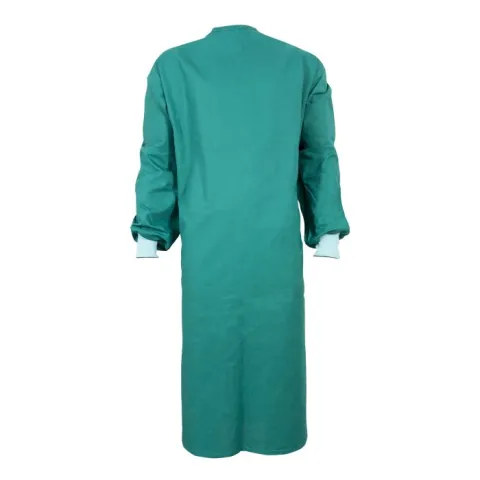
Reusable cottonThe 150 g/m² cotton surgical gown withstands autoclaving, has elastic knitted cuffs and 3 fastening points; it is made to be re-sterilized, not thrown away.
Non-sterile protective gowns
Sterile gowns in the catalog
| Gown | Material and weight | Size and dimensions | What else the sheet says |
|---|
| PRIMA sterile gown, M | SMS, 40 g/m², impermeable | 120 × 150 cm | Ultrasonically welded seams, hook-and-loop closure at the neck, cotton cuffs, 2 towels; considered sterile on the chest and from the wrist to the elbow |
| PRIMA sterile gown, L, XL, 2XL | 40 g/m² (L and XL) | 125 × 155 cm (L), 140 × 165 cm (XL and 2XL) | Individually packed, in special paper and a sealed pouch |
| Dark blue sterile gown, M | SMMMS, 35 g/m², ethylene oxide sterilized | 110 × 163 cm | Raglan sleeves, knitted cuffs, ties and hook-and-loop at the back; paper-PE pouch with a sterilization indicator |
| Reinforced sterile gown | PPSB, reinforced on the chest and up to mid-sleeve | from M (150 × 115 cm) to XXL (170 × 155 cm) | Individually packed |
| Re-sterilizable surgical gown | 100% cotton, 150 g/m² | XS, S, M, L | Autoclavable |
Sterile operating room gowns
A sterile gown stays sterile only as long as its packaging is intact. Open it right before use and, if the pouch is torn or wet, do not use it as sterile.
2EN 13795-1, surgical gowns and drapes
The performance level of a surgical gown
Surgical gowns and drapes are assessed under EN 13795-1:2019, which sets two performance levels, standard and high, with different requirements for the critical area and the less critical area. On a gown, the critical area is the front and the sleeves, the part most likely to be involved in transferring infective agents. The manufacturer states the performance level; if it does not mark out the areas, the whole gown must meet the critical-area requirements.
| Requirement | Less critical area | Critical area, standard performance | Critical area, high performance |
|---|
| Resistance to liquid penetration | ≥ 10 cm H₂O | ≥ 20 cm H₂O | ≥ 100 cm H₂O |
| Wet microbial penetration (barrier index) | not required | ≥ 2.8 | 6.0 |
| Dry microbial penetration | ≤ 300 CFU | – | – |
For all areas, the standard also requires microbial cleanliness of no more than 300 CFU/dm² and particle release (linting) of no more than 4.0 log10. Source: the summary of EN 13795-1:2019 in the technical catalog of Médecins Sans Frontières.
The sheets of the sterile gowns in the catalog do not state an EN 13795 performance level; if your facility's protocol requires a specific level, check the product label.
BEN 14126 and types 3–6
Coveralls: what to look for on the label
Protective clothing against infective agents is certified under EN 14126. The standard has four tests, each with protection classes: penetration by blood-borne viruses (ISO 16604, classes 1–6), wet bacterial penetration under rubbing (ISO 22610, classes 1–6), penetration by bacteria-laden aerosols (ISO/DIS 22611, classes 1–3) and by contaminated particles (ISO 22612, classes 1–3). The higher the class, the better the protection. On the label, the type of protective clothing gets the suffix “-B”, for example type 4-B, together with the appropriate pictogram.
| Type | Standard | How it is tested |
|---|
| Type 3 | EN 14605 | Liquid jet |
| Type 4 | EN 14605 | Spray |
| Type 5 | EN ISO 13982-1 | Inward leakage of particles |
| Type 6 | EN 13034 | Limited protection against liquids, mist test |
The types range from gas-tight suits to limited tightness against liquids (Hohenstein); types 3–6 are the ones that matter here.
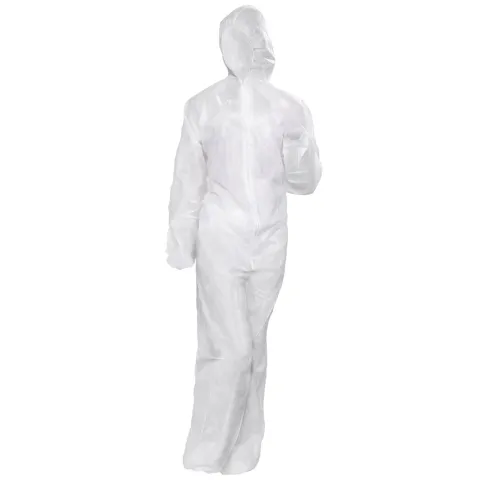
The hooded coverall in the catalog, made of non-woven fabric, with a front zipper and elastic at the hood, wrists, waist and ankles, in sizes 2XL and 3XL, is described in its sheet for protection against dust and dirt, including spray painting. The sheet does not mention EN 14126 or a protection type, so do not use it where the protocol requires clothing certified against infective agents.
Aprons, sleeve covers and a disposable scrub suit
When only the front of the body is exposed to liquids, a polyethylene apron is enough:
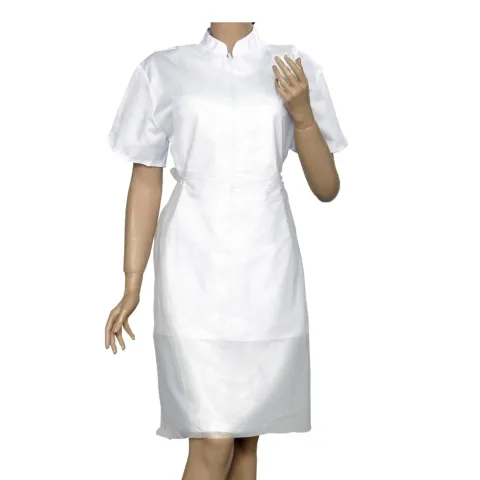
- The HDPE apron: white, 71 × 120 cm, 15 µm, non-sterile, tied around the body; packs of 100.
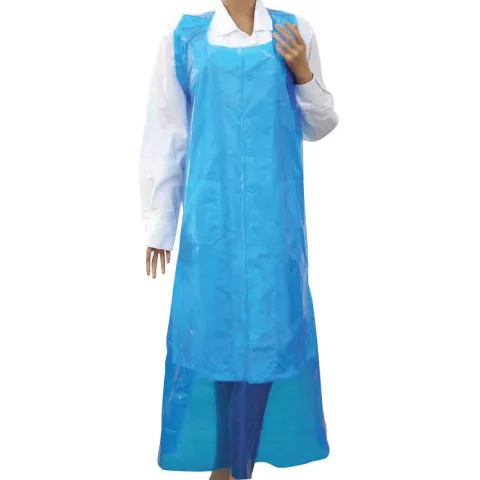
- The LDPE apron: blue, 100 × 150 cm, resistant to water, oils and grease according to its sheet; packs of 25.
- The Abena CPE apron: 25 µm, 120 × 112 cm, with long sleeves and thumb holes that keep the sleeves in place; packs of 20.
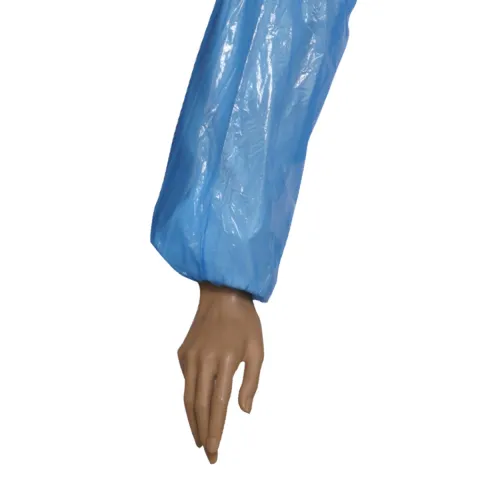
- The LDPE sleeve covers: 40 cm, with elastic at both ends, used as protective sleeves in the food industry; packs of 100.
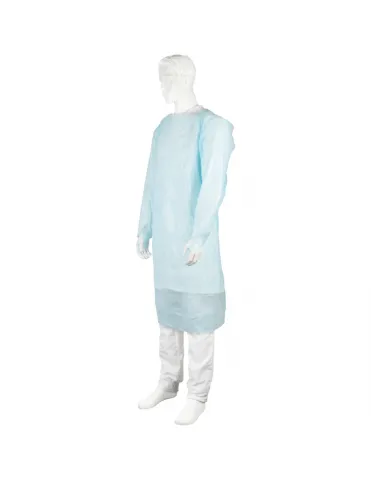
- The LDPE gown with hood and snaps: 120 × 150 cm, impermeable, used as a protective gown against liquids or as a rain cape; packs of 10.
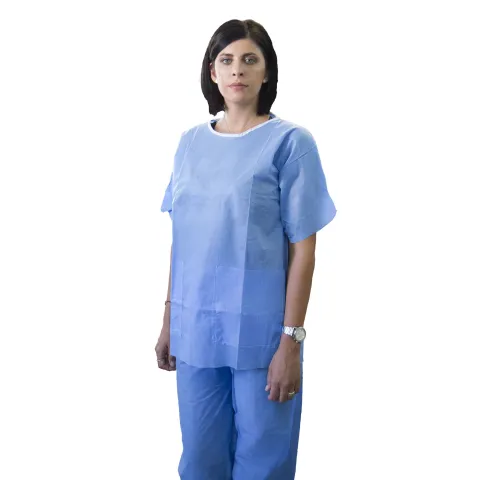
The PRIMA disposable two-piece suit, a short-sleeve top and drawstring pants, in sizes S–XL, completes the outfit. Its sheet warns that reuse can cause cross-contamination.
Coverall, scrub suit, aprons and sleeve covers
Particle Protective Coverall, Nonwoven Material, 2XL / 3XL, White, with Hood, PRIMA
from 9,92 lei
Particle Protective Coverall, Nonwoven Material, 2XL / 3XL, White, with Hood, PRIMA
in stock
2 variante
1088Lei
excl. VAT: 8,99 Lei
Caps, surgical hoods and beard covers
| Product | How it is made | What the sheet lists it for |
|---|
| Elastic cap | PPSB, one size, 46 × 11 cm | Hospital, pharmacy, cosmetics |
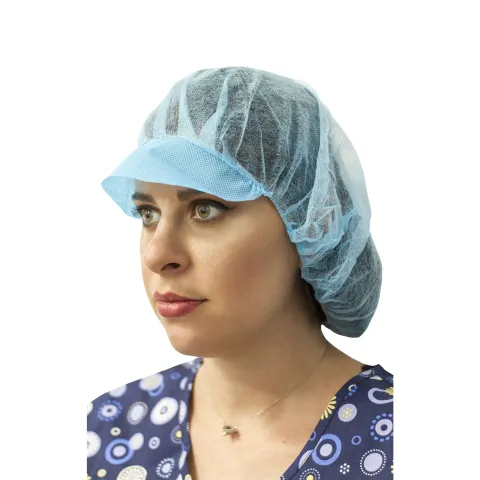
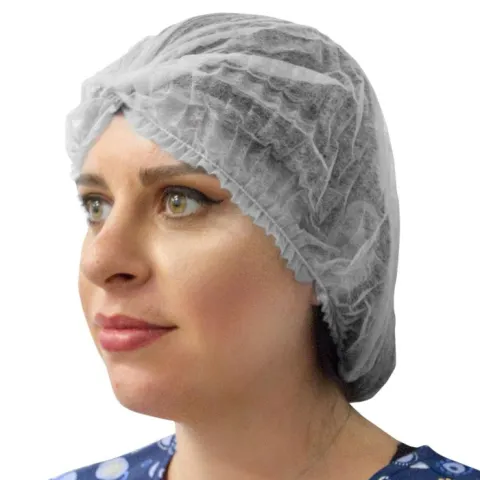
| Bouffant cap with visor | Polypropylene that lets air through, 48 cm, with elastic | Medical and food use |
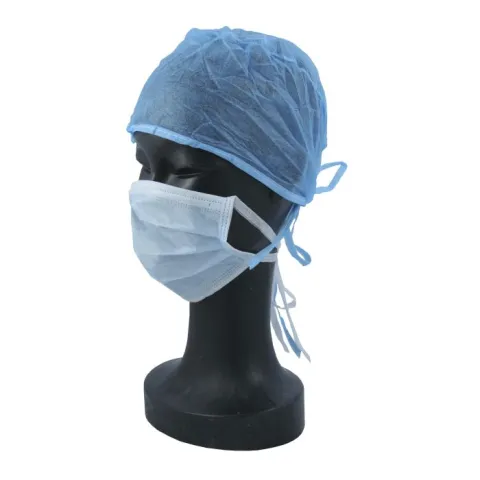
| Doctor-style surgical cap | 14 g/m² PPSB, with ties, individually packed | Surgical procedures |
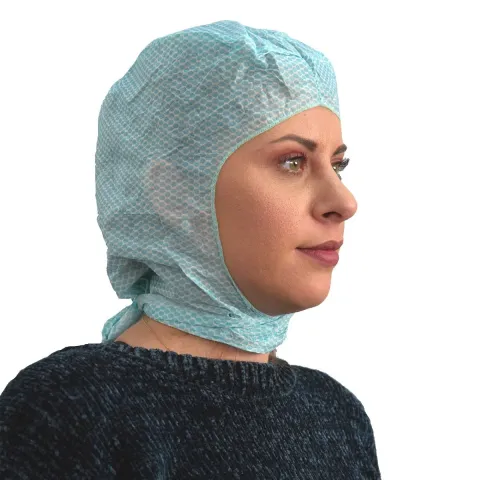
| Hood-style surgical cap | Breathable PPSB, tied at the back or front | Surgery, hair protection |
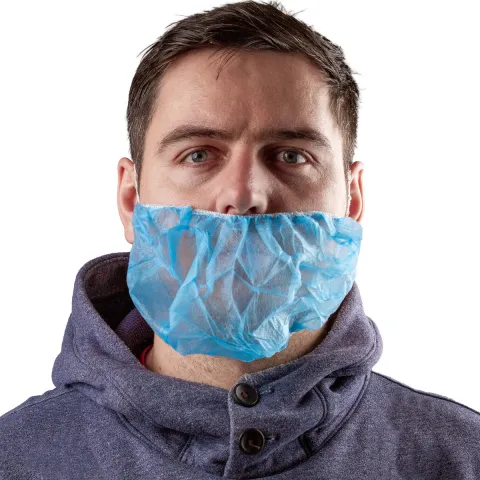
| Beard cover | PPSB with elastic, 45 cm stretched | Food industry, hospitality |
Caps, surgical hoods and beard covers
PRIMA Disposable Surgical Bouffant Caps, Blue/White, Quality PPSB, with Soft Elastic, Women's Comfort Fit, for Pharmacies and Hospitals, 100 pcs
Promoted i
PRIMA Disposable Surgical Bouffant Caps, Blue/White, Quality PPSB, with Soft Elastic, Women's Comfort Fit, for Pharmacies and Hospitals, 100 pcs
in stock
2 variante
1209Lei
excl. VAT: 9,99 Lei
PRIMA Disposable Medical Surgeon Cap, Blue, Lightweight, with Adjustable Ties, for Medical and Surgical Protection, 100 pcs
PRIMA Disposable Medical Surgeon Cap, Blue, Lightweight, with Adjustable Ties, for Medical and Surgical Protection, 100 pcs
in stock
5202Lei
excl. VAT: 42,99 Lei
PRIMA Disposable Surgical Hood Cap, Blue, Breathable PPSB, Adjustable Ties, Secure Fit, Advanced Protection, 100 pcs
PRIMA Disposable Surgical Hood Cap, Blue, Breathable PPSB, Adjustable Ties, Secure Fit, Advanced Protection, 100 pcs
in stock
9317Lei
excl. VAT: 77,00 Lei
Shoe covers and boot covers
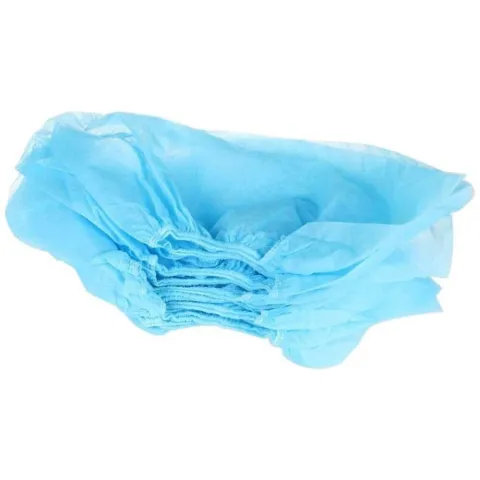
- PPSB non-woven shoe covers, 26 × 26 cm, packs of 100; slipped over footwear and thrown away after use.
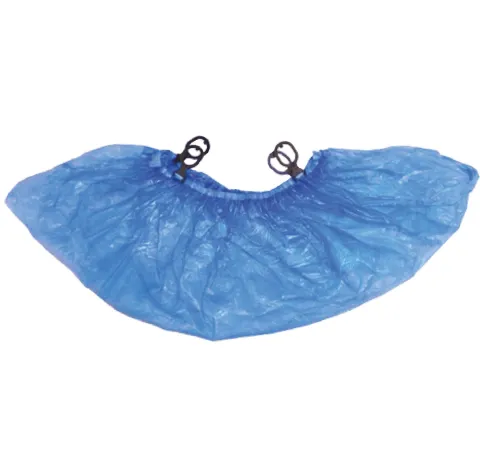
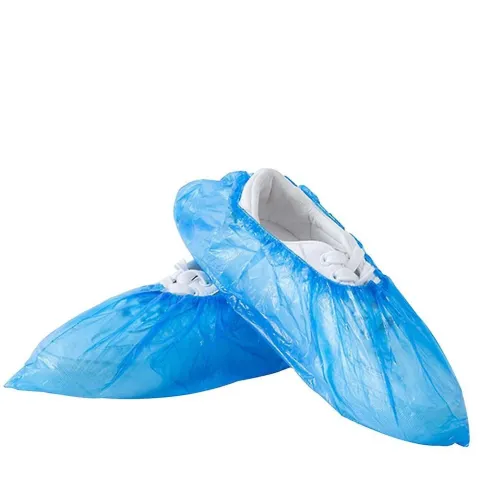
- Polyethylene shoe covers for dispensers, with 4 attachment rings, packs of 100, and the set of 1,000 elasticated HDPE shoe covers joined in a strip, for a dispenser or torn off by hand.
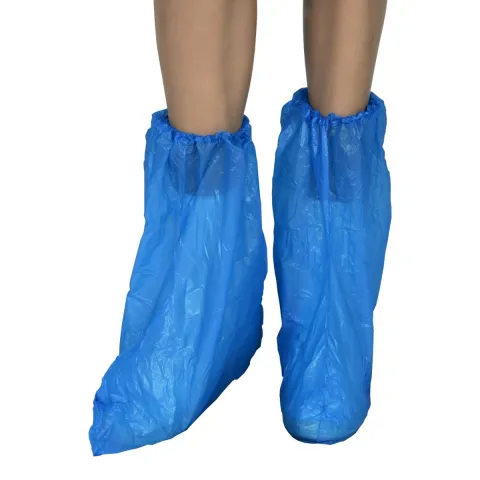
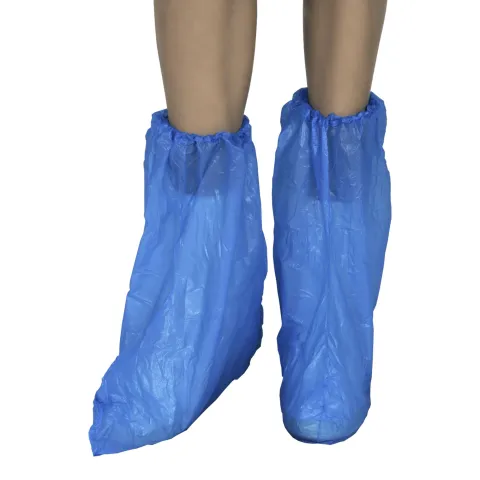
- Boot covers in LDPE, 40 × 50 cm, packs of 100, and in CPE, 40 × 40 cm, packs of 50.
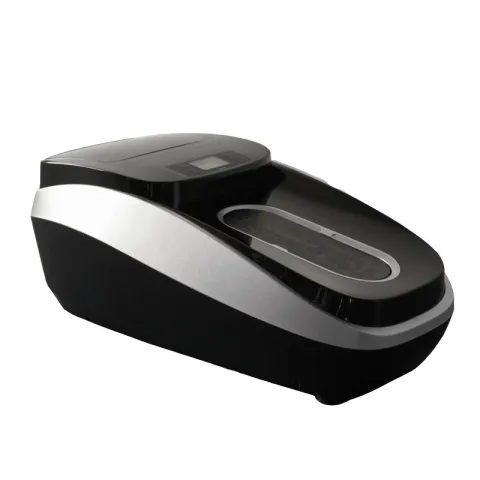
- The Dr. Mayer automatic machine wraps the sole of the footwear in PVC film in 2–3 seconds; one roll is enough for about 1,000 covers, and the machine measures 80 × 44.5 × 33 cm and weighs 24 kg.
Shoe covers, boot covers and an automatic machine
What to choose, by setting
The table starts from the uses listed in the product sheets. What staff wear for a given procedure is set by the facility's protocol.
| Setting | From the catalog | Keep in mind |
|---|
| Visitors, clean areas | PPSB visitor gown, shoe covers, elastic cap | non-sterile, single-use |
| Laboratory | PPSB lab gown or SMMS gown with zipper, goggles, gloves | SMMS: impermeable to liquids, per its sheet |
| Dental practice, minor surgery | Individually packed sterile gown, surgical cap, mask, face shield | check the packaging first |
| Operating room | Sterile gown, doctor-style or hood-style cap, shoe covers | the EN 13795 level your protocol requires |
| Beauty salon | Single-use cap, shoe covers, apron | one per client |
| Food industry, hospitality | Bouffant cap with visor, beard cover, sleeve covers, visitor gown | hair and beard covered |
| Veterinary practice, work with water | 100 × 150 cm LDPE apron, boot covers | impermeable |
In salons, the hygiene rules approved by Romanian Ministry of Health Order No. 1648/2024 require single-use materials, instruments, accessories and equipment to be used for one client only (Art. 32(3)) and removed immediately after use (Art. 32(4)). Reusable textile towels and sheets are washed in automatic machines with a thermal disinfection cycle or by a specialized company (Art. 60).
Putting on and taking off, in brief
- Hand hygiene firstTake the equipment out of its packaging only when you are about to use it.
- The right size for each personA gown that is too short leaves the arms exposed, one that is too large catches on things. The dimensions by size are in the product sheets, for example 120 × 150 cm for the size M sterile gown.
- The order in your protocolThe order in which you put on and take off the gown, cap, mask, eye protection and gloves is set by your workplace procedure.
- Take the equipment off without touching the outer sideRoll the gown or apron with the exposed side inward, throw it away immediately in the designated container, then clean your hands. In salons, the rules explicitly require this after removing protective gloves as well (Art. 31).
Common mistakes
- Using a visitor gown for procedures with liquidsThe sheet of the PPSB gown does not describe it as impermeable; for liquids, choose an impermeable gown or a polyethylene apron.
- Taking the “dust” coverall for infective agentsFor that, look for EN 14126 and a type with the “-B” suffix on the label.
- Reusing single-use equipmentThe scrub suit's sheet warns that reuse can cause cross-contamination, and in salons the rules require one client per product.
- Not checking the performance levelFor a surgical gown, your protocol may require the standard or the high level of EN 13795; look for it on the label.
Single-use gowns, coveralls, caps and shoe covers
Visitor, lab and sterile gowns, coveralls, aprons, caps, surgical hoods, shoe covers and boot covers, in the Prima Shop catalog. Orders placed by 2:00 p.m. usually ship the same day, and delivery takes 1–2 business days.
Frequently asked questions
What is the difference between a visitor gown and a sterile surgical gown?
A PPSB visitor gown is non-sterile and keeps clothes clean; its sheet does not describe it as impermeable. A sterile surgical gown is individually packed and made for the operating room and minor surgery; the 40 g/m² SMS gown in the catalog is described as impermeable.
What do SMS or SMMS mean on a gown?
They are multi-layer polypropylene non-wovens. In the catalog, the SMMS gown with zipper is described as impermeable to liquids and permeable to air, and the 40 g/m² sterile SMS gown as impermeable, with ultrasonically welded seams.
What does type 4-B mean on a coverall?
Type 4 shows protection against sprayed liquids, tested under EN 14605. The “-B” suffix shows that the clothing is also certified against infective agents under EN 14126, which has four tests: blood-borne viruses, wet bacterial penetration, aerosols and contaminated particles.
What does the performance level of a surgical gown mean?
EN 13795-1 sets two levels, standard and high. In the critical area, meaning the front and the sleeves, resistance to liquid penetration must be at least 20 cm H₂O at the standard level and at least 100 cm H₂O at the high level. The manufacturer declares the level.
Which shoe covers should I choose: non-woven or polyethylene?
The catalog has 26 × 26 cm PPSB non-woven shoe covers, polyethylene shoe covers with 4 rings for dispensers, a set of 1,000 HDPE shoe covers joined in a strip and LDPE or CPE boot covers. For practices, clinics, laboratories and salons there is also the Dr. Mayer automatic machine, which wraps the sole in PVC film.
Can I reuse a single-use gown or cap?
No. Single-use products are thrown away after one use. The sheet of the disposable scrub suit in the catalog warns that reuse can cause cross-contamination, and in salons the hygiene rules require them to be used for one client only.