A medical mask and an FFP2 respirator can look almost the same, but they are different products, tested to different standards and made for different jobs. A medical mask holds back what you breathe out and stops splashes toward your nose and mouth; a respirator filters the air you breathe in and has to seal against your face. This guide explains what Types I, II and IIR mean under EN 14683, what the FFP1, FFP2 and FFP3 classes mean under EN 149, what to read on the box and which mistakes cancel out the protection.
3medical mask typesI, II and IIR under EN 14683; Type IIR adds splash resistance.
16 kPasplash testthe pressure at which a Type IIR mask must not let the test fluid through.
3respirator classesFFP1, FFP2 and FFP3 under EN 149, in increasing order of filtration efficiency.
Medical mask and respirator: two different products
The difference starts with who is being protected. A medical mask fits loosely over the face and is designed to hold back the droplets and aerosols the wearer breathes out, so they do not reach the patient or the work field, and to stop splashes aimed at the wearer's nose and mouth. A respirator, called a filtering half mask in the standard, seals against the face and filters the inhaled air to protect the person wearing it.
The difference also shows in the regulations. The European Agency for Safety and Health at Work (EU-OSHA) notes that surgical masks are not personal protective equipment, because they do not protect the wearer; they fall under the EU Medical Device Regulation 2017/745, and their compliance is shown by the CE mark. Respirators are classified under EN 149 as FFP1, FFP2 and FFP3 and are respiratory protective equipment.
Medical device
Medical mask
- Standard EN 14683, Types I, II and IIR
- Holds back what the wearer breathes out and stops splashes
- Fits loosely over the face
- Not designed to protect the wearer
vs
Protective equipment
FFP respirator
- Standard EN 149, classes FFP1, FFP2 and FFP3
- Filters the air the wearer breathes in
- Has to seal against the face
- Marked NR (one shift) or R (reusable)
IIREN 14683
Medical masks: Type I, II and IIR
EN 14683 sorts medical masks into three types based on three tests. Bacterial filtration efficiency (BFE) shows what percentage of a bacterial aerosol, with particles averaging 3 µm, the material holds back. Differential pressure measures how hard it is for air to pass through the mask: a low value means easier breathing. Splash resistance checks whether a fluid that mimics blood gets through the mask when it is sprayed at it under pressure; this test is required only for Type IIR.
| Requirement | Type I | Type II | Type IIR |
|---|
| Bacterial filtration efficiency | ≥ 95% | ≥ 98% | ≥ 98% |
| Differential pressure | < 40 Pa/cm² | < 40 Pa/cm² | < 60 Pa/cm² |
| Splash resistance | not required | not required | ≥ 16 kPa |
| Intended for | patients and the public, especially in epidemics | staff during surgical and other procedures | as Type II, plus splash protection |
Source of the values and intended uses: Jones and Rempel, review of mask and respirator standards published in the Annals of Work Exposures and Health, 2021.
In short, Type II filters more than Type I, and Type IIR has the same filtration as Type II plus splash resistance. The standard allows Type IIR a slightly higher differential pressure, meaning a mask that is somewhat harder to breathe through.
Medical masks in the catalog
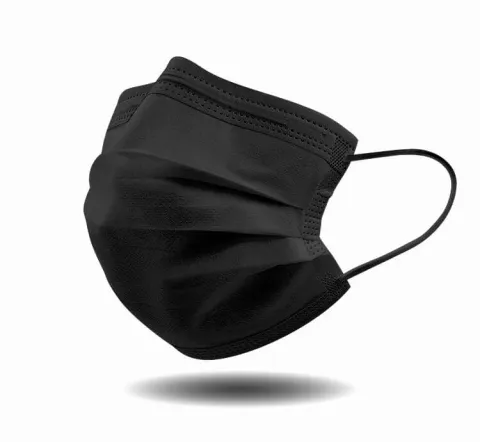
- The 3-ply PRIMA medical mask is listed in the catalog as a Type IIR surgical mask, with two layers of polypropylene non-woven and a meltblown filter layer, and ear loops. Its product sheet states compliance with EN 14683, 2014 edition, and classification as a non-sterile Class I medical device. It comes in packs of 50, in several colors.
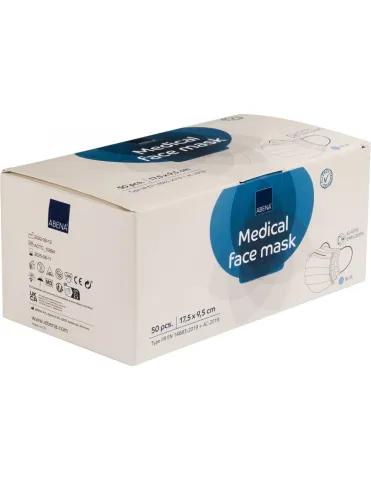
- The Abena IIR mask has 3 plies and measures 17.5 × 9.5 cm. Its sheet declares it compliant with EN 14683:2019, with a fluid resistance of 120 mmHg, which is about 16 kPa, the Type IIR threshold. It is latex-free and comes in packs of 50.
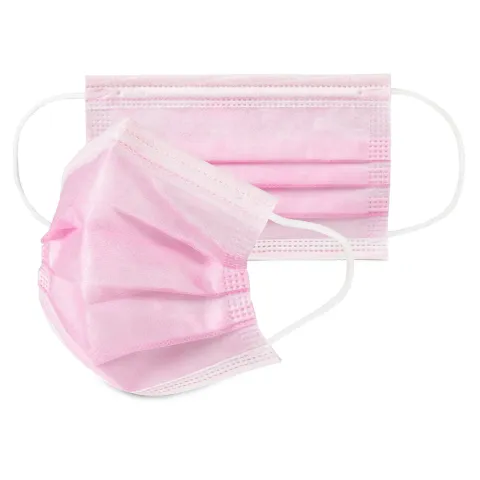
- The children's medical mask has 3 plies and 3 pleats, ear loops, no latex and no glass fiber, in white, blue or pink, in packs of 50. Its sheet does not state an EN 14683 type; if you need a specific type, check the box.
Type IIR medical masks and children's masks
FFPEN 149
FFP1, FFP2 and FFP3 respirators
EN 149 sorts respirators into three classes, in increasing order of filtration efficiency. Two values count for certification: the minimum filter efficiency and the total inward leakage, meaning the unfiltered air that gets inside around the edges and through the material. Leakage is measured on 10 people wearing the respirator, each performing 5 exercises.
| Class | Minimum filter efficiency | Total inward leakage, mean per person |
|---|
| FFP1 | ≥ 80% | ≤ 22% |
| FFP2 | ≥ 94% | ≤ 8% |
| FFP3 | ≥ 99% | < 2% |
The leakage limit must be met by at least 8 of the 10 people tested (Jones and Rempel, 2021, based on EN 149 and EN 13274-7).
The filtration test for respirators uses a sodium chloride aerosol with far finer particles than the bacterial aerosol in the mask test: a median diameter of 0.06–0.1 µm, compared with an average of 3 µm. That is why a medical mask with 98% bacterial filtration is not the equivalent of an FFP2. The figures come from different tests, and for a medical mask nobody measures how much air gets in around it. On the other hand, respirators are not tested for fluid resistance: in the European Union, the fluid penetration test is not part of FFP1, FFP2 and FFP3 certification.
The Prima Shop catalog currently has medical masks, face shields and safety goggles; FFP respirators are not listed at the moment. If you buy them elsewhere, read their markings as shown in the section below.
What each product stops
The table links the goal to the product. Which mask you wear for a given patient or procedure is set by your facility's protocol and the workplace risk assessment.
| What you want to stop | Product | Keep in mind |
|---|
| What you breathe out, toward the patient or the work field | Type II or IIR medical mask | medical device |
| Splashes of blood or other fluids as well | Type IIR mask, plus a face shield or goggles | the mask does not cover the eyes |
| Spread from patients or visitors during an epidemic | Medical mask; Type I is intended for patients and the public | staff wear Type II or IIR |
| Particles in the air you breathe in | FFP respirator, with the class chosen by risk assessment | must seal against the face |
| Vapors and dust when working with chemicals | Industrial half mask with filter cartridges | not a medical mask |
What to read on the box
- On a medical mask: the standard EN 14683 and the type, I, II or IIR. The number of plies does not tell you the type: the type comes from the test results.
- On a respirator: EN 149, the class (FFP1, FFP2 or FFP3) and the letters NR or R. NR means the respirator is made for no more than one shift; R means it can be used for more than one shift, following the manufacturer's instructions.
- The CE mark, which shows the medical mask's compliance as a medical device.
- Sterile or non-sterile. The PRIMA mask in the catalog, for example, is non-sterile.
- The lot number and expiry date, so you can trace a lot and use the older stock first.
How to wear the mask and check the fit
- Hand hygiene firstPut the mask on with clean hands and touch it only by the ear loops or straps.
- Cover your nose, mouth and chinShape the flexible nose strip so the mask sits without large gaps beside the nose and on the cheeks.
- With a respirator, the seal makes the differenceLeakage around the edges is measured separately in the EN 149 test, and studies show that one model does not fit everyone. Follow the manufacturer's instructions for positioning and for checking the seal.
- Do not touch the front of the mask while wearing itIf you do, clean your hands.
- Remove it by the ear loops and throw it awayA single-use mask does not go back into a pocket or under your chin. Discard it in the container your facility designates and clean your hands.
For the gloves you wear along with the mask, read the guide to latex, nitrile and vinyl examination gloves.
Face shields and goggles: protection the mask does not give
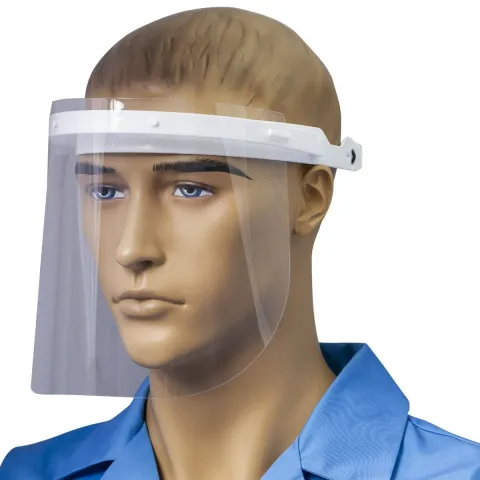
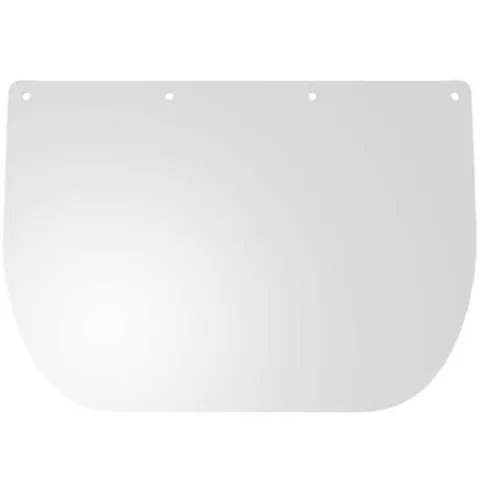
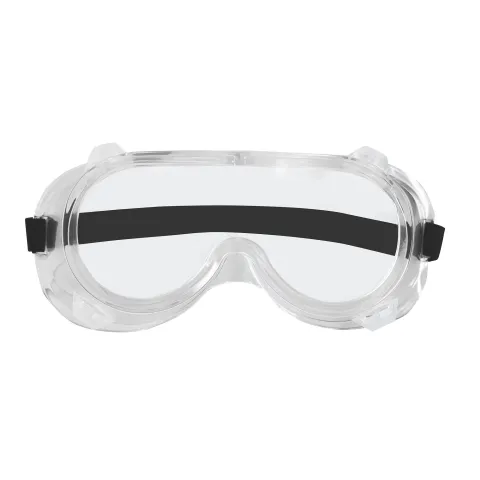
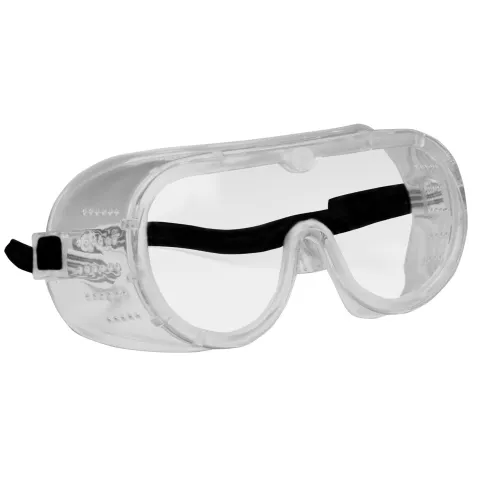
A medical mask covers the nose and mouth, not the eyes. Where splashes can occur, eye protection is added separately. The PRIMA face shield in the catalog has a reusable polypropylene frame and 10 anti-fog screens of 28 × 19 cm, with an elastic band and one size fits all; its sheet recommends it for dental practices and laboratories, and replacement screens are also sold separately, in packs of 10. The polycarbonate goggle-style safety glasses come with indirect venting, which reduces fogging, or direct venting through openings at the top and sides; both models are held by an elastic band.
Face shields and safety goggles
A reusable half mask is something elseThe DUO half mask in the catalog is industrial equipment: its sheet describes it for chemicals, gases, solvents, dust and spray painting; it is used only with Spasciani 2000 series filter cartridges, sold separately, and the sheet cites the EN 140 standard. It does not replace a medical mask.
Common mistakes
- Wearing the mask below your noseThe mask only holds back what you breathe out if it covers both your nose and your mouth.
- Relying on a medical mask to protect you from the surrounding airA medical mask is not protective equipment for the wearer; respirators tested under EN 149 exist for that.
- Comparing a mask's 98% with an FFP2's 94%The values come from different tests, with particles of different sizes, and leakage around a mask's edges is not measured.
- Pulling the mask down to your chin and wearing it againThe outer side of the mask has been exposed; a single-use mask is thrown away once you take it off.
- Using an NR respirator over several shiftsThe NR marking means one shift at most.
- Forgetting your eyesIn procedures with splashes, a Type IIR mask protects the nose and mouth; the eyes need a face shield or goggles.
Medical masks, face shields and safety goggles
Type IIR surgical masks, children's masks, face shields with replacement screens and goggle-style safety glasses, in the Prima Shop catalog. Orders placed by 2:00 p.m. usually ship the same day, and delivery takes 1–2 business days.
Frequently asked questions
What is the difference between a medical mask and an FFP2 respirator?
A medical mask, tested under EN 14683, is a medical device: it holds back what the wearer breathes out and stops splashes, but it is not designed to protect the wearer. An FFP2 respirator, tested under EN 149, is respiratory protective equipment: it filters the inhaled air and has to seal against the face.
What does IIR mean on a medical mask?
Type IIR has a bacterial filtration efficiency of at least 98%, like Type II, and also resists splashing with the test fluid at no less than 16 kPa. It is the only medical mask type for which EN 14683 requires the splash test.
Why doesn't a Type IIR mask that filters 98% replace an FFP2 rated at 94%?
The figures come from different tests. A medical mask is tested with a bacterial aerosol whose particles average 3 µm, while a respirator is tested with a sodium chloride aerosol with a median diameter of 0.06–0.1 µm. For a respirator, the air leaking in around the edges is also measured; for a medical mask, it is not.
What do NR and R mean on a respirator?
NR means the respirator is made for no more than one shift. R means it can be used for more than one shift, following the manufacturer's instructions.
Which FFP class do I need?
The class is set by the workplace risk assessment and your facility's protocol. The difference between classes: the minimum filter efficiency is 80% for FFP1, 94% for FFP2 and 99% for FFP3, and the allowed total inward leakage is no more than 22%, 8% and under 2%.
Does a medical mask protect my eyes too?
No. The mask covers the nose and mouth. Where splashes can occur, add a face shield or safety goggles; the catalog has a face shield with 10 anti-fog screens of 28 × 19 cm and goggle-style glasses with direct or indirect venting.