ECG paper is chosen by device, not by price or by how it looks. Two rolls can look identical yet differ by two millimeters in width, and an electrocardiograph built for paper pads will not take a roll. This guide shows what to check before you order, how to read the dimensions on the pack, what the grid means, which paper in the catalog is listed for which device and how to store tracings so they stay readable.
25 mm/sstandard speedat which one 1 mm small square on the paper means 0.04 seconds.
10 mmper 1 mVthe standard gain: 1 mV moves the trace up by 1 cm.
≈ 5 yearsreadabilityhow long tracings on properly stored thermal paper stayed readable, according to a Philips note.
Width × length
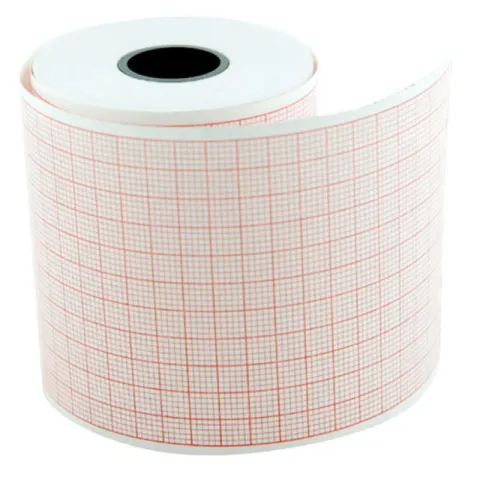
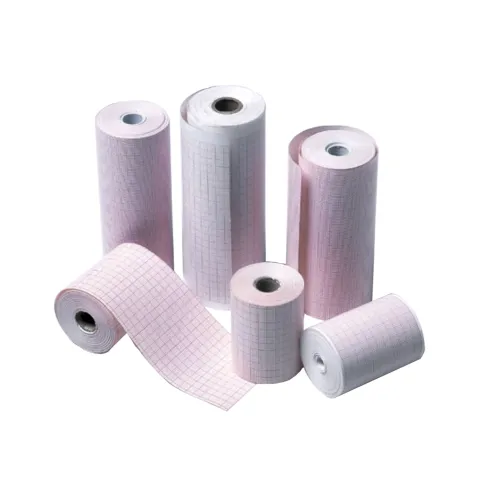
Roll
- Described by its width in millimeters and length in meters, for example 58 mm × 25 m
- In the catalog, from 50 to 215 mm wide
- PRIMA rolls are sold 5 to a pack
vs
Sheet × number of sheets
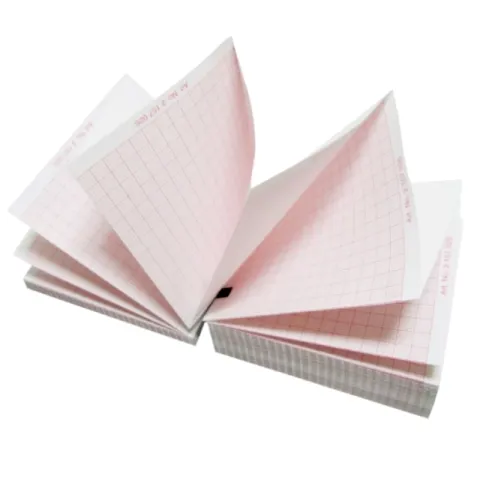
Pad of sheets
- Described by the sheet size and the number of sheets, for example 210 × 280 mm, 200 sheets
- Listed in the catalog as a “pad” (top), with 100–400 sheets
- The large 210 mm format is close to an A4 sheet
You do not choose the format: the device does. The manual or the paper compartment shows whether the electrocardiograph works with a roll or with a pad of sheets.
25mm/s, the standard speed
The grid: time across, amplitude up
ECG paper is divided into large squares and small squares. Time is recorded horizontally, and the direction and amplitude of the electrical signal vertically. The product sheets of the ECG papers in the catalog generally specify a red grid, and the sheets of several PRIMA pads specify thermal paper of 55–70 g/m², 60–75 µm thick, white and non-sterile.
| Distance on the paper | Horizontally, at 25 mm/s | Vertically, at 10 mm/mV |
|---|
| 1 mm, one small square | 0.04 s | 0.1 mV |
| 5 mm, one large square | 0.2 s | 0.5 mV |
| 10 mm, two large squares | 0.4 s | 1 mV |
| 25 mm, five large squares | 1 s | 2.5 mV |
Check speed and gainThe values in the table only hold if the device records at the standard speed of 25 mm/s and the standard gain of 1 mV per 1 cm. Before reading a tracing, check that the speed and gain were the standard ones.
How to find the right paper
- The exact device modelManufacturer and model, from the electrocardiograph label, the manual or the paper pack you have been using.
- The formatRoll or pad of sheets; the device only takes the format it was built for.
- The dimensionsFor a roll, the width in millimeters and the length in meters; for a pad, the sheet size and the number of sheets.
- Compatibility on the product sheetCompare your device model with the list on the product sheet. The tables below gather the ones in the catalog.
- LoadingWith the first roll or pad, load the paper exactly as the device manual shows: the unwinding direction and the printing side.
Rolls in the catalog, by device
| Width × length | Devices listed on the product sheet | Paper |
|---|
| 50 mm × 20 m | Heaco 100G, Burdick EK-10, Hellige EK 31/T 20, Siemens Cardiostat-1, Dixion EKG 1001, Bosch 11K/101K and Fukuda and Nihon Kohden models | 50 mm × 20 m |
| 50 mm × 30 m | Cardioline Delta 1 | 50 mm × 30 m |
| 55 mm × 20 m | Hellige EK 41/51 | 55 mm × 20 m |
| 58 mm × 25 m | Aspel Ascard B5-ECO | 58 mm × 25 m |
| 60 mm × 30 m | Cardioline, Aspel | 60 mm × 30 m |
| 63 mm × 30 m | Nihon Kohden | 63 mm × 30 m |
| 80 mm × 25 m | BTL, Aspel | 80 mm × 25 m |
| 110 mm × 20 m | Cardiette Cardiorapid Handy | 110 mm × 20 m |
| 110 mm × 30 m | Bioset 3500, Hellige EK 26/27T, Siemens Cardiostat-3T, Trismed Cardipia 400 | 110 mm × 30 m |
| 112 mm × 25 m | Aspel, Bionics, Fukuda Cardisuny, Kalamed | 112 mm × 25 m |
| 120 mm × 20 m | Cardioline, Electronica Trentina | 120 mm × 20 m |
| 120 mm × 30 m | Cardiorapid K33M | 120 mm × 30 m |
| 130 mm × 50 m | Schiller | 130 mm × 50 m |
| 145 mm × 30 m | Fukuda Denshi OP358TE | 145 mm × 30 m |
| 210 mm × 25 m | Cardioline, Aspel | 210 mm × 25 m |
| 210 mm × 30 m | BTL-08 LT | 210 mm × 30 m |
| 215 mm × 30 m | Bionet ECG 2000 | 215 mm × 30 m |
Narrow ECG rolls, 50–80 mm
PRIMA ECG/EKG Paper, 50mmx30m (Cardioline, Fukuda, Siemens, Hellige, Medicor, etc.), 5 Rolls
PRIMA ECG/EKG Paper, 50mmx30m (Cardioline, Fukuda, Siemens, Hellige, Medicor, etc.), 5 Rolls
in stock
2177Lei
excl. VAT: 17,99 Lei
Wide ECG rolls, 110–215 mm
PRIMA ECG/EKG Paper, 112mm x 25m (Aspel, Bionics, BTL, Fukuda Cardisuny, Kalamed), 5 Rolls
PRIMA ECG/EKG Paper, 112mm x 25m (Aspel, Bionics, BTL, Fukuda Cardisuny, Kalamed), 5 Rolls
in stock
5046Lei
excl. VAT: 41,70 Lei
ECG/EKG Paper, PRIMA, 210mm x 30m (BioSet, BTL, Cardioline, Edan, Fukuda Cardisuny, Hormann Medizin, Kenz, medical ECONET), 5 Rolls
ECG/EKG Paper, PRIMA, 210mm x 30m (BioSet, BTL, Cardioline, Edan, Fukuda Cardisuny, Hormann Medizin, Kenz, medical ECONET), 5 Rolls
in stock
11494Lei
excl. VAT: 94,99 Lei
Pads of sheets, by device
| Sheet × number of sheets | Devices listed on the product sheet | Paper |
|---|
| 50 × 100 mm, 300 sheets | Nihon Kohden, paper type FQW50-3-100 | 50 × 100 mm |
| 70 × 100 mm, 200 sheets | Schiller AT-3 | 70 × 100 mm |
| 80 × 70 mm, 315 sheets | Esaote P8000 | 80 × 70 mm |
| 80 × 90 mm, 280 sheets | GE/Hellige MAC 400 | 80 × 90 mm |
| 90 × 70 mm, 400 sheets | Esaote Biomedica P-80 | 90 × 70 mm |
| 90 × 90 mm, 400 sheets | Schiller AT-1 | 90 × 90 mm |
| 110 × 100 mm, 180 sheets | Bioset 3600/3700 | 110 × 100 mm |
| 110 × 140 mm, 140 sheets | Fukuda FX-7202 | 110 × 140 mm |
| 110 × 140 mm, 143 sheets | Nihon Kohden, paper type FQW110-2-140 | 110 × 140 mm |
| 112 × 90 mm, 150 sheets | Cadence MFM-2 | 112 × 90 mm |
| 112 × 100 mm, 300 sheets | Cardioline Delta 3 Plus | 112 × 100 mm |
| 210 × 140 mm, 250 sheets | Schiller AT-10, Kenz Cardico 1211 | 210 × 140 mm |
| 210 × 280 mm, 200 sheets | Welch Allyn CP100/CP200 | 210 × 280 mm |
| 210 × 280 mm, 300 sheets | Marquette MAC 5000, Case 12/15 | 210 × 280 mm |
| 210 × 295 mm, 150 sheets | GE/Hellige MAC 1200 | 210 × 295 mm |
| 210 × 300 mm, 100 sheets | Philips/Agilent PageWriter Trim I, II, III | 210 × 300 mm |
The same sheet size can come with a different number of sheets depending on the device: at 210 × 280 mm, the Welch Allyn pad has 200 sheets and the Marquette pad 300. When you order, check the model, not just the size.
ECG paper pads for the devices in the table
Thermal papers that are not for ECG
Video printer paper ultrasound110 mm × 18 m or 20 m rolls, standard, high density or glossy, for the Sony and Mitsubishi video printers that print medical images, for example at the ultrasound scanner. It has no ECG grid. You will find it under video printer paper.
Plain thermal paper monitors, spirometers57 mm × 25 m rolls, without a grid, for vital-signs monitors, spirometers, audiometers and other devices with a thermal printer. They are in the spirometry category.
How to store paper and tracings
The image on thermal paper degrades over time. An application note from Philips Medical Systems states that, when properly stored, tracings remained readable for about 5 years, and recommends:
Storing paper and tracings
- Cool and dry: no more than 40 °C and relative humidity below 80%.
- In manila folders or in sleeves made of polyester, polypropylene or acetate, not in PVC sleeves, which contain plasticizers.
- Away from solvent-based adhesives, such as adhesive tape and labels, from alcohols and from the solvents in some felt-tip markers.
- Out of sunlight and UV light, and away from hand creams and from ECG and ultrasound gels.
- Check archived originals once a year; for long-term storage, make a copy or scan the tracing.
Recording accessories
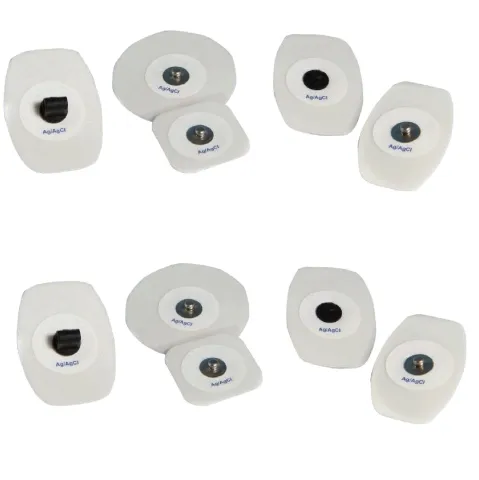
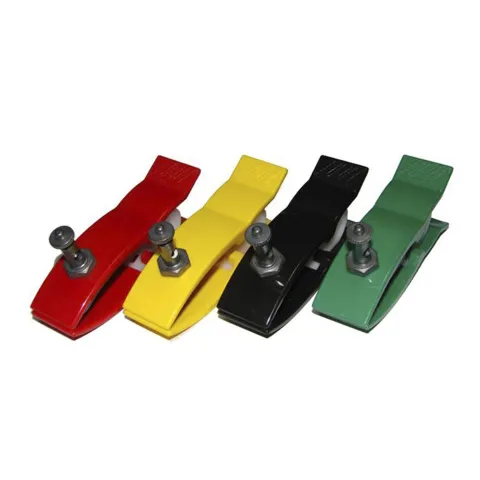
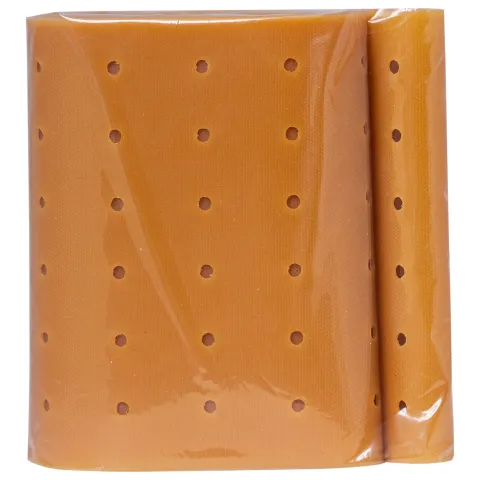
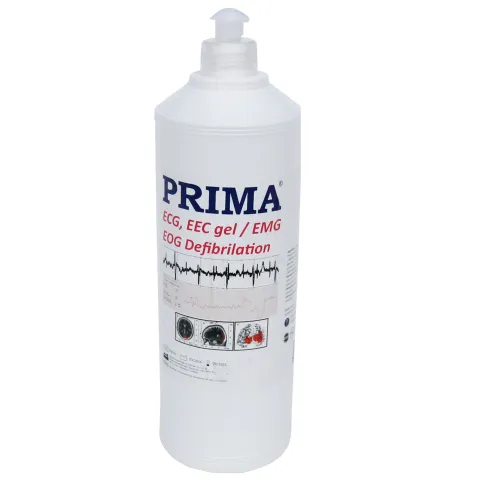
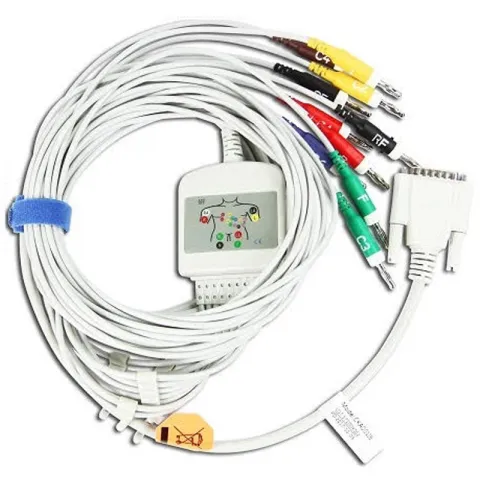
Besides paper, every recording needs electrodes and gel. The single-use silver chloride electrodes, 3.2 × 3.2 cm, come in packs of 50, and their product sheet says to apply them only to intact, clean skin. The reusable clamp electrodes, for adults (30 × 130 mm) and for children (20 × 85 mm), are used with conductive paste, according to their sheet, and the rubber chest strap, 150 × 10 cm, holds the precordial electrodes in place. They are all in the ECG electrodes and cables and ECG gel categories.
Electrodes, gel, chest strap and ECG cable
Common mistakes
- Ordering by an “approximate” width110 and 112 mm, or 58 and 60 mm, are papers for different devices. Check the exact width in the manual.
- Mixing up rolls and padsThe device takes one format only. Look at the paper compartment before you order.
- Loading video printer paper or plain thermal paper into the electrocardiographThey are made for other devices and have no ECG grid.
- Filing tracings in PVC sleeves or taping themPlasticizers and solvent-based adhesives damage the image. Use manila folders or polypropylene sleeves.
- Keeping spare paper near heat or in the sunStore paper below 40 °C and 80% humidity, away from strong light.
- Reading a tracing without checking speed and gainThe square values are only correct at 25 mm/s and 10 mm/mV.
ECG paper, electrodes, gel and cables
Rolls and pads for Aspel, BTL, Cardioline, Fukuda, GE/Hellige, Nihon Kohden, Philips, Schiller, Welch Allyn and other electrocardiographs, plus electrodes and gel, in the Prima Shop catalog. Orders placed by 2 p.m. usually ship the same day, and delivery takes 1–2 business days.
Frequently asked questions
How do I find out which ECG paper I need?
Start from the exact model of the electrocardiograph, from the device, the manual or the old pack. Then check the format, roll or pad of sheets, and the dimensions: width and length for a roll, sheet size and number of sheets for a pad. The product sheets in the catalog list the devices each paper is intended for.
What does one small square on ECG paper mean?
At the standard speed of 25 mm/s, a 1 mm small square means 0.04 seconds and a 5 mm large square 0.2 seconds. Vertically, at the standard gain, 10 mm corresponds to one millivolt.
Can I use a 112 mm roll instead of a 110 mm one?
Do not count on it. The width has to be exactly the one in the device manual; the catalog has both 110 mm and 112 mm rolls, listed for different devices.
Does video printer paper work in an electrocardiograph?
No. The 110 mm rolls for Sony and Mitsubishi video printers are made for printing medical images and have no ECG grid. Likewise, the plain 57 mm thermal paper is for vital-signs monitors, spirometers and audiometers.
How long do ECG tracings stay readable?
An application note from Philips Medical Systems states that tracings on properly stored thermal paper remained readable for about 5 years. For long-term archiving, make a copy or scan the tracing and check the originals once a year.
Where should I keep tracings so they do not fade?
At no more than 40 °C and below 80% relative humidity, in manila folders or in polyester, polypropylene or acetate sleeves. Avoid PVC sleeves, adhesive tape, solvents, sunlight, hand creams and ECG or ultrasound gels.