A clean instrument is not a sterile instrument, and a disinfected one is not either. The difference matters for everything that cuts, pierces or touches blood: burs, curettes, forceps, scissors, needles, manicure and pedicure tools. A reprocessing mistake cannot be seen on the instrument, which is why sterilization is checked with indicators and documented.
This guide is based on the Technical Rules approved by Romanian Minister of Health Order 1761/2021, as amended in 2022, and on the European standard for small autoclaves, EN 13060. It explains what each term means, which autoclave cycle you need, how to pack, how to read indicators and how long an instrument stays sterile.
10⁻⁶log reductionof microorganisms, including spores: this is how the rules define sterilization.
2 monthsin a pouchhow long sterility is maintained in paper or sealed paper-plastic pouches, unless the manufacturer states otherwise.
18–22 °Cin storagewith 35–70% relative humidity, in a dedicated, restricted area.
Cleaning, disinfection, sterilization: the official definitions
The rules define each stage (Article 1). Cleaning removes soil, meaning organic and inorganic matter, and is the mandatory preliminary step. Disinfection destroys most microorganisms on any surface, including skin, and has three levels. Sterilization means a 10⁻⁶ log reduction of microorganisms, including bacterial spores.
| Procedure | What it destroys | What it does not destroy |
|---|
| Low-level disinfection | Most vegetative bacteria, some fungi and some viruses | Mycobacteria, spores, non-enveloped viruses, molds |
| Intermediate-level disinfection | Vegetative bacteria, fungi, mycobacteria and viruses | Bacterial spores |
| High-level disinfection | Vegetative bacteria, fungi, viruses, mycobacteria and most spores | Some bacterial spores; cannot replace sterilization |
| Sterilization | Microorganisms, including bacterial spores, with a 10⁻⁶ log reduction | – |
What must be sterilized: critical, semi-critical, non-critical
The choice between disinfection and sterilization depends on the instrument's risk level (Articles 11–12):
Critical sterilizeThey come into contact with normally sterile tissue or penetrate it, including the vascular system. Examples in the rules: surgical instruments, critical dental instruments, needles and syringes, suture material, acupuncture needles.
Semi-critical at least high levelThey touch intact mucous membranes and do not penetrate the skin barrier. Examples: flexible endoscopes used only for imaging, ear syringe tips, oxygen masks.
Non-critical at least low levelThey touch only intact skin or rarely the patient. Examples: stethoscopes, blood pressure cuffs, electronic thermometers. They are cleaned and disinfected.
Dentistry separate guideDental instruments are classified according to a guide adopted by the Romanian College of Dentists and endorsed by the National Institute of Public Health.
And in a salon?The rules in Order 1761/2021 are written for public and private healthcare units. Their risk criterion is still useful to anyone who reprocesses instruments: cuticle nippers or a pedicure tool that can break the skin come into contact with blood. The exact requirements for authorizing a salon are set by the county public health directorate.
The reprocessing steps, in order
Reusable devices go through mandatory stages (Article 32), and everything to be sterilized is cleaned and disinfected first (Article 33).
- Pre-cleaning at the point of useRemove organic matter so it does not dry on the instrument, without saline or active chlorine solutions. It does not replace cleaning (Article 37).
- Manual or automated cleaningBy hand, following a written procedure, or in a washer-disinfector compliant with EN ISO 15883. Hard-to-reach areas are cleaned first by hand or, preferably, ultrasonically (Articles 34–35).
- Chemical or thermal disinfectionBefore any standardized sterilization process (Article 33).
- Visual inspection with a magnifying lampCheck that the instrument is clean and intact (Article 38).
- PackingThe instrument must be clean and dry (Article 39).
- SterilizationPressurized steam is the recommended method if the device can withstand it (Article 45).
- StorageIn a restricted area protected from insects and sunlight, at 18–22 °C and 35–70% humidity, on a first-in, first-out basis (Articles 51–52).
BEN 13060, B, N, S cycles
The autoclave: what class B, N or S means
The rules require sterilization only with authorized, approved equipment that complies with EN 13060 for small autoclaves and EN 285 for large ones (Article 47). EN 13060, currently in its 2025 edition, applies to steam sterilizers with a chamber under 60 liters and distinguishes three cycle types: B, N and S. The description below follows NHS Scotland guidance SHTM 01-05, Part B.
| Cycle | How air is removed | Which loads | Keep in mind |
|---|
| N | Passive displacement by steam, no vacuum | Solid, unwrapped instruments | not for lumens or pouches |
| B | A vacuum stage, with vacuum and pressure pulses | Hollow instruments, air-retentive loads and packaged instruments | wrapped and hollow |
| S | Active air removal | Only the loads specified by the autoclave manufacturer | strictly as instructed |
A class B autoclave may also offer N or S cycles. For example, the product sheet of the Euronda E8 autoclave in our catalog lists five type B cycles, type N and S cycles and the Vacuum, Helix and Bowie-Dick test cycles. Reference parameters for saturated steam are 121–124 °C with a holding time of at least 15 minutes, or 134–137 °C with at least 3 minutes (SHTM 01-05, Table 7.1); the program for each load type is given in the equipment manual, which the rules require you to follow (Article 49). Do not overload the autoclave: steam must reach every item (Article 50).
What about dry heat sterilizers?
A dry heat sterilizer (in Romania often called a "pupinel") works with hot air. In healthcare units, the rules allow dry heat sterilization, in an oven or dry heat sterilizer, only in microbiology laboratories (Article 44(2)), and dry heat disinfection likewise only there (Article 8). For a medical or dental practice this leaves, in practice, pressurized steam, the method recommended by the rules (Article 45); hydrogen peroxide sterilization is intended for heat-sensitive devices (Article 46). If a salon uses a dry heat sterilizer, it needs consumables made for dry heat: the autoclave pouches in our catalog are indicated by the manufacturer for steam and ethylene oxide, and there are separate pouches and indicator tapes for dry heat.
Packing: pouches, reels, containers
Packaging materials must comply with EN 868 and EN ISO 11607 and may be wrapping paper, sealed or self-sealing paper-film pouches, paper bags and rigid reusable containers with filters (Article 41). Double wrapping is allowed only if sterilization is done in fractionated-vacuum autoclaves (Article 41¹). Metal drums with a sliding band whose openings are opened and closed by hand are prohibited (Article 42). Every pack is marked with the date and the cycle number; the rules allow labels applied with a labeling gun, so that you do not puncture the pouch with a pen (Article 65).
| Packaging | How long it stays sterile | Condition |
|---|
| Paper and sealed paper-plastic pouches | Two months from sterilization | Intact packaging; a different period only if the manufacturer states it, under its conditions |
| Rigid reusable container with filter | The period stated by the manufacturer | The manufacturer's storage conditions |
| Any opened set | One use, for one patient | Keeping opened sterile sets is prohibited |
Source: Article 59 of the rules. A pack with damaged packaging is not used: the instruments go back to cleaning (Article 52).
Indicators: what each one shows and how often
| Indicator | What it checks | Where and how often |
|---|
| Physical | Pressure, time, temperature | Every cycle, recorded or printed and archived |
| Chemical type 1, process | Only exposure to the process | On every pack, pouch or container |
| Type 2, Bowie-Dick | Residual air and steam penetration, in pre-vacuum autoclaves | Daily if you sterilize porous material; at least weekly for autoclaves that sterilize instruments |
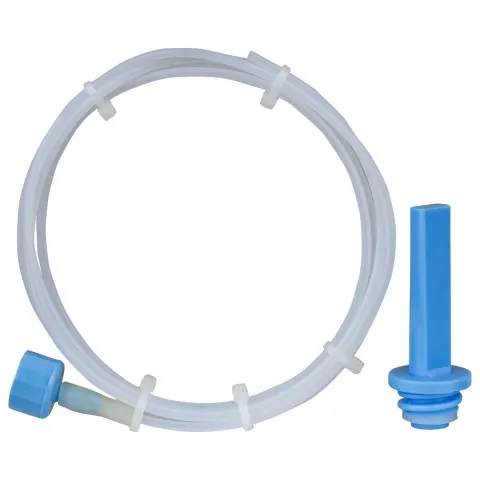
| Type 2, Helix | Steam penetration into hollow devices | Every load containing instruments with lumens |
| Type 5, integrator | All parameters of a steam or ethylene oxide cycle | In every pack, checked on opening |
| Biological (ISO 11138) | Destruction of test spores | Daily, in the first load, in sterilization departments and in autoclaves without automatic recording; in every load with implantable materials |
How to read the indicators
- A color change on the process indicator only identifies processed packs and does not guarantee correct sterilization.
- If the integrator has not changed color, the material is considered unsterilized and is not used.
- Results go into the sterilization log: date and device, contents and number of packs, load number, temperature and pressure, start and end time, indicator results and the signature of the person releasing the sterile material (Article 66).
Common mistakes
- Disinfecting critical instruments instead of sterilizing themHigh-level disinfection cannot substitute sterilization.
- Sterilizing dirty or wet instrumentsCleaning and disinfection come first, and the instrument must be dry when packed.
- Putting pouches into a class N autoclaveThe N cycle is designed for solid, unwrapped instruments.
- Using autoclave pouches in a dry heat sterilizerEach method has its own packaging and indicators.
- Relying only on the indicator tapeA process indicator shows that the pack went through a cycle, not that it is sterile.
- Reprocessing single-use productsThe rules explicitly prohibit it (Article 27).
Autoclaves, pouches, indicators and sterilization tests
Sterilization equipment, autoclave pouches and reels, chemical and biological indicators, Bowie-Dick and Helix tests, in the Prima Shop sterilization category.
Frequently asked questions
Can high-level disinfection replace sterilization?
No. The rules approved by Order 1761/2021 state explicitly that high-level disinfection cannot substitute sterilization. Critical instruments, which penetrate tissue or come into contact with blood, must be sterilized.
How long does an instrument packed in a pouch stay sterile?
Two months from sterilization for paper and sealed paper-plastic pouches, provided the packaging stays intact. A different period applies only if the packaging manufacturer specifies it, under its conditions (Article 59).
Which autoclave class do I need for instruments in pouches?
A vacuum autoclave of type B, or type S if the autoclave manufacturer explicitly lists packaged loads. The N cycle is designed only for solid, unwrapped instruments.
Can I use a dry heat sterilizer in a medical or dental practice?
In healthcare units, dry heat sterilization, in an oven or dry heat sterilizer, is allowed only in microbiology laboratories (Article 44(2)). The method recommended by the rules is pressurized steam, if the instrument can withstand it (Article 45).
How often should I run the Bowie-Dick test?
Daily if you sterilize porous material, and at least weekly for autoclaves that sterilize instruments, according to the annex on sterilization control as amended in 2022. The Helix test is run with every load containing instruments with lumens.
If the indicator tape on the pouch has changed color, is the instrument sterile?
Not necessarily. A process indicator only shows that the pack went through a cycle. Correct sterilization is confirmed by the integrator inside the pack, the cycle parameters and, periodically, biological indicators.