We use cookies necessary for the site to work and, with your consent, for: preferences, statistics, relevant offers and maps.
Your preferenceswe remember your choices from one visit to the next
Un site mai bunwe see what works and what doesn't, without identifying you
Oferte potriviteads for products you're interested in, not random ones
Google Mapslocations and pickup points shown on the map
You can change your choice anytime from “Cookie settings", in the page footer. Cookie policy
Cookie settings
You choose what we store on your device. Strictly necessary cookies always stay active. All the details are in Cookie policy.
Strict necesare
The site does not work without them: they keep you logged in, keep your cart and the steps of a booking, and protect your forms. They cannot be turned off.
Always active
Ce folosim (5)
Sesiunea · noi
Recognizes you from one page to the next: the cart, your account, the steps of a booking. prima-shop-session · 2 hours from the last action
Form protection · noi
Prevents a form from being submitted on your behalf from another website. XSRF-TOKEN · 2 ore
Stay signed in · noi
Only if you choose to stay signed in on this device. remember_web_…, remember_bookora_… · 400 de zile
Your cookie choice · noi
Remembers what you chose here, so we don't ask you on every page. acord_cookie · 6 luni
Anti-bot protection · Cloudflare (Turnstile)
Checks, without image puzzles, that contact forms are not submitted by bots. Cloudflare's own technical storage · how long the review takes · their policy
Preferences
They remember your choices between visits, so you don't have to make them again each time.
What we use
Product display · noi
Products are shown as a list or a grid, as you last chose. ps_view · 1 an
Statistics
They show us, without identifying you, how many visitors we have, which pages are searched for and where people get stuck, during an order or a booking — so we can improve the site. Without consent, Google receives only anonymous signals, without cookies.
What we use
Google Analytics 4 · Google Ireland Ltd.
Visit and sales statistics: pages viewed, products, cart, orders. _ga, _ga_* · up to 2 years · their policy
Marketing
They help us find out which ads bring in orders and show you, on other sites, products you viewed with us. Without consent, we do not measure ads on your device and you do not receive personalized ads from us.
What we use
Google Ads (conversions and remarketing) · Google Ireland Ltd.
Links an order to the ad you came from and builds remarketing lists with the products you viewed. When you order, your e-mail and phone number are sent to Google only in encrypted (hashed) form, for conversion matching. _gcl_au, _gcl_aw, cookie-uri Google (de exemplu IDE) · up to 13 months, set by Google · their policy
Maps
Maps are provided by Google Maps. When they load, Google receives your IP address and may set its own cookies. Without consent, we only show you a link to the map or the list of locations.
What we use
Google Maps · Google Ireland Ltd.
Shows the map: the business location on BookOra, and in the store the point chosen when entering the address and the easybox lockers at checkout. cookie-uri Google (de exemplu NID) · up to 6 months, set by Google · their policy
Quick Guide to Surface Disinfection in the Practice: What, With What and How Often
18 August 2026The Prima Shop Team9 min read
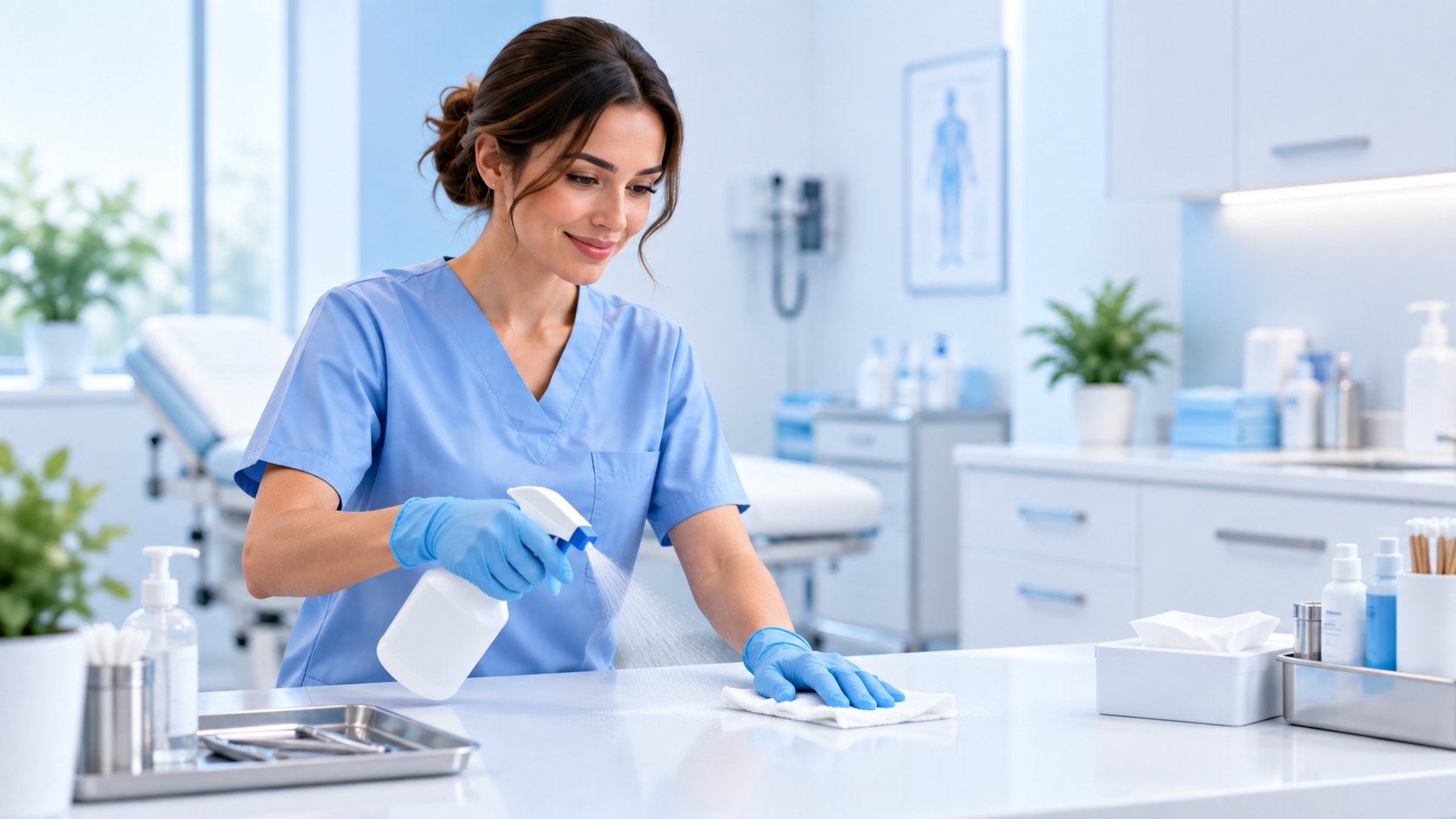
Realistically, you have a few minutes between two patients. In that time you have to throw away the disposables, change your gloves and make the dental unit, the countertop and the keyboard safe again for the next person. The difference between disinfection that actually works and a token gesture is not how expensive the product is, but three things: which surfaces you choose, what you treat them with and how long you let the disinfectant work.
The guide below is written for medical and dental practices, laboratories and salons that work with patients. You will find the areas sorted by risk level, a table of what to do and how often, the protocol between two patients, how to choose the type of disinfectant, and the products you can order directly from the Prima Shop catalog.
1. CleanDisinfectant does not penetrate visible soiling. Remove it first.
2. DisinfectWith the right product for the surface, in the amount stated on the label.
3. Let it actThe surface stays wet for the entire contact time specified by the manufacturer.
Practice areas by risk level
Not all surfaces need the same care. Those touched directly by the patient or with gloved hands during treatment are disinfected after every patient; the others, on a set schedule. Divide the practice into four areas and treat each area with its own cloth.
Patient area after every patient
The dental unit or examination couch, armrests, headrest, lamp handles, instrument tray, work surface, equipment touched during the consultation.
Staff area after every patient
Keyboard, mouse, touchscreen, phone, pens, handles of drawers and cabinets opened with gloves on.
Common area several times a day
Door handles, light switches, reception desk, payment terminal, chair armrests in the waiting room.
Floors and restrooms daily and as needed
Floors in the treatment room and waiting room, sinks, faucets, toilet bowls, waste bins.
What, when and with what: the table to put on the wall
Surface
How often
With what
Dental unit, couch, lamp, tray, countertop
after every patient
Rapid ready-to-use disinfectant (spray or wipes)
Keyboard, mouse, phone, screens
after every patient
Disinfectant wipes or spray applied to a cloth, never directly on the equipment
Alcohol-free disinfectant compatible with the material
Door handles, switches, reception
several times a day
Wipes or ready-to-use disinfectant
Floors
daily, at the end of the day
Concentrated detergent-disinfectant, diluted according to the label
Restrooms
daily and as needed
Chlorine-releasing tablets or detergent-disinfectant
General cleaning (walls, furniture, air)
periodically, according to plan
Detergent-disinfectant and, optionally, fogging
The frequencies above are guidelines. Each facility sets its exact cleaning and disinfection plan in line with the technical regulations in force for healthcare facilities (Ministry of Health Order no. 1761/2021) and the instructions on each product's label.
The protocol between two patients, step by step
Hand hygieneRemove the used gloves, disinfect your hands by hand rubbing and put on a new pair.
Throw away the disposablesCovers, gauze swabs, cups and used wipes go into the appropriate waste container.
Remove visible soilingIf there are traces of blood, saliva or other fluids on the surface, wipe them off first. A disinfectant applied over dirt doesn't do its job.
Apply the disinfectantSpray it onto the surface or onto a cloth, or use a pre-impregnated wipe. On keyboards and equipment, only on a cloth or wipe.
Wait for the contact timeThe surface must stay wet for the entire time stated on the label. Don't wipe it off right away "so it dries."
Let it dry and call the next patientIf the product doesn't require rinsing, there's nothing else to do.
What to disinfect with: how to choose the type of product
For surfaces, PT2 biocidal products are used (surface disinfectants, not applied to skin); for hands, PT1 products. On the label or in the technical data sheet you will find the spectrum of activity (bactericidal, yeasticidal, fungicidal, virucidal, mycobactericidal, sporicidal), the standards it was tested against — for example EN 14476 for virucidal efficacy —, the working concentration and the contact time. Choose according to the surface and the pace you work at.
1. Rapid alcohol-based disinfectants for small surfaces
They are the natural choice between patients: applied by spraying, they dry quickly and leave no residue. Use them on surfaces that tolerate alcohol, not on faux leather, Plexiglas or soft PVC.
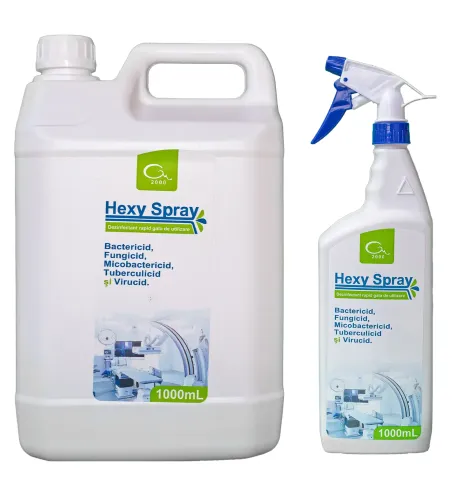
HEXY Spray combines ethanol, isopropanol and chlorhexidine; it is sprayed on directly, left to dry for a few minutes and requires no rinsing.
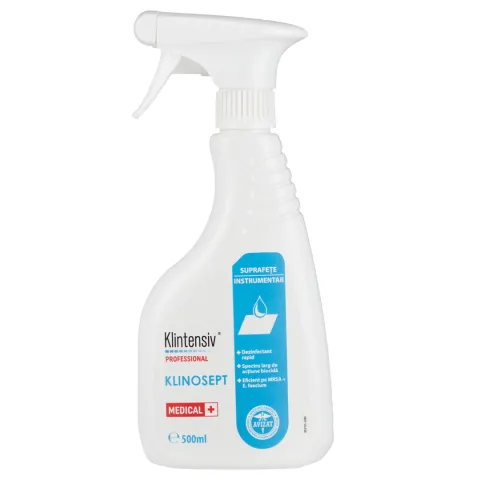
Klinosept contains 85% ethanol and has a bactericidal, fungicidal, yeasticidal and virucidal spectrum, with virucidal efficacy tested according to EN 14476.
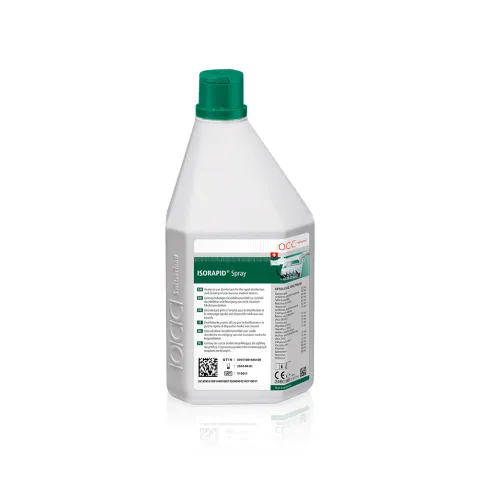
ISORAPID Spray has an alcohol content below 50% and is designed for dental unit surfaces, treatment chairs and instrument trays.
Isorapid Spray Disinfectant for Surfaces and Instruments
(0)
in stock 3 variante
7259Lei
excl. VAT: 59,99 Lei
2. Ready to use, no rinsing, also for sensitive materials
For larger surfaces or materials that don't tolerate alcohol, choose a ready-to-use disinfectant that cleans and disinfects in a single step.
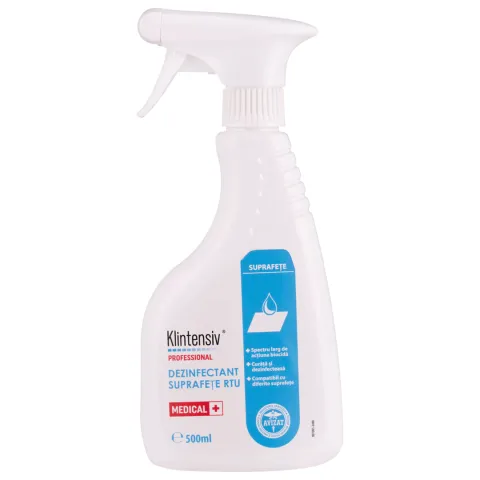
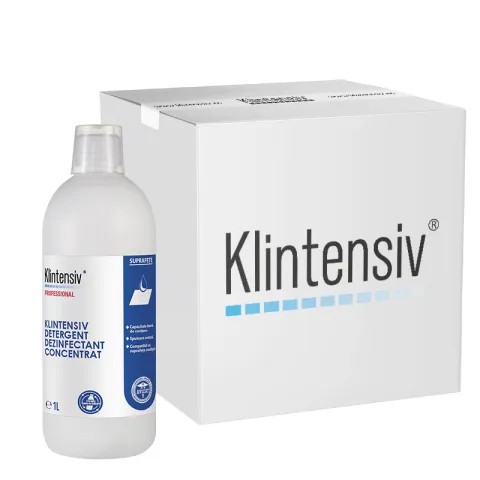
Klintensiv Surface Disinfectant, ready to use, has a bactericidal, fungicidal, yeasticidal, virucidal, mycobactericidal and sporicidal spectrum and remains active even in the presence of soiling.
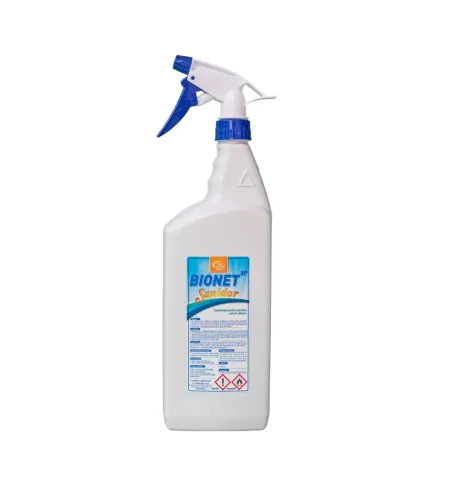
Bionet SP Sanidor cleans and disinfects at the same time, is applied by spraying after every patient and requires no rinsing.
DENTIRO Zero is alcohol-free, for alcohol-sensitive materials such as natural and synthetic leather, Plexiglas and soft PVC. It comes without a sprayer, which is available separately.
3. Disinfectant wipes: for keyboards, equipment and door handles
Pre-impregnated wipes carry the right dose of solution, don't drip into equipment and are handy anywhere. They are the safest option for keyboards, phones and screens.
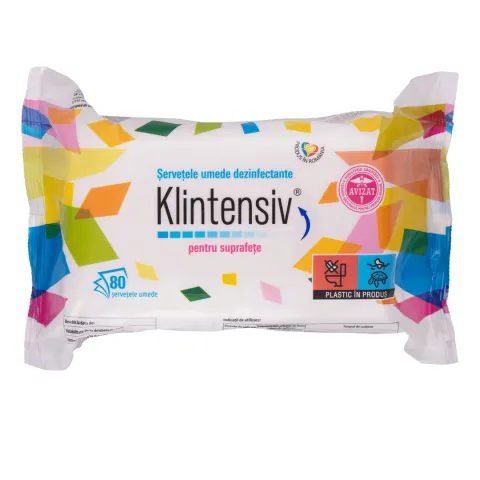
Klintensiv Surface Wipes are pre-impregnated, require no dilution or rinsing, and are virucidal according to EN 14476.
DENTIRO Wipes are compatible with over 80 materials, including artificial leather, and suitable for door handles and grips.
Dry Wipes Maxi Soft are dry wipes that you impregnate yourself with ISORAPID Spray or DENTIRO Zero.
Ready-to-use products and wipes
from 18,00 lei
Klintensiv Ready-to-Use Surface Disinfectant
(0)
in stock 5 variante
1800Lei
excl. VAT: 14,88 Lei
from 38,90 lei
Bionet SP Sanidor Surface Disinfectant, Ready to Use
(0)
in stock 2 variante
3890Lei
excl. VAT: 32,15 Lei
from 21,21 lei
Klintensiv Surface Disinfectant Wipes
(0)
in stock 4 variante
2121Lei
excl. VAT: 17,53 Lei
4. Concentrates for floors and large surfaces
For floors and general cleaning, a concentrated detergent-disinfectant is much more economical. The golden rule: dilute exactly as the label says, using a graduated container, not "by eye."
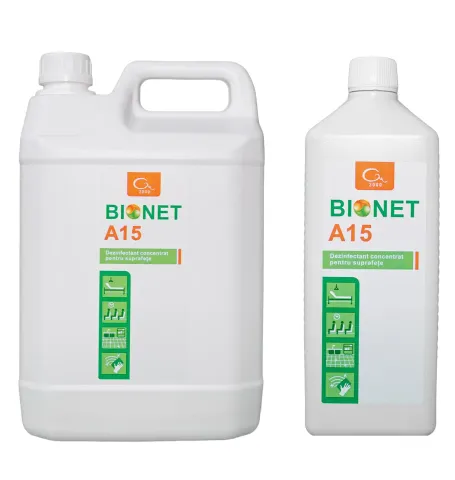
Bionet A15 is a concentrate that cleans and disinfects floors, tables and objects by wiping, fogging or spraying, without glutaraldehyde or formaldehyde.
5. Restrooms and contaminated surfaces: chlorine-releasing tablets
Effervescent tablets are easy to dose and suitable for restrooms, floors and contaminated objects. Never mix chlorine-based products with other detergents or disinfectants: they can release toxic gases.
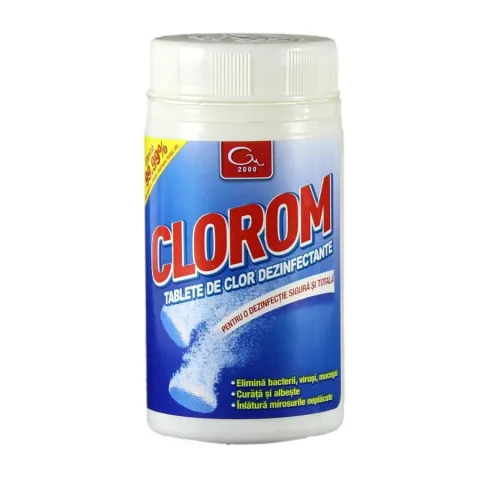
Clorom tablets are chlorine-releasing disinfectants for surfaces and objects, approved as PT2 for the medical field.
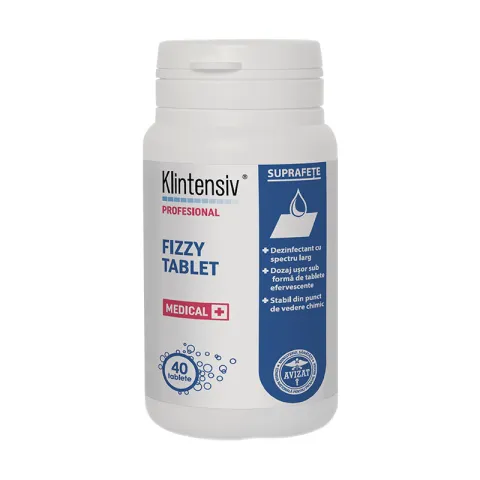
Klintensiv Fizzy Tablet, a PT2 biocide, has a bactericidal, fungicidal, yeasticidal, virucidal, sporicidal, mycobactericidal and tuberculocidal spectrum, with declared efficacy against Clostridium difficile and Norovirus.
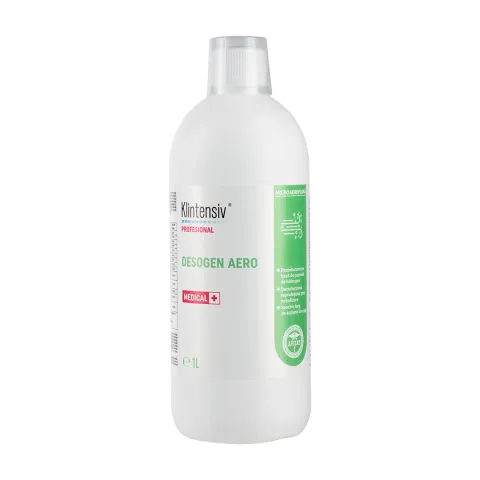
Fogging does not replace wiping after every patient, but it helps with periodic disinfection of the whole room, including hard-to-reach spots. Desogen Aero is applied as a dry fog, requires no wiping or rinsing and contains no aldehydes, phenols or chlorine.
7. Equipment, the most often forgotten
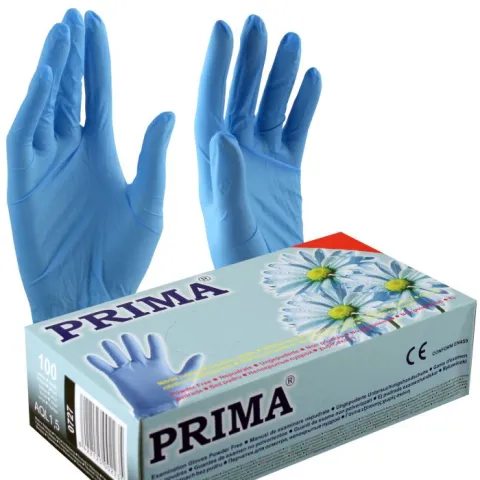
Disposable gloves, hand sanitizer within reach and separate cloths for each area. For example, blue microfiber cloths only for the patient area, other colors for reception and restrooms.
Fogging, gloves and hand hygiene
from 87,82 lei
Desogen Aero Surface Disinfectant for Nebulization
(0)
in stock 3 variante
8782Lei
excl. VAT: 72,58 Lei
Promoted i
PRIMA Blue Nitrile Examination Gloves, Powder-Free, Sizes S-XL, 100 pcs
(0)
in stock 5 variante
2965Lei
excl. VAT: 24,50 Lei
from 5,63 lei
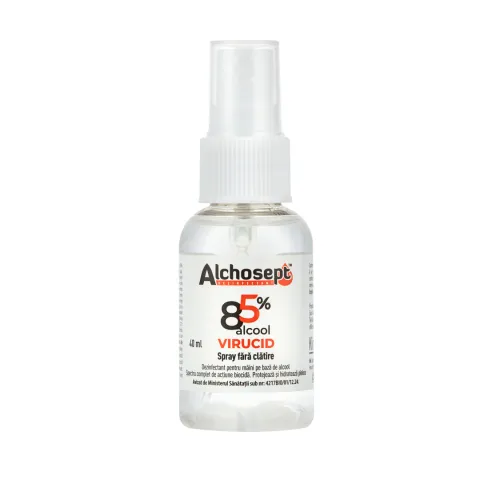
Alchosept Professional Hand and Skin Disinfectant with 85% Alcohol
You spray and wipe immediatelyWithout the contact time on the label, the surface is only wet, not disinfected.
The same cloth for the whole roomYou carry microorganisms from the restroom onto the work surface. Use separate, color-coded cloths for each area.
You dilute the concentrate "by eye"Too little doesn't disinfect; too much damages surfaces and causes irritation. Use a graduated container.
You spray directly onto the keyboard or equipmentThe liquid gets into the electronics. Apply the disinfectant to a cloth or use pre-impregnated wipes.
You use alcohol on materials that can't tolerate itFaux leather, Plexiglas and soft PVC crack and discolor. There are alcohol-free disinfectants for them.
You mix productsEspecially chlorine-based ones with other detergents. Besides the risk of toxic gases, the mixture no longer has its tested efficacy.
You top up old solution with newThe working solution prepared from concentrate has a use-by period stated by the manufacturer. Prepare fresh solution and write down the date.
The daily plan, to print and put up in the practice
Morning
Air the room and check the stock of disinfectants and gloves
Prepare the working solution and write down the date
Disinfect the countertop, dental unit and lamp before the first patient
After every patient
Hand hygiene and new gloves
Dental unit or couch, lamp, tray, countertop
Keyboard, mouse, phone, with wipes
Wait for the contact time
Evening
Floors, with detergent-disinfectant
Restrooms and waste bins
Door handles, switches, reception
Cloths to the wash, sorted by color
Everything you need for disinfection, in a single order
Surface, hand and instrument disinfectants, wipes, cloths and gloves, delivered by Prima Shop, with company invoicing.
What is the difference between cleaning, disinfection and sterilization?
Cleaning removes dirt and some of the microorganisms. Disinfection reduces microorganisms on surfaces to a safe level, using biocidal products. Sterilization eliminates all forms of microbial life and is performed on instruments that enter tissue, using separate procedures, not the surface disinfectants in this guide.
How long should I leave the disinfectant on the surface?
Exactly as long as the product label or technical data sheet states, for the spectrum you need. The time varies from product to product and sometimes between the bactericidal and virucidal effects of the same product.
With or without alcohol?
With alcohol for small, resistant surfaces when you need fast drying between patients. Without alcohol for sensitive materials (faux leather, Plexiglas, soft PVC) and, in general, for surfaces on which the equipment manufacturer does not recommend alcohol.
What does "tested according to EN 14476" mean?
EN 14476 is the European standard used to test the virucidal efficacy of disinfectants. If the product mentions it, check the test conditions in the technical data sheet as well: the concentration and the contact time.
Can I use ordinary store-bought cleaning products?
For surfaces in medical settings, use biocidal products intended for this field, with the spectrum and contact time declared by the manufacturer. Ordinary detergents clean, but they don't guarantee disinfection.