We use cookies necessary for the site to work and, with your consent, for: preferences, statistics, relevant offers and maps.
Your preferenceswe remember your choices from one visit to the next
Un site mai bunwe see what works and what doesn't, without identifying you
Oferte potriviteads for products you're interested in, not random ones
Google Mapslocations and pickup points shown on the map
You can change your choice anytime from “Cookie settings", in the page footer. Cookie policy
Cookie settings
You choose what we store on your device. Strictly necessary cookies always stay active. All the details are in Cookie policy.
Strict necesare
The site does not work without them: they keep you logged in, keep your cart and the steps of a booking, and protect your forms. They cannot be turned off.
Always active
Ce folosim (5)
Sesiunea · noi
Recognizes you from one page to the next: the cart, your account, the steps of a booking. prima-shop-session · 2 hours from the last action
Form protection · noi
Prevents a form from being submitted on your behalf from another website. XSRF-TOKEN · 2 ore
Stay signed in · noi
Only if you choose to stay signed in on this device. remember_web_…, remember_bookora_… · 400 de zile
Your cookie choice · noi
Remembers what you chose here, so we don't ask you on every page. acord_cookie · 6 luni
Anti-bot protection · Cloudflare (Turnstile)
Checks, without image puzzles, that contact forms are not submitted by bots. Cloudflare's own technical storage · how long the review takes · their policy
Preferences
They remember your choices between visits, so you don't have to make them again each time.
What we use
Product display · noi
Products are shown as a list or a grid, as you last chose. ps_view · 1 an
Statistics
They show us, without identifying you, how many visitors we have, which pages are searched for and where people get stuck, during an order or a booking — so we can improve the site. Without consent, Google receives only anonymous signals, without cookies.
What we use
Google Analytics 4 · Google Ireland Ltd.
Visit and sales statistics: pages viewed, products, cart, orders. _ga, _ga_* · up to 2 years · their policy
Marketing
They help us find out which ads bring in orders and show you, on other sites, products you viewed with us. Without consent, we do not measure ads on your device and you do not receive personalized ads from us.
What we use
Google Ads (conversions and remarketing) · Google Ireland Ltd.
Links an order to the ad you came from and builds remarketing lists with the products you viewed. When you order, your e-mail and phone number are sent to Google only in encrypted (hashed) form, for conversion matching. _gcl_au, _gcl_aw, cookie-uri Google (de exemplu IDE) · up to 13 months, set by Google · their policy
Maps
Maps are provided by Google Maps. When they load, Google receives your IP address and may set its own cookies. Without consent, we only show you a link to the map or the list of locations.
What we use
Google Maps · Google Ireland Ltd.
Shows the map: the business location on BookOra, and in the store the point chosen when entering the address and the easybox lockers at checkout. cookie-uri Google (de exemplu NID) · up to 6 months, set by Google · their policy
What Is the Difference Between a Virucidal Product and a Sanitizing Product?
7 August 2022The Prima Shop Team10 min read
“Sanitizing”, “antibacterial”, “disinfectant”, “virucidal”, “kills 99.9% of germs”: on the shelf, they all seem to promise the same thing. They don’t. Some products only clean, others have proven in the lab that they destroy certain viruses within a specific time, and the difference isn’t in the color of the bottle but in a few lines on the label.
This guide explains what each term means, who regulates these products, how to read the “virucidal” claim (not all virucides cover the same viruses), what “log” reduction means and how to recognize a product that only sanitizes. At the end you’ll find the right products from the Prima Shop catalog, grouped by what they actually do.
These four words describe different levels. Each step usually assumes you have gone through the one before: you can’t effectively disinfect a dirty surface, because dirt protects microorganisms.
1CleaningWater and detergent remove dirt and some microorganisms, mechanically, without destroying them.
2SanitizingReduces the number of microorganisms and leaves the surface clean, but with no proven effect on specific germs.
3DisinfectionDestroys the microorganisms the product has been tested against, within the contact time on the label.
4SterilizationDestroys all forms of microbial life, including spores. It is done on instruments, usually in an autoclave.
Sanitizer or virucide?
Cleans
Sanitizer
Detergent or cosmetic product
No biocidal product authorization
No EN standards for antimicrobial efficacy
Not allowed to claim it destroys viruses
vs
Destroys the tested viruses
Virucide
Biocidal disinfectant or medical device
Authorization or approval stated on the label
Tested to EN 14476 or EN 16777
Specific spectrum, concentration and contact time
“Sanitizer” is not a legal category in the European Union. On a label it can mean an ordinary detergent, a cosmetic soap or a scented gel. In the US, the equivalent term (“sanitizer”) has an official definition, which explains part of the confusion.
Who regulates these products
Product type
Legislation
Can it claim to destroy viruses?
What you see on the label
Detergent, cleaning product
Regulation (EC) No 648/2004
no
Composition, directions for use
Cosmetic (soap, hand gel)
Regulation (EC) No 1223/2009
no
INCI ingredient list, responsible person
Biocidal disinfectant (TP1, TP2, TP3, TP4)
Regulation (EU) No 528/2012, CNPB authorization
yes, for what it was tested against
Authorization, active substance and concentration, spectrum, EN standards, contact time
Medical device disinfectant
Regulation (EU) 2017/745
yes, for what it was tested against
CE marking with the notified body number
In Romania, biocidal products are authorized by the National Commission for Biocidal Products (CNPB), and the list of authorized products is public. TP1 means human hygiene, TP2 surfaces, TP3 veterinary hygiene, TP4 food contact areas.
V
Not all virucides are the same
What “virucidal” means on the label
From a disinfection standpoint, viruses fall into two main groups. Enveloped viruses have an outer lipid membrane that alcohol and detergents easily destroy: influenza, coronaviruses, HIV, hepatitis B and C viruses, herpes. Non-enveloped viruses are much more resistant: norovirus, which causes gastroenteritis, adenovirus, rotavirus, enteroviruses, poliovirus and hepatitis A virus.
That is why the European standard EN 14476 doesn’t have a single “virucidal” claim, but three levels:
Beware of “virucidal” without detailsA product that just says “virucidal”, with no standard, no list of viruses or no contact time, doesn’t tell you what it was tested against. If the technical data sheet mentions only HIV, hepatitis, herpes, influenza and coronavirus, it is active only against enveloped viruses.
What “log reduction” and “99.99%” mean
Laboratories measure a disinfectant’s efficacy in powers of ten: how many microorganisms remain active out of an initial number after the contact time. Each “log” means ten times fewer. For one million microorganisms:
1 log90%100,000 remain
2 log99%10,000 remain
3 log99.9%1,000 remain
4 log99.99%100 remain · EN 14476 threshold for viruses
5 log99.999%10 remain · EN 1276 threshold for bacteria
6 log99.9999%1 remains
So “kills 99.9% of germs” means 3 log. For a professional disinfectant, the threshold required by the standards is usually higher, and the claim only matters if it also states the standard, the microorganisms and the contact time in which the result was achieved.
4Activity: bactericidal (EN 13727, EN 13697), yeasticidal (EN 13624), virucidal against enveloped viruses (EN 14476)
5Directions for use: undiluted, contact time 5 minutes, no rinsing
6Warning · causes serious eye irritation
7Lot 00000 · Exp. 00.0000
Product type“Biocidal product” and the TP type: for hands (TP1), surfaces (TP2), veterinary (TP3) or food (TP4).
Active substance and concentrationThe exact figure, not just “alcohol-based” or “with silver ions”.
Authorization numberYou can check it in the public list of biocidal products authorized in Romania.
Spectrum and standardsWhat the product destroys and according to which standard, with the exact level for viruses.
Dilution and contact timeWithout them, the lab result can’t be reproduced on your surface.
Pictograms and hazard statementsThey tell you what protective equipment to use and how to store the product.
Lot and expiration dateAfter expiration, the concentration of the active substance is no longer guaranteed.
Signs that a product only sanitizes
It has no biocidal product authorization or approval number.
It doesn’t state the active substance and its concentration, only “antibacterial formula”.
It doesn’t mention any EN standard or any contact time.
It has an INCI ingredient list, like a cosmetic, and promises “freshness” or “deep cleaning”.
It uses “sanitizes”, “protects” or “antibacterial” without saying which microorganisms it destroys.
What to choose for each situation
Situation
What you need
Keep in mind
Daily cleaning at home
Detergent, soap, water
Disinfectant doesn’t replace cleaning
Someone at home has influenza or COVID-19
Disinfectant active against enveloped viruses
Door handles, light switches, phones, bathroom
Gastroenteritis, norovirus
Limited spectrum or full virucide, or a chlorine-based product
Alcohol alone is weak against norovirus
Hands in the practice
TP1 disinfectant tested to EN 1500
With EN 14476 for the required viral spectrum
Surfaces between patients
Fast-acting TP2 disinfectant, EN 14476, ideally EN 16615
Ready-to-use or wipes
Hospital, outbreak, isolation area
Full virucide, possibly also sporicidal
Clostridioides difficile requires a sporicide
Kitchens, food industry
TP4 disinfectant, EN 1276, EN 13697
Rinse, if the label requires it
P
Grouped by what they actually do
The right products from the catalog
Surfaces: full virucidal, including norovirus
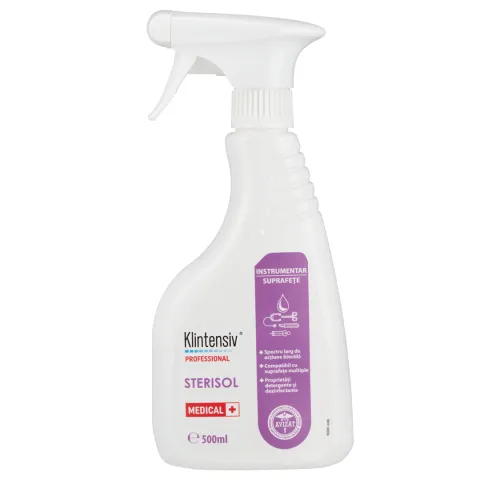
Sterisol RTU: ready-to-use high-level disinfectant, bactericidal, fungicidal, mycobactericidal, virucidal and sporicidal. Virucidal according to EN 14476 against coronavirus, enterovirus, influenza, hepatitis, HIV, adenovirus, poliovirus, norovirus and rotavirus, with proven efficacy under dirty conditions as well.
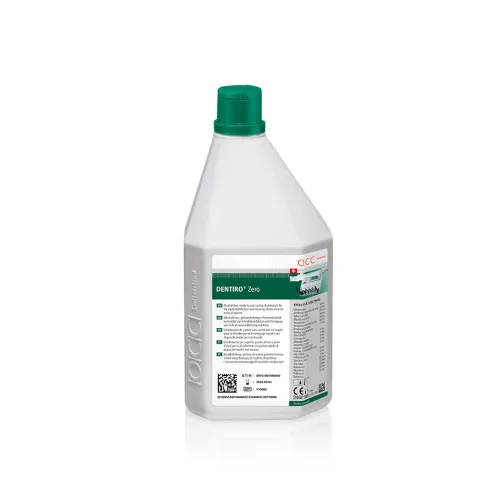
DENTIRO Zero: alcohol-free, virucidal against enveloped viruses and against adenovirus, norovirus, poliovirus and rotavirus, tested to EN 13624, EN 13727, EN 14348, EN 14476 and EN 16615. In wipe format: DENTIRO Wipes.
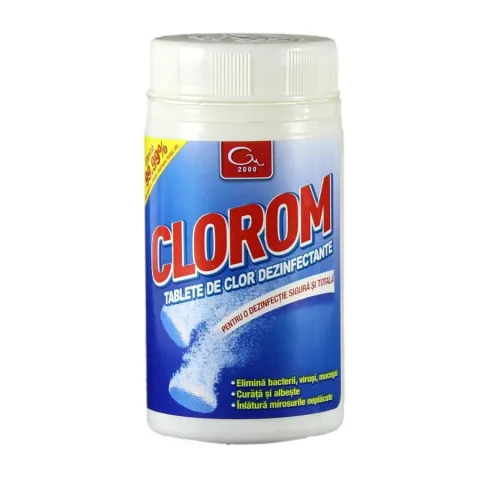
Clorom tablets, chlorine-based, authorized for TP2 and TP4: one tablet in 3 liters of water has EN 14476 virucidal activity (poliovirus, murine norovirus, adenovirus) and EN 13704 sporicidal activity, including against Clostridioides difficile.
Virucid complet pentru suprafețe
from 37,50 lei
Sterisol High-Level Disinfectant RTU
(0)
in stock 7 variante
3750Lei
excl. VAT: 30,99 Lei
PrimaDeals
DENTIRO Zero ALCOHOL-FREE Surface Disinfectant - 1 liter
(0)
in stock
Price: 76,31 Lei
6776Lei
excl. VAT: 56,00 Lei
from 13,65 lei
Clorom Disinfectant Tablets
(0)
in stock 2 variante
1365Lei
excl. VAT: 11,28 Lei
Surfaces: fast, everyday disinfection
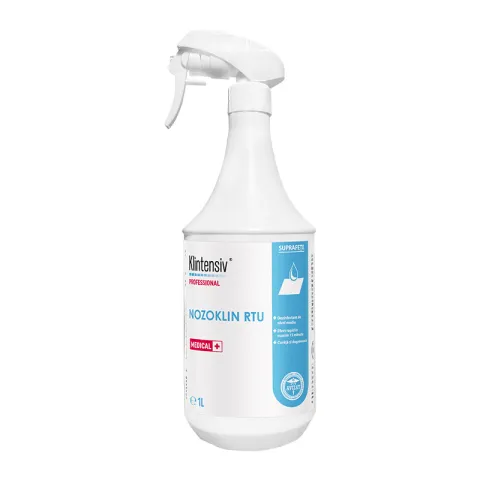
Nozoklin RTU: ready-to-use, tested to EN 14476, EN 13697 and EN 1276, active against coronavirus, HIV, hepatitis B and C, influenza and vaccinia virus, i.e. against enveloped viruses.
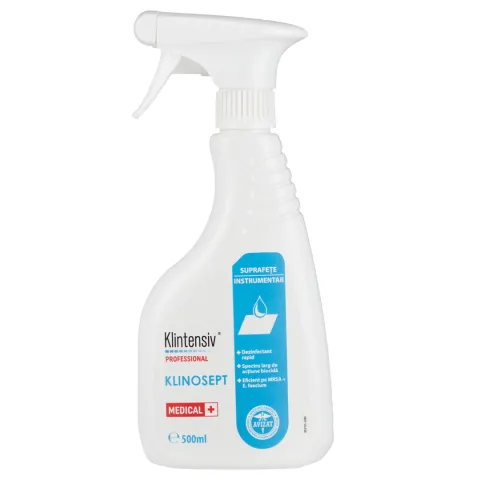
Klinosept: 85% ethanol, fast-acting, tested according to EN 14885 and with EN 14476 virucidal protection, for small surfaces that need to dry quickly.
OROMED Gel: hydroalcoholic gel tested to EN 1500, EN 12791 and EN 14476, active against enveloped and non-enveloped viruses, adenovirus, norovirus and poliovirus, in 15–90 seconds.
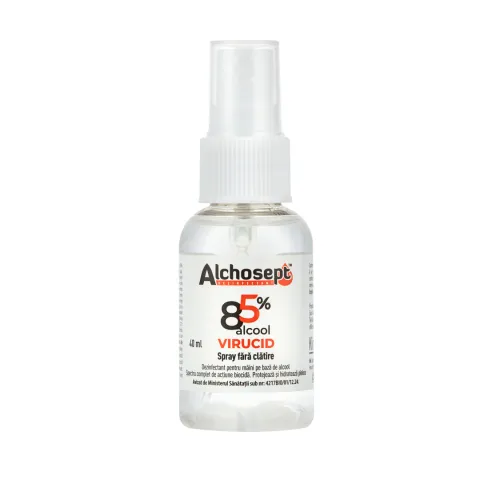
Alchosept: 85% ethanol, hygienic hand disinfection in 30 seconds (EN 1500), active against bacteria, fungi, yeasts, mycobacteria and enveloped viruses.
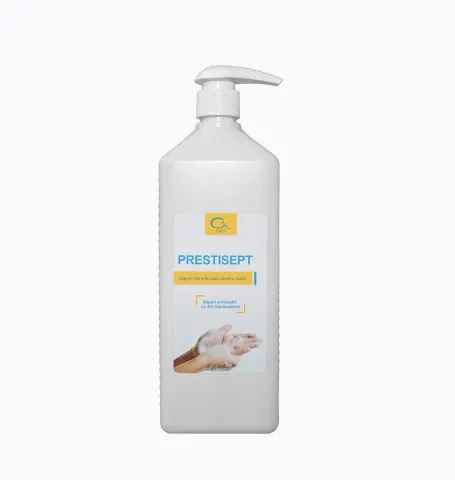
Prestisept: liquid soap with 4% chlorhexidine, TP1 authorization, EN 14476 virucidal against enveloped viruses. For a spray with two alcohols and chlorhexidine, also active against non-enveloped viruses: Dezidiol Spray.
Dezinfectanți pentru mâini
from 60,48 lei
OROMED Gel Hand Sanitizer
(0)
in stock 3 variante
6048Lei
excl. VAT: 49,98 Lei
from 5,63 lei
Alchosept Professional Hand and Skin Disinfectant with 85% Alcohol
(0)
in stock 11 variante
563Lei
excl. VAT: 4,65 Lei
from 25,91 lei
Disinfectant and Antiseptic Liquid Soap for Hands and Skin, Prestisept, BIOCIDE - 1 liter
(0)
in stock 3 variante
4680Lei
excl. VAT: 38,68 Lei
For cleaning: the step before disinfection
Cleaning products and cosmetic soaps aren’t “weaker”; they have a different role: they remove dirt, grease and a good share of microorganisms, and prepare the surface for the disinfectant. Proper handwashing with soap and water remains mandatory when hands are visibly dirty.
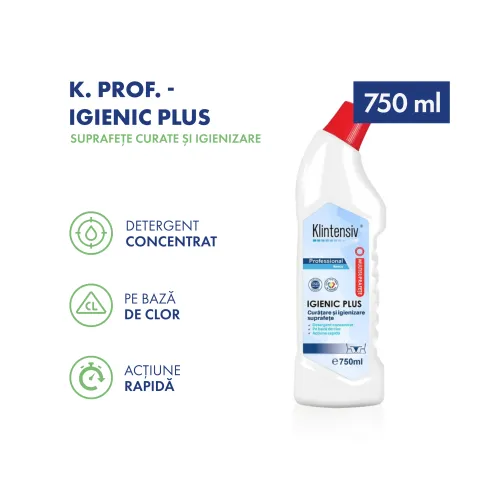
Klintensiv Igienic plus: sanitizing detergent with sodium hypochlorite and surfactants, for cleaning and sanitizing washable surfaces. Never mix it with acidic products or ammonia.
Klintensiv Igienic plus – Sodium Hypochlorite Sanitizing Detergent
(0)
in stock 3 variante
1197Lei
excl. VAT: 9,89 Lei
from 27,79 lei
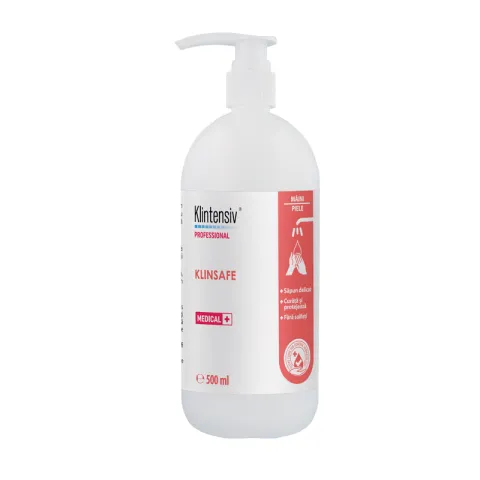
KlinSafe Gentle Liquid Soap
(0)
in stock 4 variante
2779Lei
excl. VAT: 22,97 Lei
from 15,15 lei
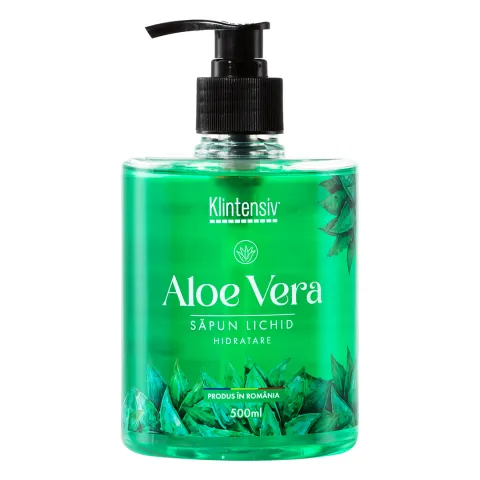
Aloe Vera Liquid Soap
(0)
in stock 3 variante
1515Lei
excl. VAT: 12,52 Lei
Common mistakes
Buying a “sanitizer” thinking it’s a disinfectantWithout an authorization and EN standards, you have no guarantee it destroys viruses.
Relying on alcohol for norovirusNorovirus has no envelope and is much more resistant. Choose a limited spectrum or full virucide, or a chlorine-based product.
Wiping off the disinfectant right after sprayingThe contact time on the label is the time in which the lab result was achieved. The surface must stay wet during that time.
Disinfecting over dirtGrease, dust and organic residue protect microorganisms. Clean first, unless the product is also tested under dirty conditions.
Diluting “by eye”Too diluted and it no longer works; too concentrated and it irritates and damages surfaces. Follow the dose on the label.
Mixing productsChlorine mixed with acids or ammonia releases toxic gases. Use one product at a time and rinse in between.
Transferring disinfectant into unlabeled bottlesYou lose the instructions and the expiration date, and you risk dangerous mix-ups.
Authorized disinfectants with a clear spectrum, delivered by Prima Shop
Virucidal disinfectants for surfaces and hands, cleaning products and soaps, with technical data sheets and authorizations, invoiced to your company.
Does an alcohol-based “sanitizing” gel kill viruses?
A gel with at least 60–70% alcohol usually works against enveloped viruses. Without testing to EN 14476 and without a biocidal product authorization, however, you have no guarantee regarding concentration, contact time or spectrum. In practices and hospitals, use a tested TP1 disinfectant.
Do vinegar and baking soda disinfect?
They have no proven efficacy as disinfectants and are not authorized for this purpose. They are useful for cleaning, for example for limescale or grease, but they don’t replace a disinfectant.
Is household bleach virucidal?
Sodium hypochlorite solutions at the right concentration also destroy resistant viruses, including norovirus. However, products sold as detergents don’t have tested and authorized dilutions and contact times. If you use them, follow the label, ventilate the area and never mix them with acids or ammonia.
What does “kills 99.9% of bacteria” mean?
A 3 log reduction, meaning that out of one million bacteria, one thousand remain. The claim says nothing about viruses, nor about the conditions under which the result was achieved, unless it states the standard and the contact time.
Does disinfectant need to be rinsed off?
It depends on the product and the surface. On surfaces that come into contact with food or with children’s skin, many products require rinsing after the contact time. The instruction is always on the label.
Can I use surface disinfectant on my hands?
No. For hands and skin, use only TP1 products or antiseptics made for living tissue. The difference is explained in detail in the guide to disinfectants and antiseptics.