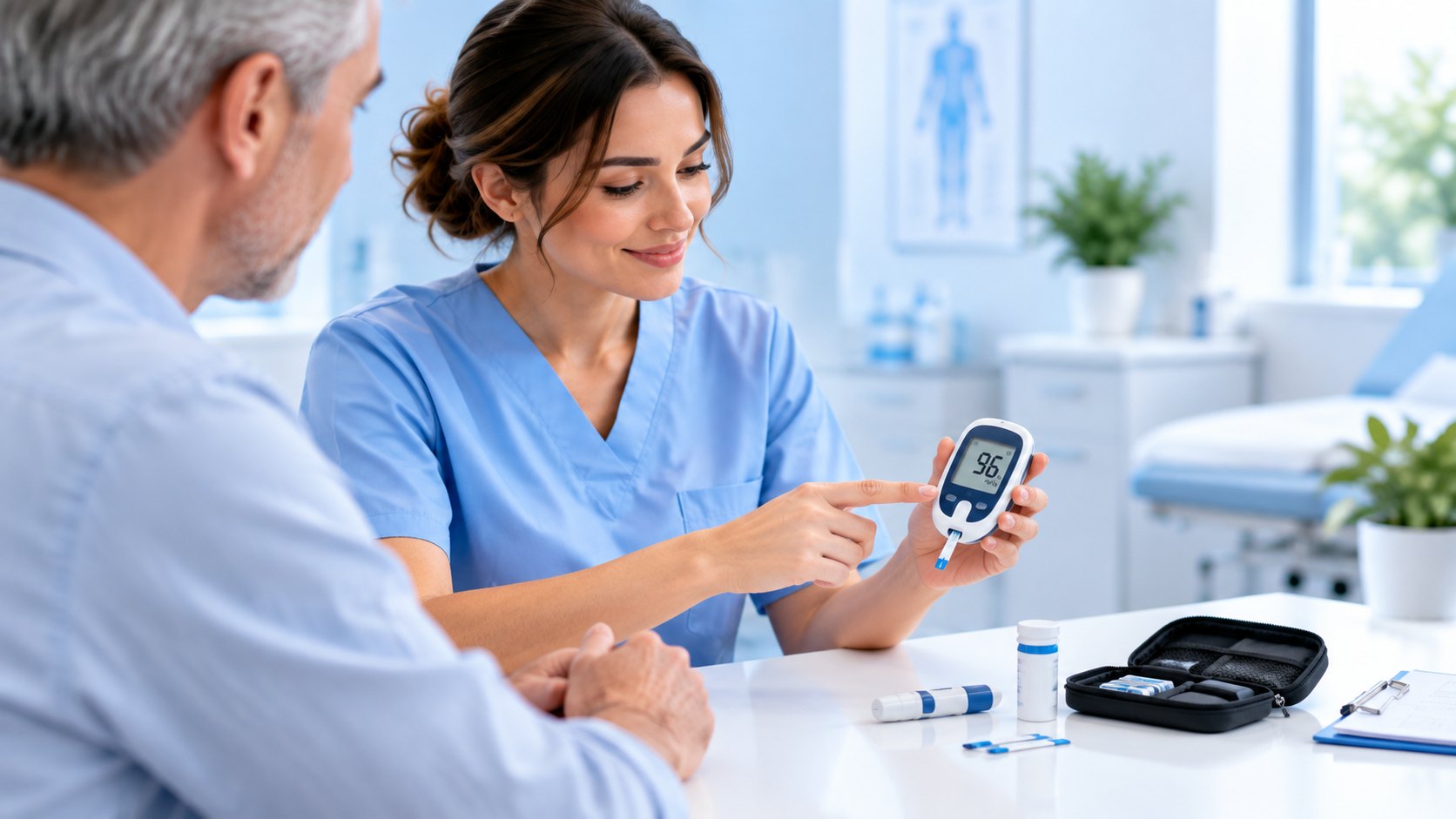
A number appears on the screen: 96 mg/dL. For someone with diabetes, that figure isn't a curiosity but information they build their day around: what they eat, how much they move, whether everything is going according to the plan agreed with their doctor. The glucometer is the most accessible tool for tracking diabetes, but only if it is accurate, used correctly, and you can afford its strips month after month.
In the guide below you'll learn what the readings tell you, how to measure so the result is reliable, what criteria to use when choosing a meter, what it really costs you, and which mistakes give false numbers. At the end you'll find the complete monitoring kit from the Prima Shop catalog.
ImportantThis article is for information only and does not replace a medical consultation. Your blood glucose target, how many measurements you take per day, and any change in treatment are decided by your diabetes doctor. A glucometer is not used to diagnose diabetes.
What your blood glucose readings tell you
In Romania, blood glucose is usually expressed in mg/dL; some meters and lab tests use mmol/L (1 mmol/L ≈ 18 mg/dL). Below are the reference values from the international guidelines of the American Diabetes Association (ADA). For people with diabetes, these are general targets: your doctor may set them differently, depending on age, treatment and individual history.
| Situation | mg/dL | What it means |
|---|
| Fasting, without diabetes | below 100 | Normal value (below 5.6 mmol/L) |
| Before a meal, with diabetes | 80 – 130 | Usual target for adults (4.4 – 7.2 mmol/L) |
| 1 – 2 hours after the start of a meal, with diabetes | below 180 | Usual target for adults (below 10.0 mmol/L) |
| Hypoglycemia | below 70 | Low value (below 3.9 mmol/L): follow the plan you received from your doctor immediately |
| Severe hypoglycemia | below 54 | Very low value (below 3.0 mmol/L) that requires immediate action |
A single result says little. The real value of a glucometer comes from trends: what your readings look like in the morning, before and after meals, on days with physical activity. That's why the meter's memory matters, along with a consistently kept log that you bring to every checkup.
How to measure correctly, step by step
- Wash your hands with warm water and soapWarm water boosts circulation in your fingers, and soap removes traces of sugar (from fruit, for example), which can give a false, much higher reading.
- Dry them very thoroughlyA drop of water left on your finger dilutes the blood and lowers the result.
- Prepare the lancing device and the stripInsert a new lancet, choose the right depth for your skin, and check the expiration date of the strips. Insert the strip into the meter only when you're ready to measure.
- Prick the side of your fingertipIt hurts less than the center of the pad. Switch fingers from one measurement to the next.
- Let the drop form without squeezingGently massage the finger from the base toward the tip. Squeezing hard mixes the blood with tissue fluid and distorts the reading.
- Apply the blood to the indicated area of the stripWait a few seconds for the result without moving the strip.
- Record the result and dispose of the lancet safelySave the reading with the right marker (before or after a meal), and put the used lancet in a sharps container, not in the household trash.
How to choose a glucometer: the criteria that matter
Accuracy the first criterionLook for compliance with the ISO 15197:2013 standard: at least 95% of results must be within ±15 mg/dL of the lab value for readings below 100 mg/dL, and within ±15% for readings of 100 mg/dL and above. This information appears in the manual or on the strip box.
The strips the real costStrips are usually compatible with only one specific model. Before you buy the meter, check the price of the strips and whether they're easy to find, because you'll be buying them for months or years.
Sample size and time everyday comfortA small blood volume, around 1 µL or less, means a smaller prick. A result in a few seconds makes measuring easy to fit into your day.
Memory and averages the trendsResults saved with date and time, 7-, 14- or 28-day averages, and before/after-meal markers show you and your doctor how your blood glucose is evolving.
Ease of use for any ageA large, high-contrast screen, few buttons, no manual strip coding, a reminder alarm. These matter a lot for older people and those with vision problems.
The kit and the warranty ready from day oneA package with a lancing device, lancets, strips and a carrying case saves you separate purchases. Check the warranty period as well.
The glucometer in our catalog
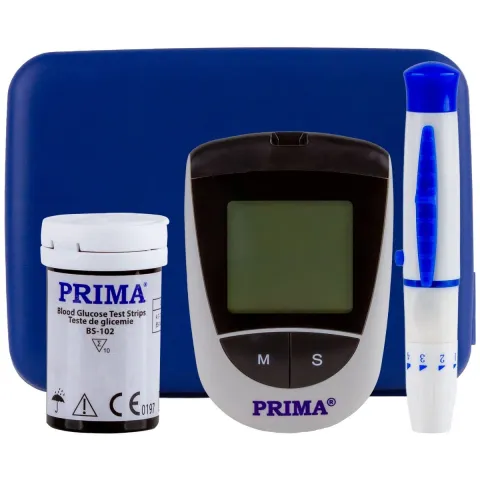
PRIMA BG-208 Blood Glucose Meter with Supplies Included, 1 µL
in stock
6776Lei
excl. VAT: 56,00 Lei
The PRIMA BG-208 glucometer ticks the comfort criteria above: it needs about 1 µL of blood, displays the result in 5 seconds, stores up to 360 results with date and time, calculates averages for the last 7, 14 and 28 days, and has a reminder alarm for your testing schedule. It comes as a complete package, with strips, a lancing device, a sterile lancet and a carrying bag, and has a 2-year warranty. It uses PRIMA BS-102 strips exclusively.
What it really costs you: the strips, not the meter
You pay for the glucometer once. You pay for strips and lancets with every measurement. The calculation worth doing before you choose:
The monthly cost of monitoring
- Measurements per day × 30 = how many strips and lancets you use in a month. At 2 measurements a day, you need 60; at 4 a day, 120.
- Price per strip = the box price divided by the number of strips. Add the price of one lancet.
- Monthly cost = strips per month × (price per strip + price per lancet). Compare meters by this figure, not by the price on the box.
If you measure often, large packs lower the cost per measurement. The PRIMA pack with 200 test strips and 200 lancets includes the glucometer and the lancing device. At 2 measurements a day, it lasts about 100 days, and the meter displays results in both mg/dL and mmol/L.
The mistakes that cause false results
- Measuring with unwashed or wet fingersTraces of sugar raise the result; water left on the skin lowers it.
- Leaving the strip container openStrips degrade with humidity and heat. Keep them in the original container with the lid closed, and take out one at a time, only when you measure.
- Using expired strips or strips for another modelEven if they fit in the meter, the result is no longer reliable. Use only the strips specified for your glucometer.
- Squeezing your finger to get the drop outThe blood mixes with tissue fluid. It's better to wash your hands with warm water beforehand.
- Reusing the lancetThe tip dulls after the first prick: it hurts more and increases the risk of infection.
- Measuring in extreme conditionsThe meter and strips have a temperature range in which they work correctly, listed in the manual. Don't leave the kit in the car in the sun or in the cold in winter.
- Comparing with the lab at different timesBlood glucose changes from one hour to the next. If you want to compare the meter with lab tests, measure at the same time as the blood draw.
What to record in your blood glucose log so it's useful to your doctor
With every measurement
- Date and time
- The reading, in mg/dL
- Before or after a meal
Context
- What and how much you ate
- Physical exertion or an unusual day
- Illness, stress, little sleep
Treatment and symptoms
- Medication or insulin and the time taken
- Dizziness, sweating, tremor
- Unusual readings and what you did
The complete monitoring kit from our catalog
Besides the glucometer and strips, a safe routine needs a few things people forget: a container for used lancets and needles and, if your treatment includes insulin, the needles or syringes that match your pen or vial.
Sharps containers, needles and syringes
from 4,53 lei
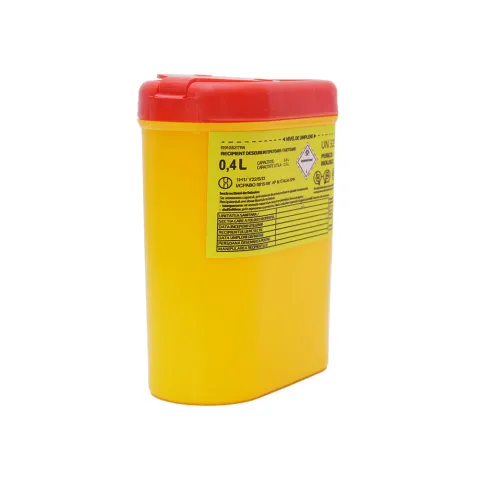
Sharps Containers – Biosafe Line
in stock
14 variante
486Lei
excl. VAT: 4,02 Lei
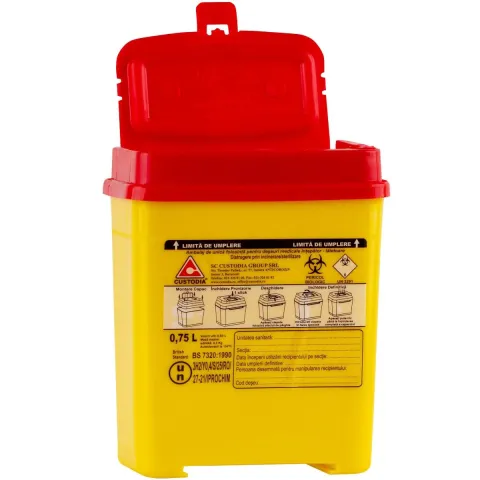
Sharps Waste Container, Plastic, 0.75 Liters, Yellow, Disposable, ADR Certified
in stock
981Lei
excl. VAT: 8,11 Lei
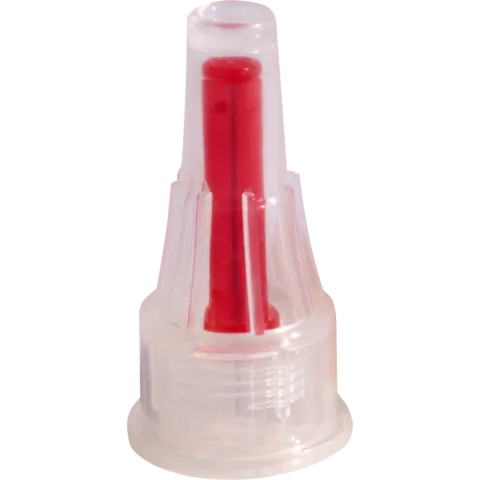
PEN Insulin Needles, Thin, 29G, Small, Medical, Sterile, for Insulin Administration, Red, 12 mm, 100 pcs, RAYS
in stock
10398Lei
excl. VAT: 85,93 Lei
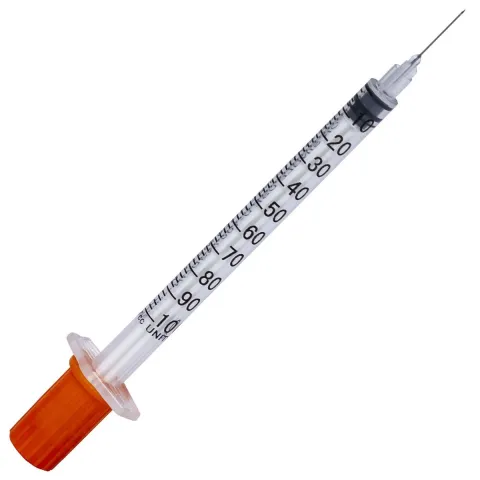
PRIMA Insulin Syringes 1 ml with Fixed Needle 29G 1/2" (0.33 x 13 mm), 100 pcs
in stock
4839Lei
excl. VAT: 39,99 Lei
Blood glucose isn't the only number to track
Diabetes and high blood pressure often occur together, and blood pressure control is part of diabetes care. If your doctor has asked you to measure your blood pressure at home as well, an automatic upper-arm blood pressure monitor simplifies your routine.
Automatic upper-arm blood pressure monitors
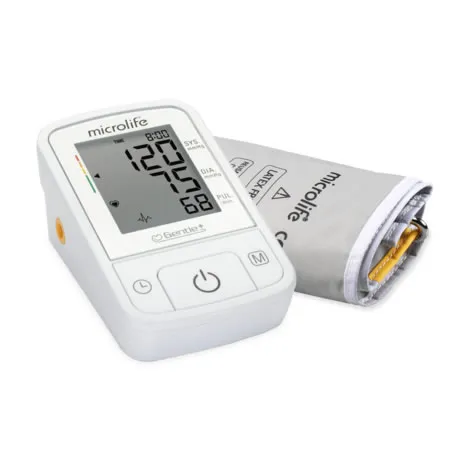
Microlife B2 Basic Automatic Blood Pressure Monitor
in stock
18719Lei
excl. VAT: 154,70 Lei
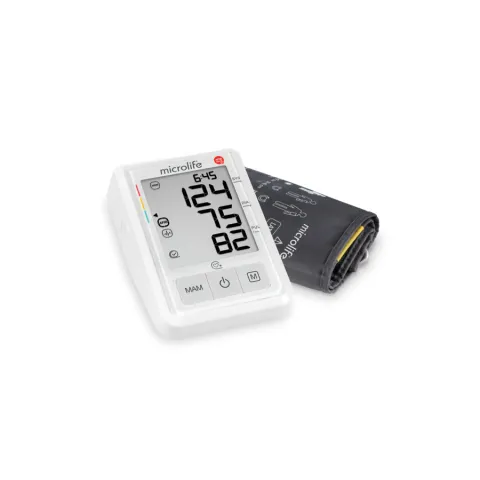
Microlife BP B3 AFIB Automatic Blood Pressure Monitor
in stock
25630Lei
excl. VAT: 211,82 Lei
Everything you need for monitoring, delivered to your home or practice
Glucometers, strips, lancets, sharps containers, insulin needles and syringes, blood pressure monitors. For practices and pharmacies, with company invoicing.
Frequently asked questions
How many times a day should I measure my blood glucose?
It depends on the type of diabetes and the treatment, so the frequency is set by your doctor. People who take insulin several times a day usually measure more often than those who follow only a diet or oral treatment.
Can I use strips from another glucometer?
No. Strips are calibrated for a specific meter. Even if a strip physically fits into another glucometer, the result is not reliable. The PRIMA BG-208 glucometer, for example, uses PRIMA BS-102 strips exclusively.
Why does my glucometer result differ from the lab result?
The ISO 15197:2013 standard allows a difference of up to ±15 mg/dL for values below 100 mg/dL and ±15% for higher values. In addition, blood glucose changes from one hour to the next, and the lab usually analyzes venous blood, not capillary blood. Small differences are normal; large or repeated ones are worth discussing with your doctor.
Can a glucometer diagnose diabetes?
No. A glucometer is for monitoring blood glucose. The diagnosis is made by a doctor, based on laboratory tests.
What do I do with used lancets and needles?
Put them in a rigid sharps container and, when it's full, close it permanently. Don't throw them loose into the household trash, because they can injure someone.