We use cookies necessary for the site to work and, with your consent, for: preferences, statistics, relevant offers and maps.
Your preferenceswe remember your choices from one visit to the next
Un site mai bunwe see what works and what doesn't, without identifying you
Oferte potriviteads for products you're interested in, not random ones
Google Mapslocations and pickup points shown on the map
You can change your choice anytime from “Cookie settings", in the page footer. Cookie policy
Cookie settings
You choose what we store on your device. Strictly necessary cookies always stay active. All the details are in Cookie policy.
Strict necesare
The site does not work without them: they keep you logged in, keep your cart and the steps of a booking, and protect your forms. They cannot be turned off.
Always active
Ce folosim (5)
Sesiunea · noi
Recognizes you from one page to the next: the cart, your account, the steps of a booking. prima-shop-session · 2 hours from the last action
Form protection · noi
Prevents a form from being submitted on your behalf from another website. XSRF-TOKEN · 2 ore
Stay signed in · noi
Only if you choose to stay signed in on this device. remember_web_…, remember_bookora_… · 400 de zile
Your cookie choice · noi
Remembers what you chose here, so we don't ask you on every page. acord_cookie · 6 luni
Anti-bot protection · Cloudflare (Turnstile)
Checks, without image puzzles, that contact forms are not submitted by bots. Cloudflare's own technical storage · how long the review takes · their policy
Preferences
They remember your choices between visits, so you don't have to make them again each time.
What we use
Product display · noi
Products are shown as a list or a grid, as you last chose. ps_view · 1 an
Statistics
They show us, without identifying you, how many visitors we have, which pages are searched for and where people get stuck, during an order or a booking — so we can improve the site. Without consent, Google receives only anonymous signals, without cookies.
What we use
Google Analytics 4 · Google Ireland Ltd.
Visit and sales statistics: pages viewed, products, cart, orders. _ga, _ga_* · up to 2 years · their policy
Marketing
They help us find out which ads bring in orders and show you, on other sites, products you viewed with us. Without consent, we do not measure ads on your device and you do not receive personalized ads from us.
What we use
Google Ads (conversions and remarketing) · Google Ireland Ltd.
Links an order to the ad you came from and builds remarketing lists with the products you viewed. When you order, your e-mail and phone number are sent to Google only in encrypted (hashed) form, for conversion matching. _gcl_au, _gcl_aw, cookie-uri Google (de exemplu IDE) · up to 13 months, set by Google · their policy
Maps
Maps are provided by Google Maps. When they load, Google receives your IP address and may set its own cookies. Without consent, we only show you a link to the map or the list of locations.
What we use
Google Maps · Google Ireland Ltd.
Shows the map: the business location on BookOra, and in the store the point chosen when entering the address and the easybox lockers at checkout. cookie-uri Google (de exemplu NID) · up to 6 months, set by Google · their policy
Medical Syringes and Needles: A Complete Guide to Use, Selection, and Recommendations
12 June 2025The Prima Shop Team17 min read
A syringe and a needle seem like the simplest supplies in any practice. Yet the choice decides how precisely you deliver a dose, how much the injection hurts, how fast a blood draw flows and, above all, whether someone on the team gets stuck at the end.
This guide brings together everything you need to know: how a syringe is built, the difference between Luer Slip and Luer Lock, how to read a needle's gauge and color, which needle to choose for each route of administration, how to work with insulin syringes, how to draw blood with a vacutainer, and what to do with used needles. At every step you'll find the right products from the Prima Shop catalog.
Before types and sizes, it's worth knowing what each part is called. That way you read a product sheet correctly and know exactly what you're ordering.
"3-part" syringes have a barrel, plunger and rubber stopper; "2-part" syringes have no stopper, the plastic plunger seals on its own.
The barrel volume and scale
Transparent, with printed graduations. The nominal volume (1, 2, 5, 10, 20, 50 ml) and the scale increment tell you how finely you can measure: on a 1 ml syringe you read hundredths of a milliliter, on a 20 ml one only halves or whole milliliters.
The stopper precision
The rubber ring on the plunger makes the movement smooth and leak-tight. Read the dose at the edge of the stopper nearest the needle, not at its conical tip.
The Luer tip the connection
The tip onto which the needle or infusion line is attached. It can be a plain push-on tip (Luer Slip) or threaded (Luer Lock). The connectors are described by the ISO 80369-7 standard.
The needle hub, cannula, bevel
The colored hub attaches to the syringe, the stainless steel cannula is the tube itself, and the bevel is the slanted tip that penetrates the tissue. The protective sheath keeps the needle sterile until use.
S
Volume, connection, construction
What types of syringes are there
Disposable syringes differ in three ways: volume, how the needle attaches, and intended use. The table below helps you tell them apart quickly.
Type
Common volumes
Used for
Keep in mind
Luer Slip
2 – 60 ml
IM, SC injections, drawing up medication
quick, push-on
Luer Lock
2 – 60 ml
Infusions, stopcocks, viscous solutions, pressure
needle won't pop off
Insulin
0.3 / 0.5 / 1 ml
U-100 insulin, dosed in units
scale in IU, not ml
Tuberculin
1 ml
Small doses in ml, intradermal tests
graduated in 0.01 ml
Guyon (catheter tip)
50 – 100 ml
Tube feeding, irrigation, aspiration
not for injections
Heparinized
1 – 3 ml
Arterial blood for blood gas analysis
contains heparin
Luer Slip or Luer Lock?
Both follow the same tip geometry, so a standard needle fits either one. The difference is how it stays attached.
Luer Slip push-on
The needle is pushed onto the tip and held by friction. It's quick to attach and sufficient for ordinary low-pressure injections. With viscous solutions or strong pressure, the needle can come off.
Luer Lock threaded
The hub screws into the threaded collar and locks in place. It's the safe choice for infusions, three-way stopcocks, extension lines, viscous solutions and any procedure where the syringe stays connected.
2-part or 3-part?
3-part syringes have a rubber stopper on the plunger: they glide evenly, without jerking, and you dose more precisely. 2-part syringes have no stopper, are cheaper, and are suitable for drawing up and transferring liquids or for non-medical use. For injections, generally choose 3-part syringes.
Which volume to choose
The simple rule: the smallest syringe that holds the dose. A 0.4 ml dose measured in a 10 ml syringe is read almost at random; in a 1 ml syringe, precisely. Still, leave a little room for expelling air.
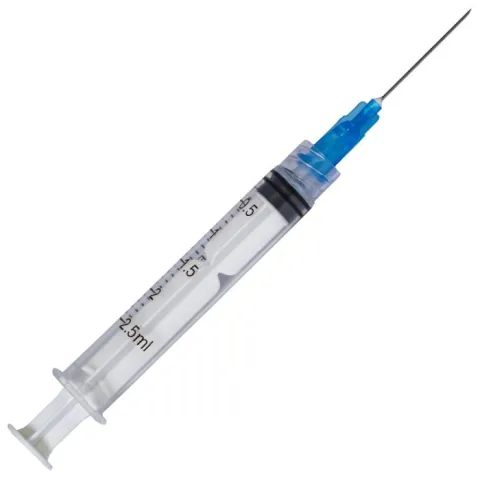
PRIMA Luer Lock Syringes 2/2.5 ml with 23G Needle, 100 pcs
(0)
in stock
3629Lei
excl. VAT: 29,99 Lei
Promoted i
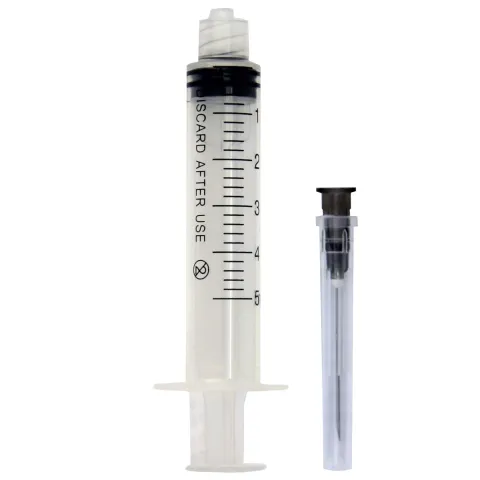
PRIMA 5ml Luer Lock Syringes with 22G Needle, 100 pcs
(0)
in stock
3570Lei
excl. VAT: 29,50 Lei
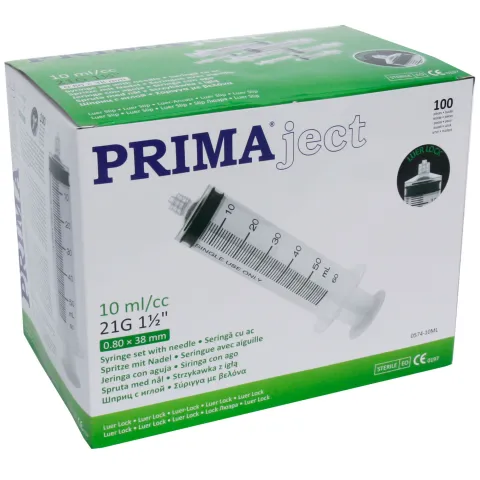
PRIMA Luer Lock Syringes 10 ml with 21G Needle, 100 pcs
(0)
in stock
4925Lei
excl. VAT: 40,70 Lei
Seringi Luer Slip, cu sau fără ac
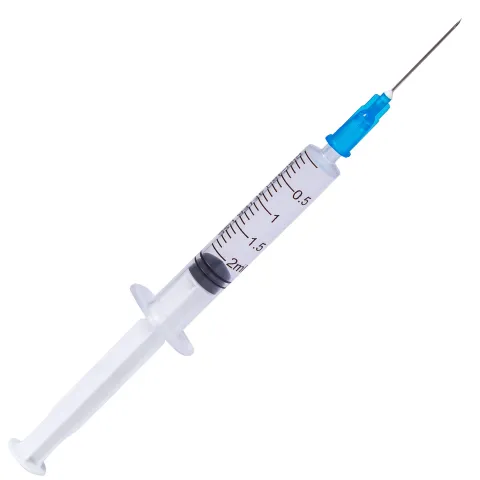
PRIMA Luer Slip Syringes 2 ml with 23G Blue Needle, 100 pcs
(0)
in stock
3388Lei
excl. VAT: 28,00 Lei
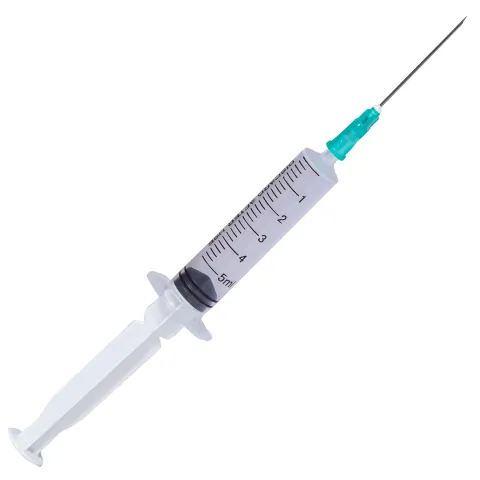
PRIMA Luer Slip Syringes 5 ml with 21G Green Needle, 100 pcs
(0)
in stock
3449Lei
excl. VAT: 28,50 Lei
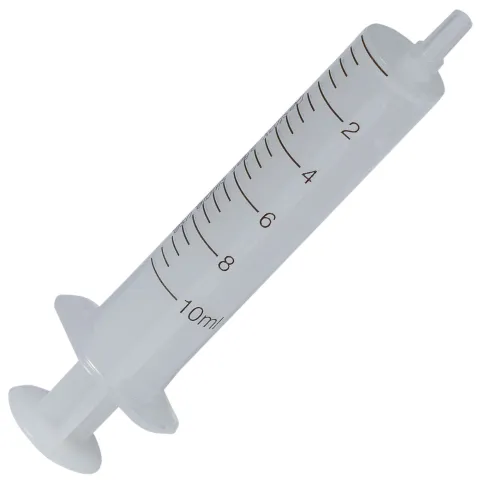
PRIMA 10ml Luer Slip Syringes, Without Needle, Disposable, 100 pcs
(0)
in stock
4719Lei
excl. VAT: 39,00 Lei
G
Gauge, length, color
How to read a needle
A needle box reads, for example, 21G × 1½″ (0.8 × 38 mm). The first number is the gauge, i.e. the outer diameter: the higher the number, the thinner the needle. Next comes the length in inches and, in parentheses, the diameter and length in millimeters.
So you don't have to read the label on every needle, the hub has a color standardized by ISO 6009: a green needle is 21G from any manufacturer that follows the standard.
18G1.20 mmpinkdrawing up medication, viscous solutions
19G1.10 mmcreamdrawing up, thick liquids
20G0.90 mmyellowdrawing up, IM injections
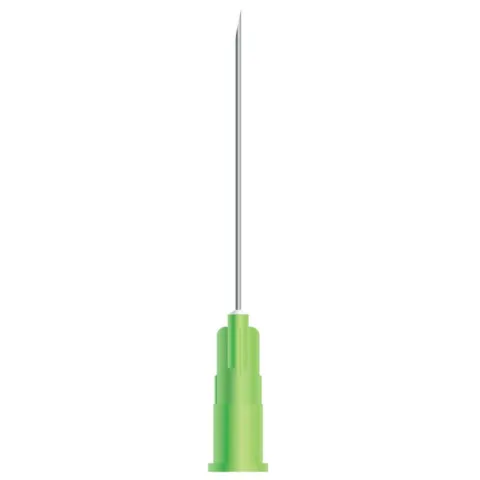
21G0.80 mmgreenadult blood draws, IM
22G0.70 mmblackIM, smaller veins
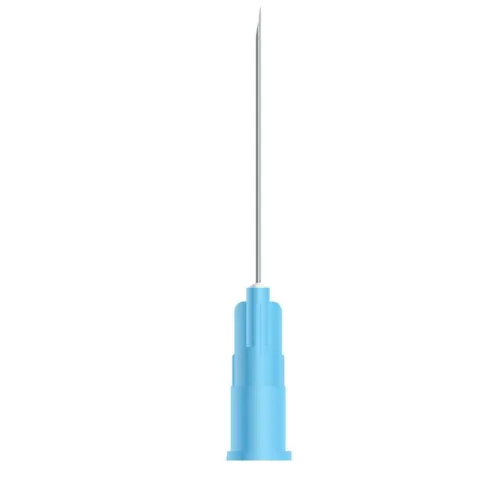
23G0.60 mmbluedeltoid IM, SC, fragile veins
24G0.55 mmpurplesubcutaneous
25G0.50 mmorangesubcutaneous, intradermal
26G0.45 mmbrownintradermal
27G0.40 mmgrayintradermal, local anesthesia
29G0.33 mmredinsulin
30G0.30 mmyellowinsulin, superficial injections
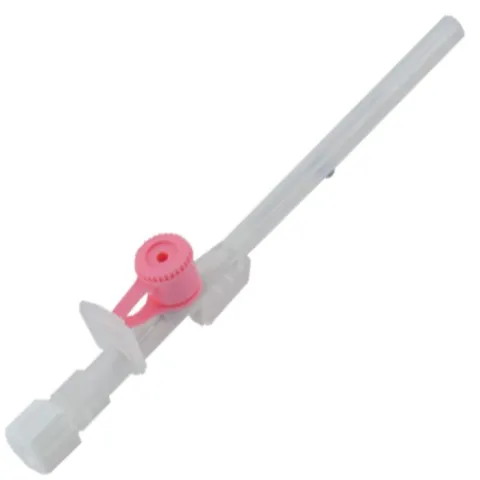
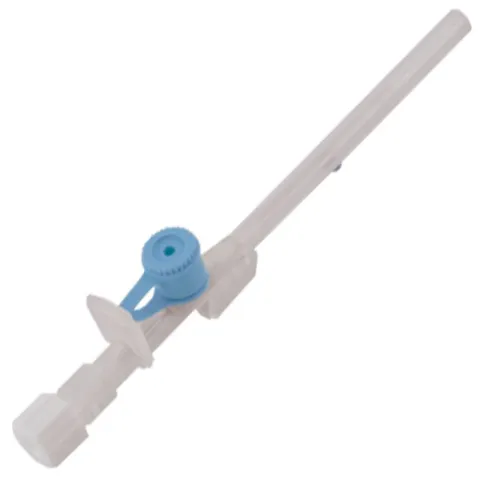
Watch out with IV cannulasPeripheral venous catheters (IV cannulas) have a different color code, set by ISO 10555-5: 14G orange, 16G gray, 18G green, 20G pink, 22G blue, 24G yellow, 26G violet. A pink hub means 18G on a needle but 20G on a cannula. Always read the number too, not just the color.
Length: inches and millimeters
Length is chosen according to how deep the substance needs to go. The conversions you'll see most often: ½″ = 13 mm, ⅝″ = 16 mm, 1″ = 25 mm, 1¼″ = 32 mm, 1½″ = 38 mm. A needle too short for an intramuscular injection leaves the drug in fatty tissue; one too long for a subcutaneous injection delivers it into muscle.
Which needle for each route of administration
Route
Angle
Usual needle
Length
Keep in mind
Intradermal (ID)
10 – 15°
26 – 27G
10 – 16 mm
Bevel up; a small wheal forms
Subcutaneous (SC)
45°, or 90° with short needles
23 – 27G
13 – 16 mm
Into the tissue under the skin, no massage afterward
Intramuscular (IM)
90°
21 – 25G
25 – 38 mm
Length depends on the muscle and fat layer
Venous blood draw
15 – 30°
21G, 22 – 23G for fragile veins
19 – 38 mm
Bevel up; tourniquet for no more than one minute
Drawing up from ampoule or vial
–
18 – 21G
25 – 38 mm
Many protocols require a new needle for the injection
Values are approximate. The final choice depends on the facility's protocol, the drug's package insert, and the patient's age and build.
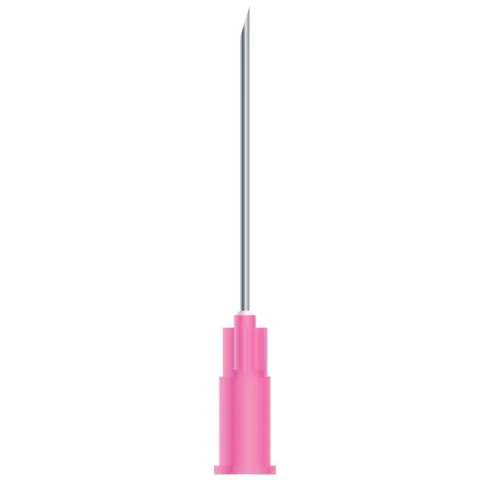
PRIMA Sterile Medical Syringe Needles, Thick, Large, 18G, for Intravenous, Hypodermic Injections and Infusions, Pink, 1.20x38mm, 100 pcs
(0)
in stock
1693Lei
excl. VAT: 13,99 Lei
PRIMA Syringe Needles, 21G, Long, Sterile, for Intravenous and Hypodermic Injections and Infusions, Green, 0.80x38mm, 100 pcs
(0)
in stock
1295Lei
excl. VAT: 10,70 Lei
PRIMA Sterile Medical Syringe Needle, Thin, 27G, for Intravenous, Hypodermic Injection and Infusion, Gray, 0.4x13 mm, 100 pcs
(0)
in stock
1392Lei
excl. VAT: 11,50 Lei
I
Doses in units
Insulin syringes
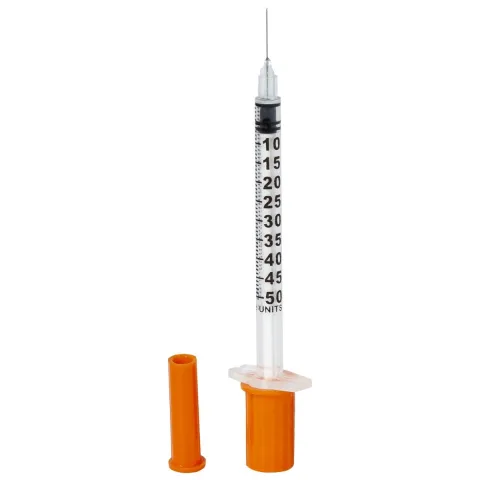
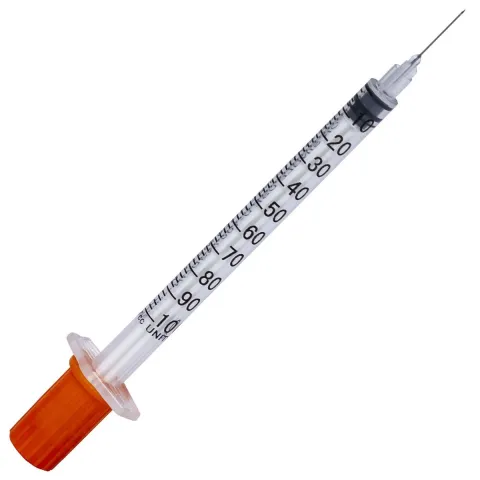
Insulin syringes are graduated in international units (IU), not milliliters, and are calibrated for a specific concentration. Vial insulin, the kind drawn up with a syringe, usually has a concentration of U-100: 100 units per milliliter. Higher concentrations, U-200 or U-300, exist only in pens and are not drawn up with a syringe. For U-100:
1 ml= 100 IUFor doses over 50 units; each graduation is usually 2 IU.
0.5 ml= 50 IUFor doses up to 50 units, with single-unit graduations that are easier to read.
0.3 ml= 30 IUFor small doses up to 30 units; some have half-unit graduations.
What matters in an insulin syringe
Syringe concentration = insulin concentration. A U-100 syringe used for U-40 insulin (found mainly in veterinary medicine) gives a dose 2.5 times smaller, and the other way around, 2.5 times larger.
A fixed needle has minimal dead space. Less insulin remains between the stopper and the needle tip, so you waste less and small doses are more accurate.
Short needles are preferred in adults. The international FITTER recommendations (2016) prefer the shortest needle, 4 mm for pens. Needles of 8 mm or longer are no longer recommended; if used, the injection is given into a skin fold so it stays subcutaneous. The exact technique is determined by the diabetologist.
Rotate injection sites and don't reuse the needle: the tip dulls after a single use, it hurts more, and repeated injections in the same spot produce lumps of fatty tissue (lipohypertrophy), from which insulin is absorbed irregularly.
For small doses expressed in milliliters, not units: 1 ml tuberculin syringes with 25G needle. For insulin pens: PEN needles 29G × 12 mm, compatible with universal pens; since they are long, they are used with a skin fold, as directed by the physician.
Seringi de insulină U-100
PRIMA Insulin Syringes 0.5 ml with Fixed Needle 30G 1/2" (0.30 x 13 mm), 100 pcs
(0)
in stock
4719Lei
excl. VAT: 39,00 Lei
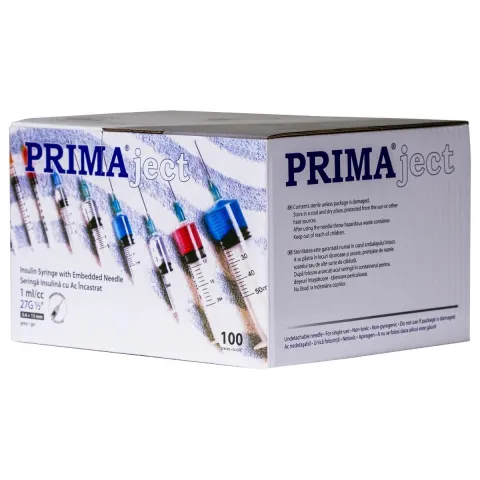
PRIMA Insulin Syringes 1 ml with Fixed Needle 29G 1/2" (0.33 x 13 mm), 100 pcs
(0)
in stock
4839Lei
excl. VAT: 39,99 Lei
PRIMA 1 ml Insulin Syringes with Fixed Needle 27G 1/2" (0.4 x 13 mm), 100 pcs
(0)
in stock
4078Lei
excl. VAT: 33,70 Lei
R
Closed vacuum system
Blood collection: vacutainer, holder, butterfly
Drawing blood with a syringe works, but the closed vacuum system is safer and faster: blood flows directly into the tube, in the correct amount for the additive it contains, without transfer from one container to another. You need three pieces:
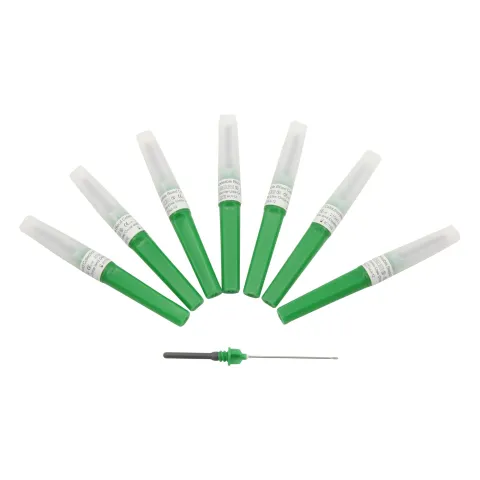
The vacutainer needleIt has two points: one goes into the vein, the other, covered by a rubber sleeve, pierces the tube stopper. The sleeve closes again when you remove the tube, so no blood leaks. The standard for adults is 21G green.
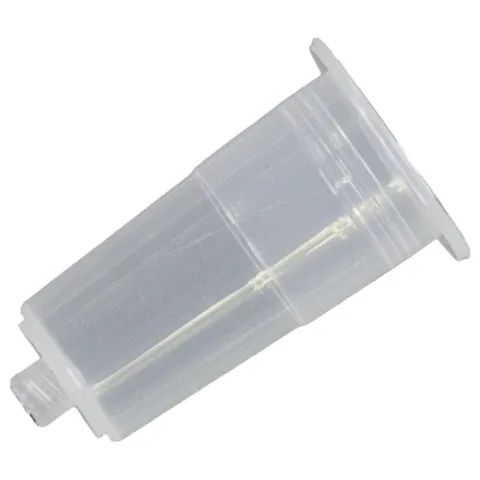
The holderThe transparent holder into which the needle screws and into which you push the tubes one by one. It is single-use and is discarded together with the needle, without separating them.
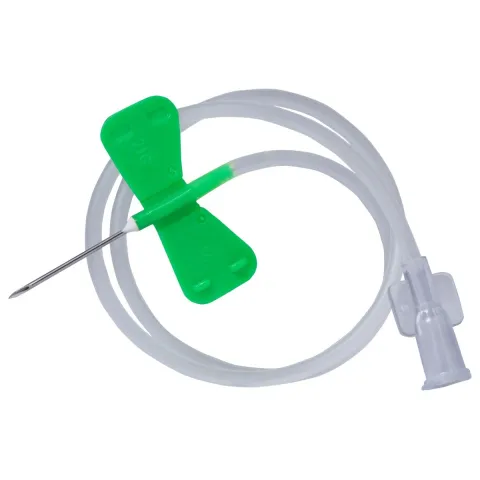
The butterflyA short needle with wings and flexible tubing, for small or fragile veins, children, the elderly and hand draws. The wings give you fine control during venipuncture.
Order of draw
Additives in one tube can contaminate the next tube and alter results; for example, EDTA falsely raises potassium. That's why tubes are filled in a recommended order (CLSI GP41):
Order
Tube
Additive
For
1
Blood culture
culture medium
Microbiology
2
light blue cap
sodium citrate
Coagulation
3
red or yellow cap
clot activator, with or without gel
Chemistry, serum
4
green cap
heparin
Plasma chemistry
5
lavender cap
EDTA
Hematology, CBC
6
gray cap
sodium fluoride
Glucose, lactate
Cap colors may vary between manufacturers, and special tubes, such as those for ESR, are drawn according to the laboratory's procedure. Always follow the tube label.
PRIMA Sterile Vacutainer Needles, 21Gx1 1/2, Green, 100 pcs
(0)
in stock
3509Lei
excl. VAT: 29,00 Lei
Blood Collection Holder for Vacutainer, PRIMA, Luer Lock, 100 pcs
(0)
in stock
2541Lei
excl. VAT: 21,00 Lei
Sterile Butterfly Infusion Sets with 21G Needle - Green - 100 pcs
(0)
in stock
3509Lei
excl. VAT: 29,00 Lei
Beyond the syringe: IV cannulas
When a patient needs multiple intravenous administrations or an infusion, instead of repeated sticks an IV cannula (peripheral venous catheter) is placed. Choose the smallest gauge that allows the treatment: 20–22G for most adult infusions, 18G and larger for high flow, 24–26G for children and very fragile veins. Secure the cannula with a dedicated sterile dressing and note the insertion date.
Branule cu valvă și plasturi de fixare
PRIMA Color-Coded IV Cannulas, 14G - 26G, with Wings and Catheter, 100 pcs
(0)
in stock
9559Lei
excl. VAT: 79,00 Lei
Color-Coded IV Cannulas, 14G - 26G, with Wings and Catheter, PRIMA, 100 pcs
(0)
in stock
9559Lei
excl. VAT: 79,00 Lei
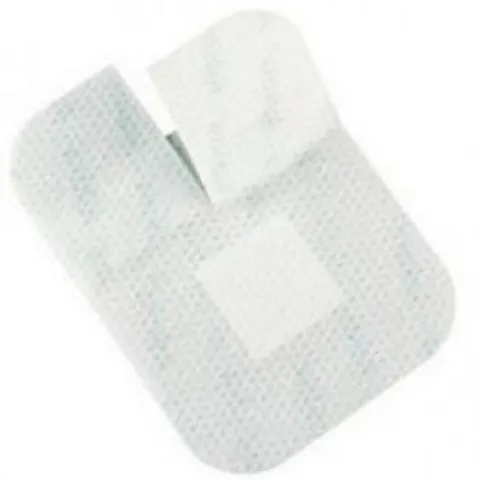
PRIMA Sterile IV Cannula Fixation Dressings, PPSB, 8x6 cm, 50 pcs
(0)
in stock
1755Lei
excl. VAT: 14,50 Lei
Safe injection, step by step
Most injection-related incidents come not from technique but from preparation and what happens afterward. The steps below follow the World Health Organization's best practice principles for injections.
Hand hygiene and a clean work areaPrepare the medication on a clean surface, separate from the area where blood samples and waste are kept.
Check the packaging and expiration dateSterility is guaranteed only as long as the blister pack is intact. Wet, torn or open packaging means the syringe gets thrown away.
Disinfect the vial stopper and let the alcohol dryUse a 70% alcohol pad on the rubber stopper and wait until it is completely dry: that way it works and doesn't get into the medication.
A new syringe and a new needle for every injectionNever reinsert a used syringe or needle into a multi-dose vial, not even for the same patient, and don't leave a needle stuck in the stopper.
Expel the air and check the dose at eye levelHold the syringe upright, needle up, tap the barrel gently and push the bubbles out. Read the dose at the edge of the stopper.
Disinfect the skin and wait for it to dryOn skin that is still wet, alcohol stings and disinfects less effectively.
Inject at the angle and depth appropriate to the routeWithdraw the needle along the same path and apply a sterile gauze swab, without massaging the site for subcutaneous injections.
Immediately discard the syringe with needle in the sharps containerWithout recapping, without detaching the needle, and without leaving the syringe on the tray "for later".
Pentru pregătire: tampoane cu alcool, comprese, garou
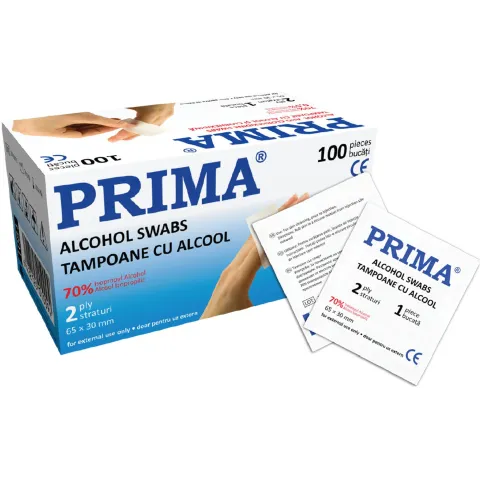
PRIMA Sterile Alcohol Prep Pads, 6.5 x 3 cm, 100 pcs
(0)
in stock
666Lei
excl. VAT: 5,50 Lei
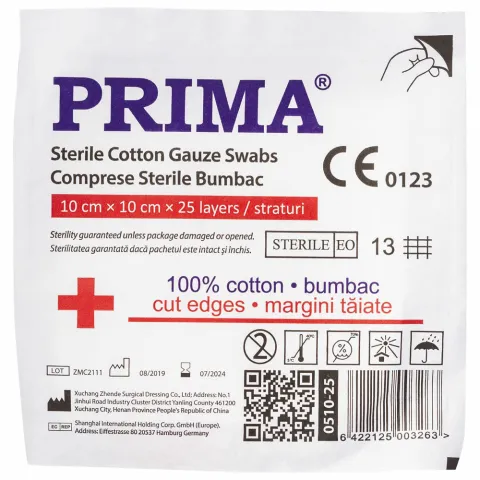
Sterile Gauze Swabs, PRIMA, 10x10cm, 25 pcs
(0)
in stock
120Lei
excl. VAT: 0,99 Lei
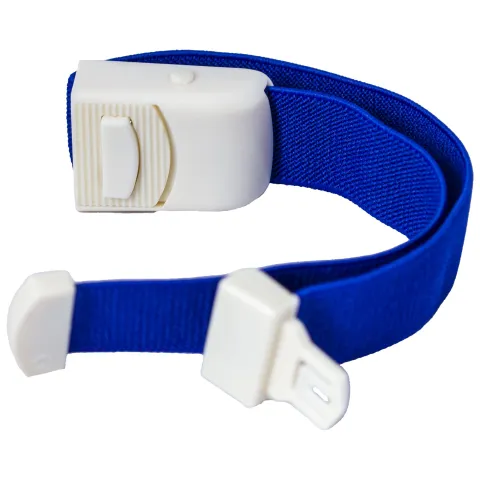
PRIMA Elastic Textile Medical Tourniquet with Quick Release, Blue, 2.5cm x 40cm
(0)
in stock
725Lei
excl. VAT: 5,99 Lei
!
The most important step
Used needles: where and how to dispose of them
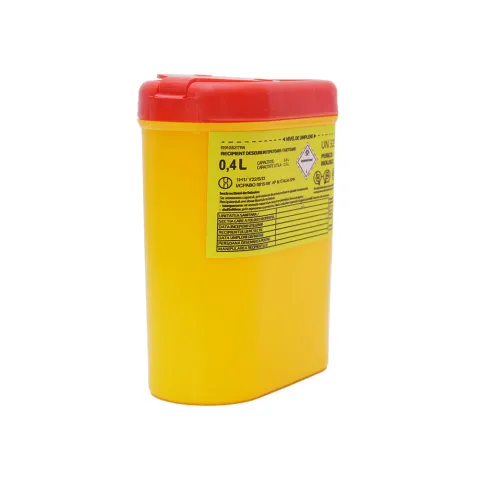
Needlestick injuries almost always happen after the injection: when recapping, detaching the needle, clearing the tray, or with an overfilled container. Directive 2010/32/EU on the prevention of sharp injuries in the hospital and healthcare sector calls for eliminating exactly these actions. In Romania, medical waste collection follows Ministry of Health Order no. 1226/2012.
1ImmediatelyThe syringe with needle goes into the container right at the injection site, with no intermediate steps.
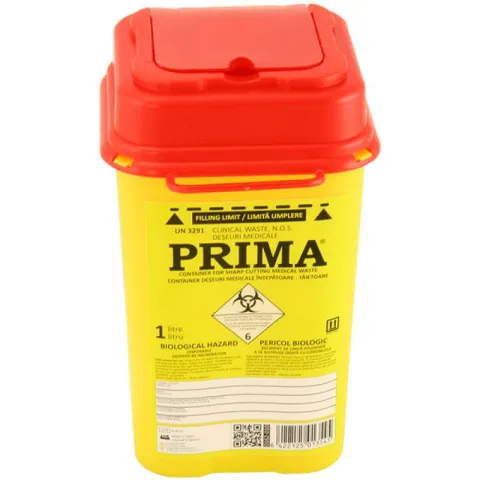
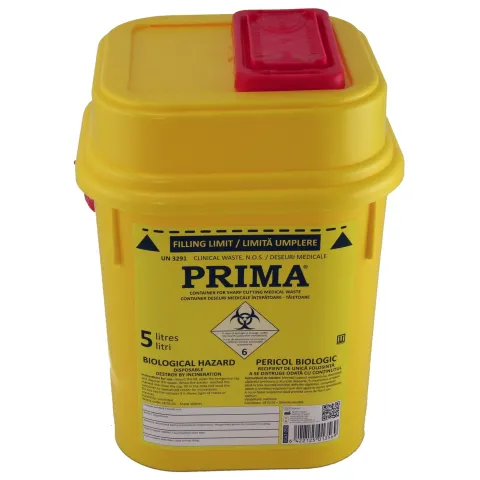
2Rigid containerPlastic, puncture-resistant, with a lid, marked with the biohazard symbol.
3Up to the lineDon't fill above the marked line, then close it permanently and hand it over to the authorized operator.
If you've been stuck with a used needle
Let the wound bleed under running water and wash it with soap and water, without scrubbing or sucking it.
If blood got onto mucous membranes or into the eyes, rinse thoroughly with water or saline solution.
Immediately notify the chief physician or the infection prevention officer and record the source patient.
Assessment for post-exposure prophylaxis should be done as soon as possible, ideally within the first few hours.
Sterile syringes and needles are medical devices under Regulation (EU) 2017/745. Alongside the CE marking, the four-digit number of the notified body that certified the product must appear.
ISO 7886-1 and ISO 7864 syringes and needles
The standards for sterile single-use hypodermic syringes and sterile hypodermic needles: leak-tightness, graduation accuracy, needle strength, lubrication.
ISO 6009 and ISO 8537 colors and insulin
ISO 6009 sets the color code for needles by gauge. ISO 8537 describes insulin syringes, including the concentration for which they are graduated.
STERILE EO sterilization method
"EO" means ethylene oxide sterilization, the usual method for plastics. Next to it you'll find the lot number and expiration date.
Crossed-out 2 do not reuse
The "single use" symbol. It doesn't mean "twice" but "never a second time", not even for the same patient.
Latex-free sensitive patients
Stoppers may be made of natural or synthetic rubber. For patients allergic to latex, look for the "latex-free" statement or symbol on the packaging.
Common mistakes
Recapping the needleTwo-handed recapping is the most common cause of needlesticks. The syringe with needle goes straight into the container.
Changing only the needle and reusing the syringeThe syringe becomes contaminated through backflow, even if you can't see it. The syringe and needle are both single-use.
Going by color alonePink means 18G for hypodermic needles but 20G for IV cannulas. Read the number on the hub or packaging.
Using a U-100 syringe for another insulin concentrationThe dose ends up 2.5 times off. The syringe must have the same concentration as the insulin.
Measuring a small dose in a large syringeHalf a milliliter in a 20 ml syringe can't be read precisely. Choose the smallest syringe that holds the dose.
Leaving a needle stuck in a multi-dose vialThe needle becomes an entry point for microorganisms into the whole vial.
Using a Guyon syringe for injectionsIts tip is made for feeding tubes and irrigation, not for needles or intravenous lines.
Filling the sharps container up to the lidNeedles poke out through the opening when you add another. Close it permanently at the marked line.
Syringes, needles and everything that goes with them, delivered by Prima Shop
Luer Slip and Luer Lock syringes, insulin and Guyon syringes, needles in every gauge, blood collection supplies and sharps containers, with company invoicing.
Gauge comes from an old wire measurement scale: the number shows how many times the wire was drawn through a die to thin it. The more times it was drawn, the thinner it is, so a higher number means a thinner needle.
Can I reuse a syringe if I change the needle?
No. The syringe becomes contaminated through backflow of blood or fluid, even if nothing is visible. The syringe and needle are single-use and are discarded together.
Does a thinner needle hurt less?
Usually yes, and thin, silicone-lubricated needles penetrate more easily. However, a needle that is too thin makes injecting viscous solutions slow and difficult, and during blood draws it can damage red blood cells. Choose the thinnest needle suitable for the procedure, not the thinnest needle possible.
What's the difference between a vacutainer needle and a regular needle?
A vacutainer needle has two points and a rubber sleeve on the tube side and is used only with the holder. A regular needle has a single point and attaches to a syringe.
Do syringes and needles expire?
Yes. The packaging shows the date until which the manufacturer guarantees sterility, provided the blister pack is intact. Store them in a dry place, away from sunlight and heat.
Where do I dispose of syringes used at home?
In a rigid container that cannot be punctured and closes tightly, never loose in household trash or recyclables. Ask your family doctor, pharmacy or sanitation service where you can drop off the full container.