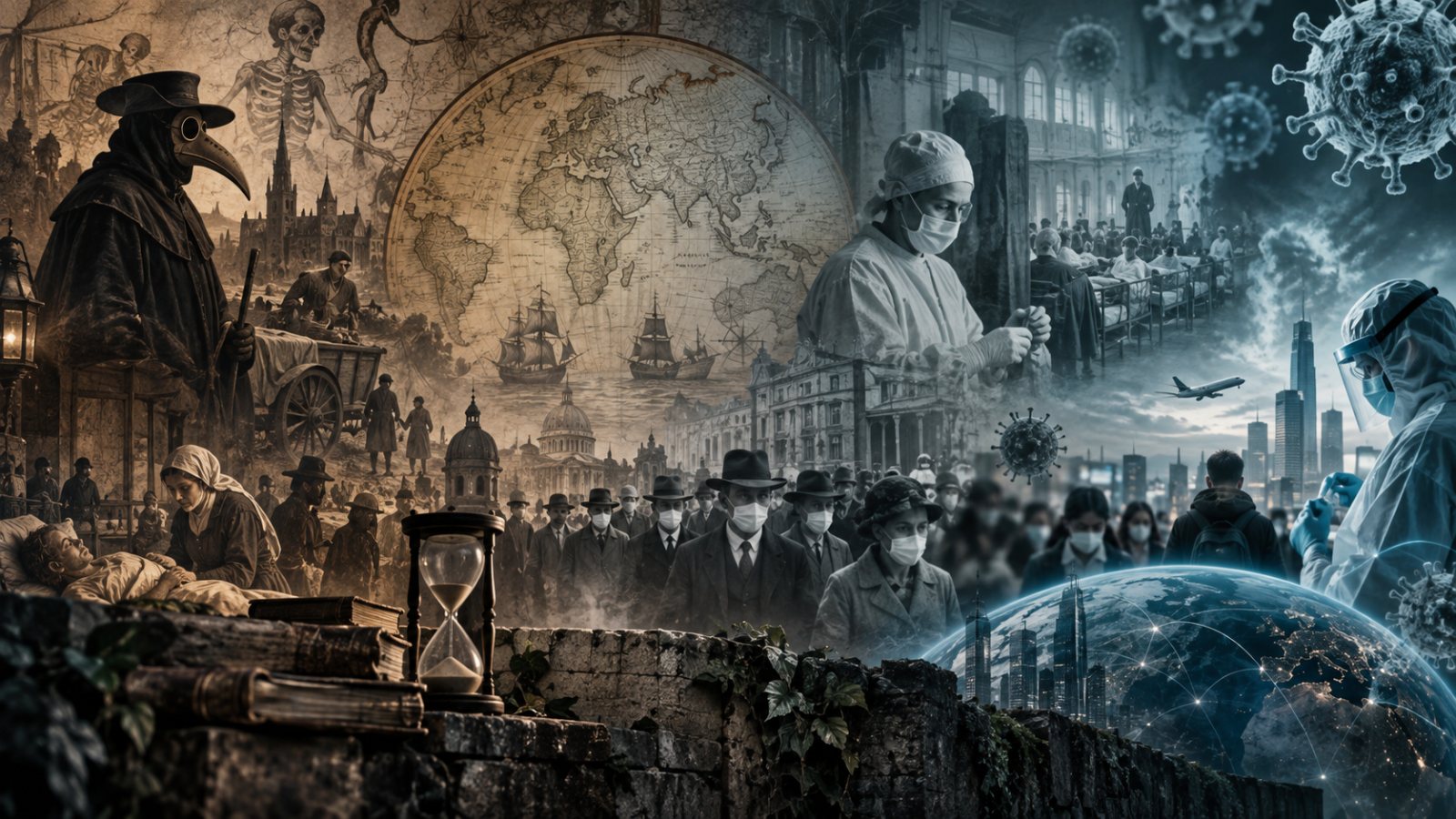
Epidemics have changed history more than many wars. They toppled empires, emptied cities, shifted borders and changed the way we work, build and care for one another. They also gave rise to quarantine, medical statistics, vaccines and the hygiene rules we follow today without a second thought.
Below you will find 21 of the worst epidemics and pandemics in history, in chronological order: what caused them, how they spread, how many lives they claimed and what lesson they left behind. Figures for older epidemics are historians' estimates and can vary widely from one source to another.
⅓ – ½of Europe's populationkilled by the Black Death between 1346 and 1353.
1980smallpox eradicatedafter a disease that killed around 300 million people in the 20th century alone.
> 99%fewer polio casesthan in 1988, thanks to the global vaccination campaign.
Outbreak, epidemic, pandemic: what's the difference
Outbreak localLinked cases in a limited place and time: a school, a hospital, a wedding. It can be stopped quickly if detected in time.
Endemic constantThe disease is permanently present in a region, at a predictable level. Malaria is endemic in many tropical areas.
Epidemic above normalThe number of cases rises suddenly above the usual level, in a region or a country.
Pandemic globalAn epidemic that spreads across several countries or continents. The term describes geographic spread, not the severity of the disease.
Timeline of the 21 epidemics
bacteriumvirusuncertain cause
- Antiquity
-
430–426BC
01 · Ancient Greece
The Plague of Athens
uncertain cause: typhus, smallpox or typhoid fever
It broke out in the second year of the Peloponnesian War, when the people of Attica were sheltering, crowded together, behind the walls of Athens. The historian Thucydides, who fell ill and survived, described the fever, the rashes and the agonizing thirst of the sick. Among the victims was Pericles, the city's leader.
- Deaths (estimates)
- a quarter to a third of the population of Athens
- Legacy
- the first detailed description of an epidemic and the observation that survivors did not fall seriously ill a second time
-
165–180AD
02 · Roman Empire
The Antonine Plague
virus, most likely smallpox
Accounts from the time say it was brought back by legions returning from campaigns in the East. The physician Galen described the fever, diarrhea and skin rashes, on the basis of which researchers believe it was smallpox. It is named after the Antonine dynasty, to which Emperor Marcus Aurelius belonged.
- Deaths (estimates)
- 5–10 million people, around 10% of the empire's population
- Legacy
- a Roman army and economy weakened for decades
-
249–262AD
03 · Roman Empire
The Plague of Cyprian
unknown cause
It is named after Bishop Cyprian of Carthage, who described it as a sign of the end of the world. According to some ancient sources, at its peak it killed up to 5,000 people a day in Rome. In Luxor, Egypt, archaeologists found a burial site from that period, with bodies covered in a thick layer of lime, used at the time as a disinfectant, and the kilns where the lime was produced.
- Deaths (estimates)
- unknown; sources of the time describe entire cities depopulated
- Legacy
- one of the oldest archaeological records of lime being used against disease
-
541–549recurrences until 750
04 · Byzantine Empire and the Mediterranean
The Plague of Justinian
bacterium · Yersinia pestis
The first documented plague pandemic. It started in Egypt and reached Constantinople in 542, carried by rats and fleas on grain ships. The historian Procopius wrote of thousands of deaths a day in the capital, and Emperor Justinian fell ill and survived. DNA analysis of victims' skeletons confirmed the plague bacterium in the 21st century.
- Deaths (estimates)
- classic estimates: 25–50 million, including recurrences; recent studies suggest the impact was smaller
- Legacy
- an empire weakened just as it was trying to reconquer the west of the former Roman Empire
- The Middle Ages and the early modern era
-
1346–1353Europe, Asia, North Africa
05 · The deadliest pandemic on record
The Black Death
bacterium · Yersinia pestis
The plague came from Central Asia along trade routes, reached Crimea in 1346 and, aboard Genoese ships, Messina in 1347. Within a few years it killed between a third and half of Europe's population. The labor shortage drove up wages and weakened serfdom. In 1377, Ragusa (today Dubrovnik) imposed a 30-day isolation on ships and travelers; Venice later extended it to 40, "quaranta giorni", which gave us the word "quarantine".
- Deaths (estimates)
- 25–50 million in Europe alone
- Legacy
- quarantine, the first organized public health measure
-
from 1520the Americas
06 · Mexico, Central and South America
Smallpox in the New World
virus · variola virus
Brought by Spanish expeditions, smallpox struck populations that had never encountered the disease and had no immunity. In 1520 it killed Cuitláhuac, the Aztec ruler, and Tenochtitlan fell the following year. Together with measles, influenza and typhus, wars and exploitation, over the next century it led to the loss of a large part of the indigenous population, up to 90% in some regions.
- Deaths (estimates)
- tens of millions in the Americas; in the 20th century alone, smallpox killed around 300 million people worldwide
- Legacy
- Edward Jenner's vaccine (1796) and the eradication of smallpox, declared by the WHO in 1980
-
1545–1548Mexico
07 · New Spain
Cocoliztli
bacterium, most likely Salmonella Paratyphi C
In Nahuatl, "cocoliztli" means "pestilence". The sick had high fever, headaches and bleeding, and death came within a few days, in a population already weakened by a terrible drought. In 2018, a genetic study of victims' skeletons from Teposcolula-Yucundaa found the bacterium that causes paratyphoid fever, the strongest explanation so far.
- Deaths (estimates)
- 5–15 million people, a large part of Mexico's indigenous population
- Legacy
- genetic archaeology, which today identifies centuries-old microbes
-
1665–1666England
08 · London
The Great Plague of London
bacterium · Yersinia pestis
The last major plague outbreak in England. Those who could afford it, including King Charles II and the court, left the city. Houses with sick people were shut with the family inside and marked with a red cross. The village of Eyam, in Derbyshire, isolated itself voluntarily to keep the disease from spreading: more than 250 villagers died, but the surrounding region was spared.
- Deaths (estimates)
- around 100,000 people, nearly a quarter of London's population
- Legacy
- the example of Eyam, a community isolating itself voluntarily for the good of others
-
1770–1772Russia
09 · Moscow
The Moscow Plague
bacterium · Yersinia pestis
Brought from the theater of the Russo-Turkish War, the plague reached Moscow in 1770. In September 1771, fear and quarantines led to the Plague Riot: Archbishop Ambrosius, who had moved a venerated icon to prevent crowds, was killed by the mob. Catherine II sent Grigory Orlov to restore order and organize hospitals, quarantines and the disinfection of homes.
- Deaths (estimates)
- 50,000–100,000 people in Moscow alone
- Legacy
- a lesson about communication: measures imposed without people's trust can provoke riots
-
1793United States
10 · Philadelphia
The Philadelphia Yellow Fever Epidemic
virus, transmitted by mosquitoes
Philadelphia was then the capital of the United States. More than 20,000 residents, including members of the government, fled the city. No one knew the disease was transmitted by mosquitoes, and the epidemic stopped only when the autumn cold killed them. Members of the Free African Society cared for the sick, based on the mistaken belief that Black people were immune; many of them died.
- Deaths (estimates)
- around 5,000 people, nearly a tenth of the city's population
- Legacy
- mosquito transmission, confirmed in 1900 by Walter Reed's team; today there is a vaccine
- The 19th century
-
1813–1814Wallachia
11 · Bucharest
Caragea's Plague
bacterium · Yersinia pestis
The best-known epidemic in the history of Bucharest is named after the ruling prince of the time, Ioan Gheorghe Caragea. The plague hit the capital and the surrounding villages hard, and the gravediggers who collected the dead remained in the city's memory as nightmarish figures. Many of the dead were buried in mass graves.
- Deaths (estimates)
- tens of thousands of people in Wallachia
- Legacy
- in the following decades, the Principalities set up permanent quarantine stations on the Danube
-
from 18177 pandemics
12 · On every continent
The Cholera Pandemics
bacterium · Vibrio cholerae, through water and food
The first pandemic started in 1817 in the Ganges delta, in Bengal. Six more followed, on every continent, Romania included. In 1854, in London, physician John Snow mapped the cases in one neighborhood and showed that they all led to the same water pump, on Broad Street. Removing the pump handle became the symbol of modern epidemiology. The seventh pandemic, which began in 1961, continues to this day.
- Deaths (estimates)
- millions of people in the 19th century; today, between 21,000 and 143,000 deaths a year, according to the WHO
- Legacy
- drinking water, sewage systems and oral rehydration salts, which save most patients
-
1889–1890worldwide
13 · The first pandemic of the industrial age
The "Russian" Flu
virus, most likely influenza
The first cases were reported in Saint Petersburg, and within a few months the disease circled the globe by train and steamship, followed by the press around the world. The cause is uncertain: an influenza virus, according to the classic hypothesis, or the human coronavirus OC43, according to a newer one.
- Deaths (estimates)
- around 1 million people
- Legacy
- proof that transport networks can carry a disease around the world in a few weeks
- The 20th century
-
1918–1920worldwide
14 · During and after World War I
The Spanish Flu
virus · influenza A(H1N1)
It infected around 500 million people, a third of the world's population, in three waves. Unlike ordinary flu, it killed many young, healthy adults. It did not come from Spain: the Spanish press, uncensored during the war, was simply the first to write freely about it. With no vaccine and no antibiotics for the pneumonias that followed, cities defended themselves with masks, by closing schools and theaters and by banning gatherings.
- Deaths (estimates)
- at least 50 million people, according to the CDC
- Legacy
- non-pharmaceutical measures: cities that adopted them earlier had fewer deaths
-
1916–1955peak of the epidemics
15 · United States and Europe
The Polio Epidemics
virus · poliovirus
In 1916, an epidemic that started in New York led to more than 27,000 cases and 6,000 deaths in the United States, mostly children. The virus spreads through contaminated hands, water and food and can cause paralysis, sometimes even of the respiratory muscles; the "iron lung" kept thousands of patients alive. The Salk injectable vaccine (1955) and the Sabin oral vaccine (1960s) changed everything.
- Deaths (estimates)
- in 1988 there were still around 350,000 cases of paralysis a year
- Legacy
- cases have fallen by more than 99%; the wild virus now circulates only in Pakistan and Afghanistan
-
1957–1958worldwide
16 · Started in China
The Asian Flu
virus · influenza A(H2N2)
It appeared in China in early 1957 and within a few months reached Singapore, Hong Kong and the United States. This time, laboratories quickly isolated the virus, and a vaccine was available within a few months. A decade later, the Hong Kong flu (1968–1969, H3N2) killed around another million people.
- Deaths (estimates)
- around 1.1 million people, according to the CDC
- Legacy
- the global influenza surveillance network, which selects the vaccine strains every year
-
from 1981worldwide
17 · Ongoing pandemic
HIV/AIDS
virus · HIV, through blood and sexual contact
The first AIDS cases were described in 1981, in the United States. Genetic studies show that the virus passed from chimpanzees to humans in Central Africa, around the 1920s. In Romania, in the late '80s and early '90s, more than 10,000 children were infected, mainly through reused syringes and needles and untested transfusions. Combination antiretroviral therapy, available since 1996, turned the disease into a chronic one.
- Deaths (estimates)
- more than 40 million people since the start of the epidemic, according to UNAIDS
- Legacy
- tested blood, disposable needles and syringes, and universal precautions in hospitals
- The 21st century
-
2002–200329 countries
18 · The first pandemic coronavirus
SARS
virus · SARS-CoV
It started in southern China and spread to 29 countries, largely through hospitals: about one fifth of patients were healthcare workers. It was stopped in less than a year, without a vaccine, through case detection, isolation, contact tracing and protective equipment.
- Deaths
- 8,096 cases and 774 deaths, according to the WHO
- Legacy
- the International Health Regulations revised in 2005 and pandemic preparedness plans
-
2009–2010worldwide
19 · Started in North America
The Swine Flu
virus · influenza A(H1N1)pdm09
A new virus, with genes from swine, avian and human influenza, emerged in Mexico and the United States in spring 2009, and the WHO declared a pandemic in June. Unlike seasonal flu, it hit mainly children and young adults: about 80% of deaths were in people under 65.
- Deaths (estimates)
- between 151,700 and 575,400 deaths in the first year, according to the CDC
- Legacy
- the virus is now part of the annual flu vaccine
-
2014–2016West Africa
20 · Guinea, Liberia, Sierra Leone
Ebola
virus · Ebola, through blood and body fluids
It began in Guinea in late 2013 and spread to Liberia and Sierra Leone, with exported cases in Europe and the United States as well. It is transmitted through direct contact with the blood and body fluids of sick or deceased people, which is why patient care and burial rituals were at the center of the epidemic. More than 500 healthcare workers died.
- Deaths
- 28,600 cases and 11,325 deaths, according to the CDC
- Legacy
- strict donning and doffing protocols and a vaccine approved in 2019
-
from 2019worldwide
21 · The most recent pandemic
COVID-19
virus · SARS-CoV-2
The first cases were reported in Wuhan in December 2019, and the WHO declared a pandemic on March 11, 2020. The virus spreads mainly through the air, via respiratory particles, including from people without symptoms. Vaccines were developed and authorized in less than a year, and the public health emergency of international concern ended on May 5, 2023.
- Deaths
- more than 7 million deaths reported to the WHO; estimated excess mortality for 2020–2021 was nearly 15 million
- Legacy
- masks, hand hygiene, ventilation and telemedicine, now part of everyday routine
There were other serious epidemics that did not make the list: the Great Plague of Marseille (1720–1722), MERS (since 2012, nearly 2,600 confirmed cases and more than 900 deaths), the 2015–2016 Zika epidemic, with thousands of children born with microcephaly, and mpox in 2022.
What they taught us, in order of discovery
- 1377 · QuarantineRagusa isolates ships and travelers for 30 days, and Venice extends the period to 40. The principle is still used today, from isolating the sick to quarantining contacts.
- 1796 · The first vaccineEdward Jenner shows that inoculation with cowpox protects against smallpox. The word "vaccine" comes from the Latin "vacca" (cow).
- 1847 · Hand hygieneIn Vienna, Ignaz Semmelweis requires handwashing with chlorinated lime solution before deliveries, and deaths from puerperal fever drop dramatically.
- 1854 · EpidemiologyJohn Snow links cholera cases to a contaminated water pump and shows that data and a map can stop an epidemic.
- 1880s · GermsLouis Pasteur and Robert Koch prove that infectious diseases are caused by microorganisms. Koch identifies the tuberculosis bacillus (1882) and the cholera vibrio (1883).
- 1928 · AntibioticsAlexander Fleming discovers penicillin, widely used from the 1940s. Bacterial diseases such as plague become treatable.
- 1980 · Smallpox eradicationAfter a global vaccination campaign, the WHO declares smallpox eradicated, the first and only human disease completely eliminated.
- 2020 · Vaccines in less than a yearNew technologies, including mRNA vaccines, make it possible to develop and authorize a COVID-19 vaccine within months.
How they spread and how we protect ourselves today
Almost all the epidemics on the list fall into a few routes of transmission. For each one there are clear measures, and many of them require nothing more than discipline and the right equipment.
| Route | Examples from the list | How we protect ourselves today |
|---|
| Air and respiratory droplets | Influenza, SARS, COVID-19, smallpox | Vaccination, ventilation, isolating the sick, medical face masks or FFP2 respirators, depending on the risk |
| Hands and surfaces | Influenza, polio, Ebola | Hand sanitizer, disinfection of frequently touched surfaces |
| Water and food | Cholera, cocoliztli, polio | Drinking water, sewage systems, handwashing, well-cooked food, vaccination |
| Blood and body fluids | HIV, Ebola | Disposable needles and syringes, gloves, protective equipment, tested blood |
| Fleas and rodents | Plague of Justinian, Black Death, Caragea's Plague | Rodent control, household hygiene, detection and antibiotics |
| Mosquitoes | Yellow fever, Zika | Eliminating standing water, nets and repellents, yellow fever vaccine |
+The lessons, applied today
Everyday protection, in the practice and at home
Today's epidemics are stopped with the same principles as centuries ago, only now we have much better tools. In healthcare facilities, pharmacies and anywhere with lots of people, a few gestures repeated correctly make the difference.
Medical face mask or FFP2?
Type IIR medical face mask EN 14683Filters at least 98% of bacteria in exhaled air and resists splashes. It mainly protects those nearby from the wearer's droplets. Replace it after a few hours or as soon as it gets damp.
FFP2 respirator EN 149Filters at least 94% of particles and seals tightly to the face, so it protects the wearer from aerosols. It is used for aerosol-generating procedures and in contact with airborne diseases.
- PRIMA type IIR surgical masks, 3-ply with a meltblown filter layer, compliant with EN 14683, and Abena IIR medical face masks, compliant with EN 14683:2019. For children: children's medical face masks.
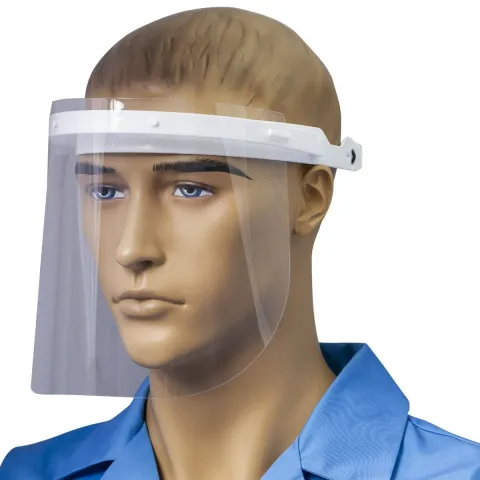
- PRIMA face shield, reusable, with 10 replacement visors, or indirect-vent safety goggles, for procedures with a risk of splashing.
- PRIMA hooded coverall, made of nonwoven fabric, and visitor protective gowns, for isolation areas.
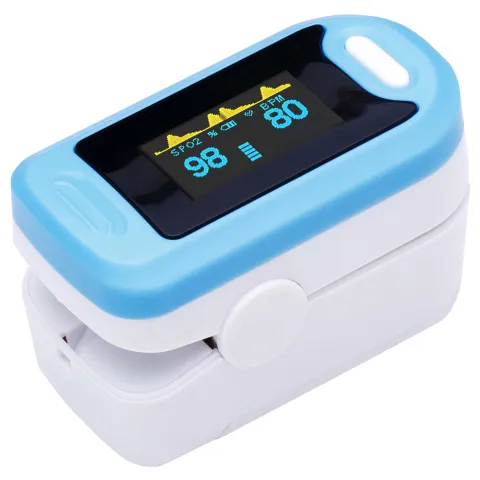
- For fever screening: the Microlife NC150 non-contact thermometer, the PRIMA ear and forehead thermometer and, for oxygen saturation, the fingertip pulse oximeter.
Respiratory and face protection
Promoted i
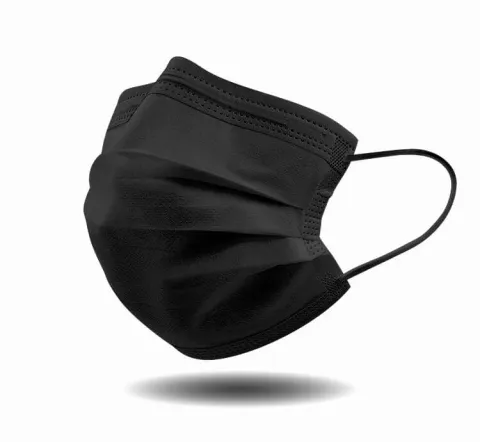
PRIMA Medical Surgical Masks with Ear Loops, Type IIR, 3-Ply, 50 pcs, Assorted Colors
in stock
9 variante
908Lei
excl. VAT: 7,50 Lei
Abena 3-Ply Medical Face Masks Type IIR - 50 pcs
in stock
1390Lei
excl. VAT: 11,49 Lei
PRIMA Face Shield Visor, 28 x 19 cm, 1 Reusable Frame + 10 Anti-Fog Shields
in stock
3 variante
3207Lei
excl. VAT: 26,50 Lei
Hand and surface hygiene
from 5,63 lei
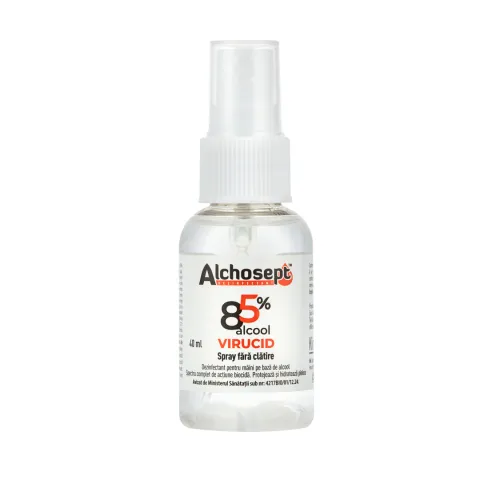
Alchosept Professional Hand and Skin Disinfectant with 85% Alcohol
in stock
11 variante
563Lei
excl. VAT: 4,65 Lei
Promoted i
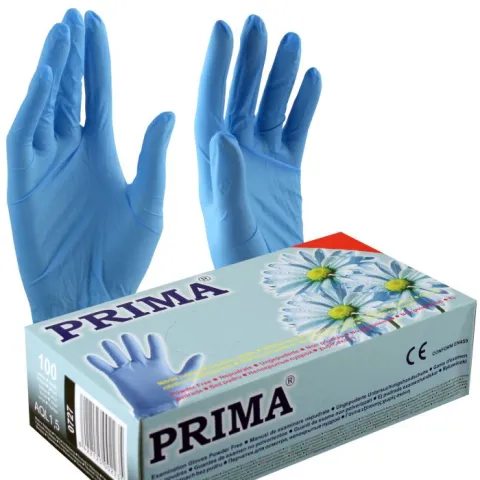
PRIMA Blue Nitrile Examination Gloves, Powder-Free, Sizes S-XL, 100 pcs
in stock
5 variante
2965Lei
excl. VAT: 24,50 Lei
from 18,00 lei

Klintensiv Ready-to-Use Surface Disinfectant
in stock
5 variante
1800Lei
excl. VAT: 14,88 Lei
Protective and monitoring equipment
from 9,92 lei

Particle Protective Coverall, Nonwoven Material, 2XL / 3XL, White, with Hood, PRIMA
in stock
2 variante
1088Lei
excl. VAT: 8,99 Lei
Microlife NC150 Non-Contact Forehead Thermometer
in stock
20159Lei
excl. VAT: 166,60 Lei
PRIMA Color Fingertip Pulse Oximeter for SpO2 and Pulse Rate, (WEEE), 1 pc
in stock
8278Lei
excl. VAT: 68,41 Lei
Ready for respiratory infection season
At reception- Hand sanitizer at the entrance
- Medical face masks for patients with symptoms
- Non-contact thermometer
- Staggered appointments, no crowding
In the treatment room- Ventilation between patients
- Disinfection of frequently touched surfaces
- Gloves, mask and face shield during procedures
- Infectious waste container
For the team- Annual flu vaccination
- Hand hygiene at the 5 moments
- Stay home when you have a fever
- A few weeks' stock of equipment
Protective and hygiene equipment, delivered by Prima Shop
Medical face masks, face shields, gowns and coveralls, gloves, hand and surface disinfectants and thermometers, always in stock, with company invoicing.
Frequently asked questions
What was the worst pandemic in history?
As a share of the population, the Black Death: between a third and half of Europe's inhabitants died within a few years. By number of victims, smallpox is among the diseases that have killed the most people in history, with about 300 million deaths in the 20th century alone.
Does plague still exist today?
Yes, but it is rare. The bacterium still circulates among wild rodents in some regions of Africa, Asia and the Americas, and human cases occur, for example, in Madagascar and the Democratic Republic of the Congo. Diagnosed in time, plague is treated with antibiotics.
Why is it called the "Spanish flu" if it didn't start in Spain?
Spain was neutral in World War I and its press was not censored, so it was the first to write freely about the disease. Countries at war concealed information, and the name stuck to Spain.
What is the difference between quarantine and isolation?
Isolation applies to sick people, so they don't pass on the disease. Quarantine applies to healthy people who have been exposed, for the period during which they could become ill.
Could a new pandemic emerge?
Experts believe so: new influenza viruses and coronaviruses periodically jump from animals to humans. That is why there are global surveillance networks, preparedness plans and stocks of protective equipment, while hygiene and vaccination remain the best defense.